
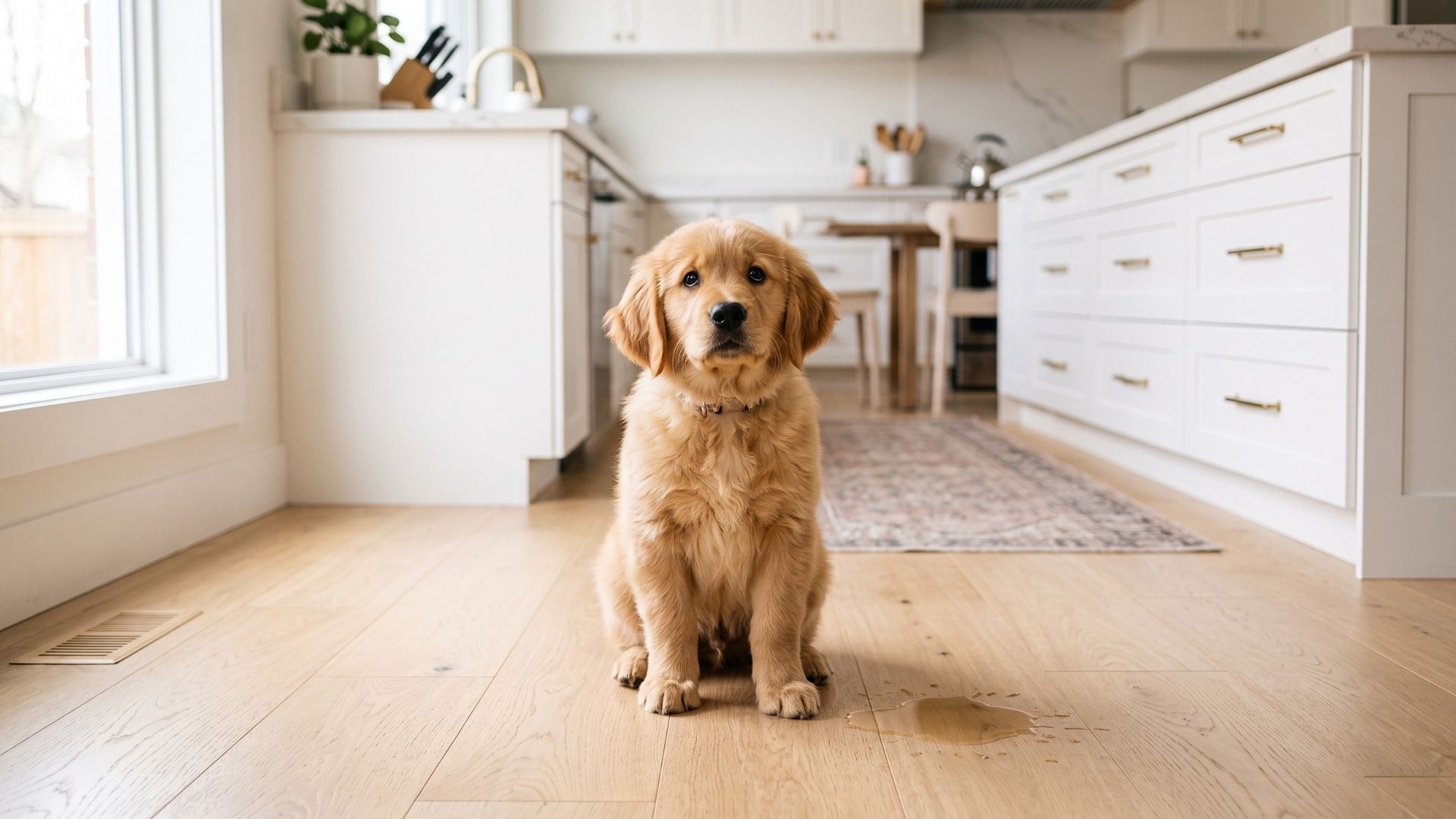
Your hands are covered in tiny scratches. Your sleeves have holes in them. And the more you try to stop the biting, the more your puppy seems to think it’s a brilliant game.
If that sounds familiar, you’re not doing anything unusual. Puppy biting is normal. Puppies explore with their mouths, play with their mouths, and soothe sore teething gums with their mouths. But some very common reactions, many of them passed on as “good advice,” can accidentally make the biting harder, longer, or more frequent.
This guide covers 12 of the most common puppy biting mistakes, why each one backfires, and what to do instead. You’ll also find a quick-reference table and the signs that mean it’s time to call in a professional.
Short on time? Our top 3 picks
- Best for redirecting bites: A long, soft tug toy
- Best for teething gums: A freezable teething toy
- Best for a calmer, more focused puppy: Brain training games
First: Why Puppies Bite
It helps to know what you’re dealing with. Most puppy biting comes from one of these:
- Play. Puppies wrestle and mouth each other all day. To them, your hands are just another playmate.
- Teething. Most puppies lose their baby teeth somewhere between about 3 and 6 months old, and chewing eases the ache.
- Tiredness. An overtired puppy often gets bitier, not sleepier.
- Too much excitement. Visitors, zoomies, rough play, or a long, busy day.
- Not enough to do. A bored puppy will make their own fun.
The good news is that most puppies bite much less once they’re through teething and have learned better habits. The mistakes below are what can slow that down.
12 Puppy Biting Mistakes (And What To Do Instead)
Mistake 1: Using Your Hands As Toys
Wiggling your fingers in front of your puppy’s face, play-wrestling, or letting them chew your hands “because it’s cute” all teach the same lesson: hands are for biting. It feels harmless at 9 weeks, but it gets a lot less fun as those teeth and jaws grow.
Our pick: Mammoth Flossy Chews. It’s soft on puppy teeth and long enough to keep your fingers out of range.
Check The Price On AmazonMistake 2: Pulling Your Hand Away Quickly
It’s a natural reflex. Your puppy bites, you snatch your hand away. But to a puppy, something that suddenly moves away fast is prey. It’s an invitation to chase and bite again, often harder.
Mistake 3: Shouting, Smacking, Or Tapping Their Nose
Physical punishment and shouting don’t teach a puppy what to do. Some puppies get more excited and treat it as rougher play. Others become nervous of hands coming towards their face, which can make them more likely to bite out of fear later on.
Mistake 4: Holding Their Mouth Shut Or “Alpha Rolling”
Some older advice suggests holding the puppy’s mouth closed, pinning them on their back, or “showing them who’s boss.” Modern, evidence-based trainers don’t recommend any of this. It can frighten your puppy, damage their trust in you, and increase the risk of defensive biting.
Mistake 5: Yelping Loudly With Every Puppy
You may have heard that you should yelp like a puppy when you’re bitten. For some puppies, a short “ouch” followed by a pause does help them learn to be gentler. But for many others, a high-pitched squeal is exciting and makes them bite more.
Mistake 6: Letting Your Puppy Get Overtired
This is one of the biggest causes of “crazy biting,” and most owners never suspect it. Young puppies need a lot of sleep, often around 18 hours or more a day. When they miss naps, they don’t get sleepy like adults do. They get wired, mouthy, and harder to calm.
If your puppy turns into a land shark at the same time each evening, it’s often a sign they need a nap, not more play.
Mistake 7: Playing Too Rough Or For Too Long
Long, rough games, wrestling, and chasing games where you run away all build excitement. The more excited a puppy gets, the harder they bite and the less they can listen.
Mistake 8: Not Giving Enough Chew Options
Teething puppies need to chew. If the only interesting things in reach are your hands, ankles, and the sofa, guess what gets chewed.
Our pick: Nylabone Puppy Chew. Fill it with a little wet food and freeze it. The cold soothes sore gums, and licking it out keeps your puppy busy.
View On AmazonOur pick: KONG Puppy Classic. It’s a long-lasting chew made for puppies, perfect for settling down after play.
See It On AmazonMistake 9: Different Rules From Different People
One person lets the puppy chew their hands. Another plays rough. Someone else shouts. Your puppy has no way of knowing which rule applies right now, so they just keep trying.
Mistake 10: Letting Children Run And Squeal
Children running, waving their arms, and squealing look exactly like a fun game to a puppy. It almost always ends in nipped ankles and upset kids.
Mistake 11: Only Focusing On Stopping The Biting
Telling a puppy “no” over and over without showing them what to do instead leaves them guessing. A puppy can’t just “stop.” They need something else to do with all that energy and mouthiness.
Help Your Puppy Learn Calm, Not Chaos 🧠🐶
Brain Training For Dogs is a step-by-step program of short games that build focus, impulse control, and calm. A great fit for busy, mouthy puppies.
See The Brain Training ProgramMistake 12: Expecting It To Stop Overnight
It’s easy to feel like nothing is working after a few days. But puppy biting usually fades gradually, not all at once. Many owners give up on a good plan too soon, or keep switching methods, which confuses the puppy.
Puppy Biting Mistakes: Quick-Reference Table
| Mistake | Why it backfires | Do this instead |
|---|---|---|
| Hands as toys | Teaches that hands are for biting | Always use a toy |
| Snatching your hand away | Triggers the chase instinct | Go still, then redirect |
| Shouting or smacking | Excites or frightens the puppy | Calmly pause and redirect |
| Holding the mouth or alpha rolling | Damages trust, risks fear biting | Reward the behaviour you want |
| Loud yelping | Excites many puppies | Calm “oops” and a pause |
| Overtired puppy | Tired puppies bite more | Regular naps and quiet time |
| Rough or long play | Builds over-excitement | Short, calm play sessions |
| Not enough chews | Hands become the chew toy | Several textures, rotated |
| Mixed household rules | Confuses the puppy | One simple plan for everyone |
| Kids running and squealing | Looks like a chase game | “Be a tree” and supervise |
| Only saying “no” | No better option offered | Teach and reward calm |
| Expecting instant results | Plans get dropped too soon | Stay consistent for weeks |
What A Good Puppy Biting Plan Looks Like
- Prevent it. Plenty of naps, short play sessions, and chews always within reach.
- Redirect it. Teeth on skin? Calmly offer a toy instead.
- Pause it. Still biting hard? Calmly stop the game for a few seconds, or step behind a baby gate.
- Reward the good stuff. Gentle play, chewing toys, and settling down all earn praise and treats.
- Stay consistent. Same rules, every person, every day.
A baby gate or playpen makes the “pause” step easy. You can calmly step out of reach without shutting your puppy away for long.
Our pick: Amazon Basics Portable Foldable Octagonal Metal Exercise Dog Playpen. It gives your puppy a safe space to calm down with a chew, and lets you take a quick break from the biting without any drama.
Check Today’s PriceFor a full step-by-step method, see our guide on how to stop puppy biting.
- Growls, freezes, or goes stiff before biting
- Bites when you go near their food, toys, or bed
- Bites when touched or handled in certain places, which can signal pain
- Bites hard enough to regularly break skin, despite consistent training
- Is still biting a lot after their adult teeth are through, around 6 to 7 months
These can be signs of fear, guarding, or pain rather than play, and they’re much easier to fix with expert help early on.
The Bitey Stage Doesn’t Last Forever
It can feel endless when you’re living with a little land shark. But avoid these mistakes, give your puppy better options, and stay consistent, and the biting will fade. One day you’ll realise your sleeves are hole-free and your hands have healed.
Build A Calmer, Gentler Puppy
Fun, structured training games that teach focus and self-control, all done at home in a few minutes a day.
Try Brain Training For DogsFrequently Asked Questions
What should you not do when a puppy bites?
Avoid using your hands as toys, snatching your hand away, shouting, smacking, tapping their nose, holding their mouth shut, or pinning them down. These can excite or frighten your puppy and often make biting worse.
Why is my puppy biting more instead of less?
Common reasons include tiredness, over-excitement, teething, rough play, and mixed rules in the household. Check your puppy is getting enough naps, keep play short and calm, and make sure everyone follows the same plan.
Does yelping stop puppy biting?
For some puppies, a short “ouch” and a pause helps them learn to be gentler. But for many puppies, a high-pitched yelp is exciting and makes biting worse. If that happens, skip the noise and just calmly stop the game.
When do puppies stop biting?
Most puppies bite much less once teething is finished, usually around 6 to 7 months old, especially with consistent training. If biting is still frequent after that, or comes with growling or stiffness, talk to your vet or a qualified trainer.