Disclosure: This article contains affiliate links. If you buy through them, Puppy Panic may earn a commission at no extra cost to you.
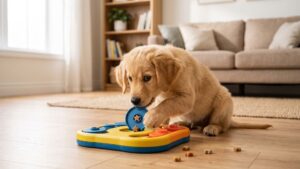
The best brain games for puppies are short sniffing and problem-solving games. Find It, Which Hand?, a snuffle towel and a lick mat are all safe from 8 weeks old. Play for 2 to 5 minutes, 2 to 3 times a day, use part of your puppy’s daily food as the reward, and stop while your puppy still wants more.
Your puppy has had a walk, a play and a meal, and they’re still bouncing off the walls. What’s usually missing is mental exercise. Five minutes of sniffing and problem-solving often settles a puppy better than another lap of the garden, and it builds focus and confidence along the way.
This guide gives you 10 brain games you can start today using treats and things already in your home. Every game has exact steps, clear levels so you know when to make it harder, and a fix if your puppy gets stuck. You’ll also find a problem-to-game picker, an age-by-age guide and a 7-day plan.
Why Brain Games Matter For Puppies
Puppies learn constantly. Everything they sniff, chew and work out shapes the adult dog they’ll become. When that busy brain has nothing to do, it finds its own projects: your shoes, the sofa cushions, your ankles.
Brain games give that energy a job. They:
- Tire your puppy out without the long walks and repetitive running that growing joints aren’t ready for
- Build focus, which makes everyday training easier
- Grow confidence as your puppy learns that problems can be solved
- Reduce boredom behaviour like chewing, nipping and barking for attention
- Strengthen your bond, because you become the source of all the fun
Which game for which problem
Start with the problem you’re dealing with today. Each game is explained in full further down.
| If your puppy… | Try | Why it helps |
|---|---|---|
| Gets the zoomies every evening | Snuffle Towel, then Lick Mat | Sniffing and licking are calming activities. Evening zoomies often mean an overtired puppy who needs help winding down. |
| Nips your hands during play | Which Hand? | Your hand only opens for a gentle nose, never for teeth, so your puppy learns that soft mouths win. |
| Won’t come when called | Hide and Seek | Turns “come” into the best game in the house, so your puppy wants to find you. |
| Chews furniture out of boredom | Cardboard Box Dig or Muffin Tin | Gives the urge to rip, dig and chew an approved outlet. |
| Cries in the crate | Lick Mat inside the crate | Builds a calm, positive link with the crate. |
| Can’t focus on you outdoors | Touch | Gives you one simple cue that brings their attention straight back to you. |
| Is stuck indoors (rain or before vaccinations are complete) | Find It across two rooms | Sniffing burns energy fast and needs no space or equipment. |
| Gets overexcited when visitors arrive | Lick Mat on their bed | Gives your puppy a calm job to do while the excitement passes. |
Brain games by age
Young puppies tire quickly and lose focus fast. Use this as a starting guide and adjust to your puppy.
| Age | Session length | Sessions a day | Best games to start with |
|---|---|---|---|
| 8 to 10 weeks | 2 to 3 minutes | 2 to 3 | Find It (Level 1), Which Hand?, Snuffle Towel, Touch, Lick Mat |
| 10 to 16 weeks | 3 to 5 minutes | 2 to 3 | Add the Cup Game, Muffin Tin, Cardboard Box Dig and indoor Hide and Seek |
| 4 to 6 months | 5 to 10 minutes | 2 | Level 3 versions of every game, Name That Toy with 2 to 3 toys, Hide and Seek in the garden |
Before you start: 5 rules
- Keep sessions short. Follow the times in the age table above and stop while your puppy still wants more.
- Budget your treats. Treats and rewards should make up no more than about 10% of your puppy’s daily calories. The easiest way: measure out one meal’s kibble in the morning and use part of it for games. Cut soft treats into pea-sized pieces.
- Follow the 4-out-of-5 rule. Move up a level only when your puppy gets it right 4 times out of 5. If they fail twice in a row, go back a level.
- Supervise every game. Puppies chew and swallow things they shouldn’t. Put all puzzle items away when the game ends.
- Pick a calm moment. Wait at least 30 minutes after a meal, and don’t play when your puppy is overtired and nippy. They need a nap, not a game.
10 Brain Games For Puppies
1. Find It
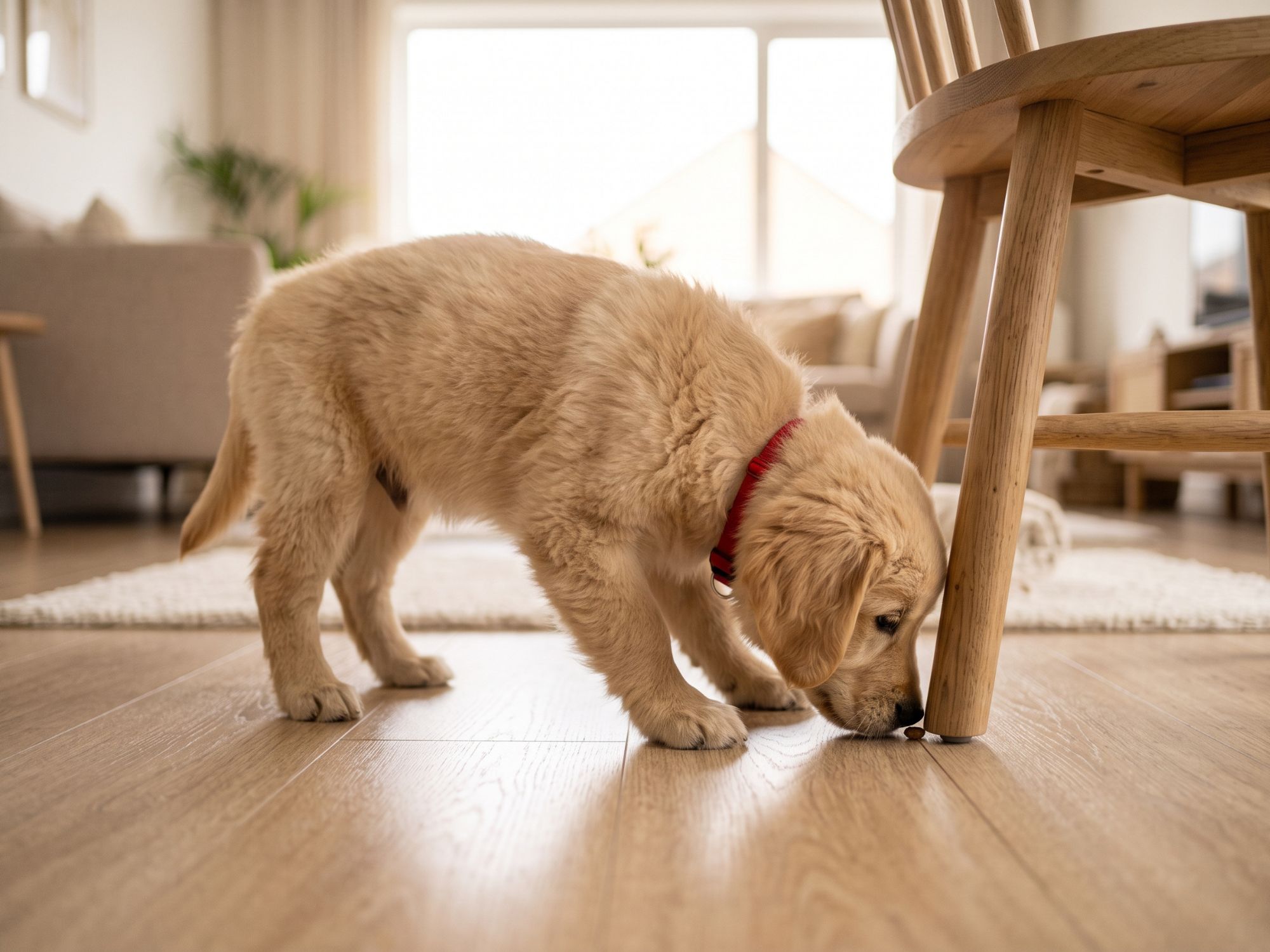
The best first brain game. Sniffing is hard mental work for dogs, and this game puts that nose to use.
You’ll need: 10 to 15 pieces of kibble or small treats.
How to play
- Show your puppy a treat, say “find it” once, and toss it about an arm’s length away on the floor.
- Praise as they eat it. Repeat 5 or 6 times until they run off as soon as they hear “find it”.
Level up
- Level 2: Place a treat just out of sight, behind a chair leg or a cushion, then say “find it”.
- Level 3: Hide 5 treats around one room while your puppy waits in another, then send them in. Later, use two rooms.
If your puppy gets stuck: Walk towards the hidden treat and point at the floor near it. Go back to tossing treats in view for a few rounds.
2. Which Hand?
You’ll need: a few smelly treats, such as small pieces of cheese or soft treats.
How to play
- Let your puppy watch you put a treat in one hand. Close both hands into fists and hold them out at nose height.
- Wait. When your puppy sniffs or nudges the correct hand, open it and let them take the treat.
- If they choose the empty hand, open it to show it’s empty, say nothing, and try again.
Level up
- Level 2: Swap the treat between hands behind your back so your puppy can’t see where it goes.
- Level 3: Wait for your puppy to sit before you hold your fists out.
If your puppy paws or nips: Keep your fists closed and still. Open only for a gentle nose. Within a few sessions most puppies learn that calm wins.
3. The Cup Game
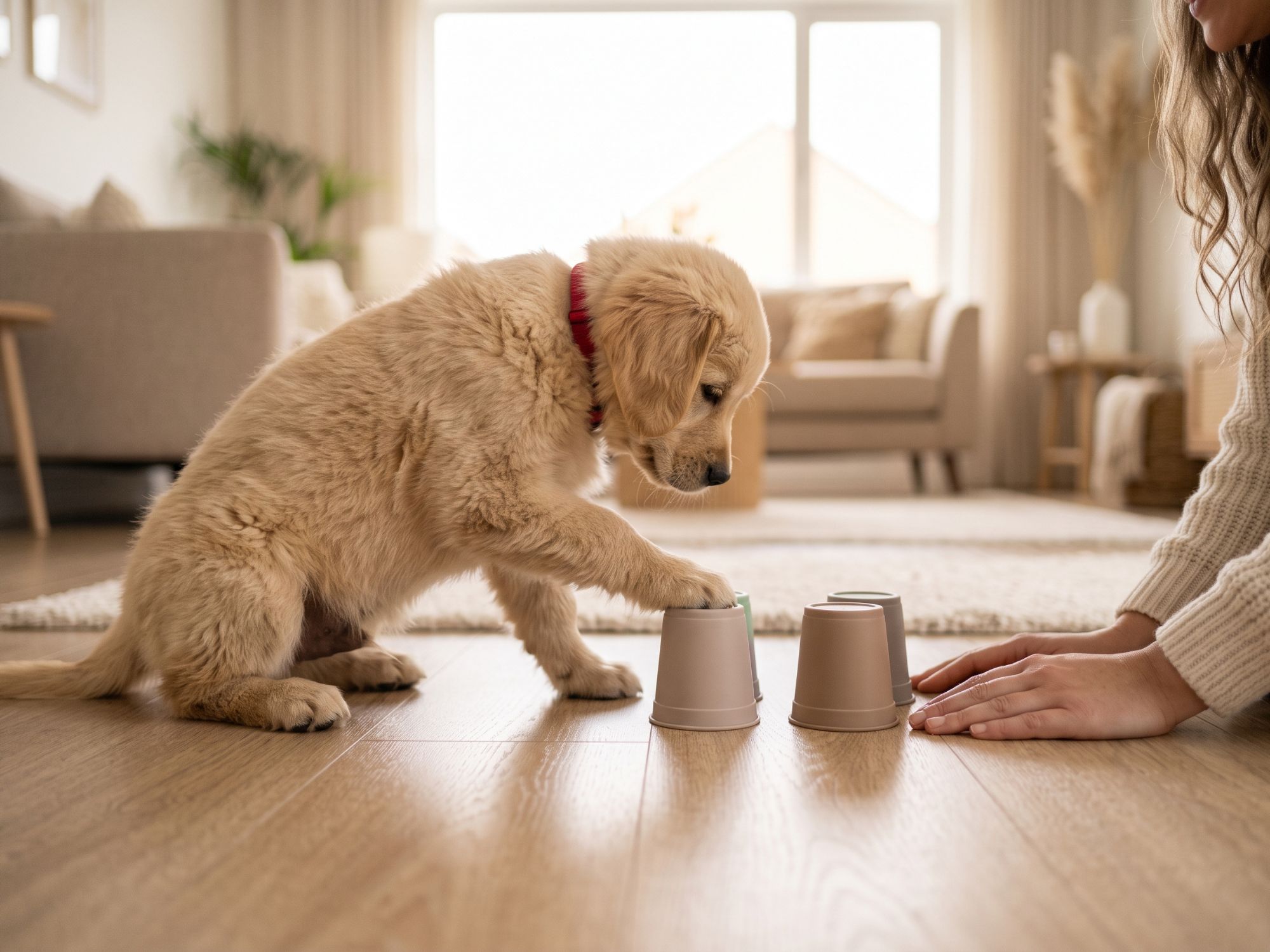
You’ll need: 3 sturdy plastic cups or small plastic bowls, and treats.
How to play
- Place one cup upside down over a treat while your puppy watches.
- When they nose or paw at the cup, lift it straight away and let them eat the treat. Repeat 4 or 5 times.
Level up
- Level 2: Add a second, empty cup. Let your puppy choose. Lift the right cup when they pick it; if they pick the wrong one, lift it to show it’s empty and try again.
- Level 3: Use three cups and slowly slide them around before your puppy chooses.
If your puppy gets stuck: Tilt the cup so a corner of the treat shows, then go back to one cup for a few rounds.
Safety: Use sturdy plastic, not paper cups, which can be chewed and swallowed.
4. Muffin Tin Puzzle
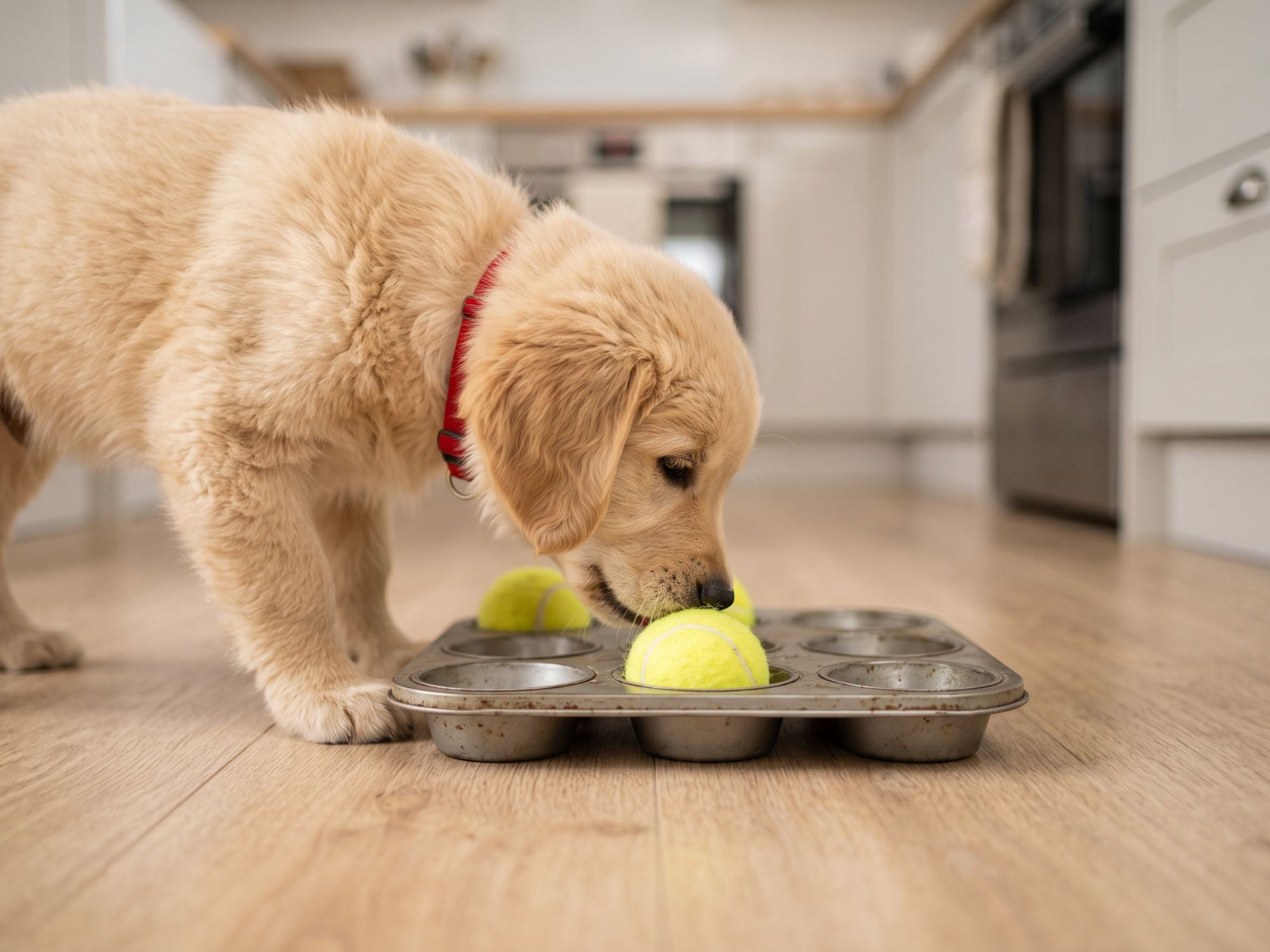
A homemade dog puzzle toy that costs nothing.
You’ll need: a 6 or 12-cup muffin tin, tennis balls or soft toys, and treats.
How to play
- Drop a treat into 3 or 4 of the cups and let your puppy eat them out. No balls yet.
- Next round, cover 1 or 2 treat cups with a tennis ball. Your puppy has to work out how to move the ball.
Level up
- Level 2: Cover every cup with a ball, with treats in all of them.
- Level 3: Cover every cup, but put treats in only half, so your puppy has to sniff out which balls to move.
If your puppy gets stuck: Roll the ball halfway off so the treat is visible, then let them finish the job.
Safety: Use balls too big to fit fully in your puppy’s mouth, and put them away after the game. A puppy left alone with a tennis ball can chew it apart and swallow the pieces.
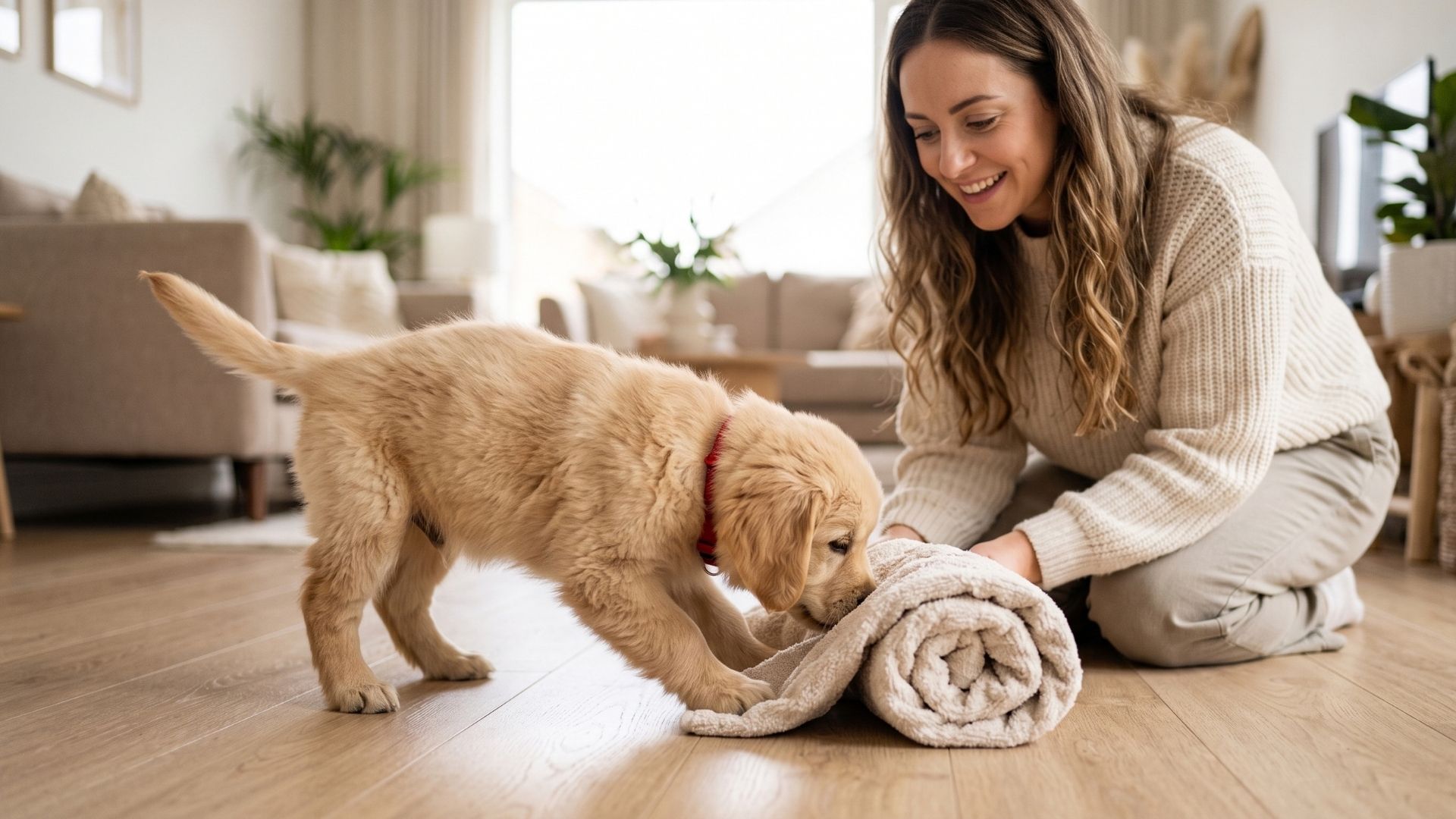
5. Snuffle Towel
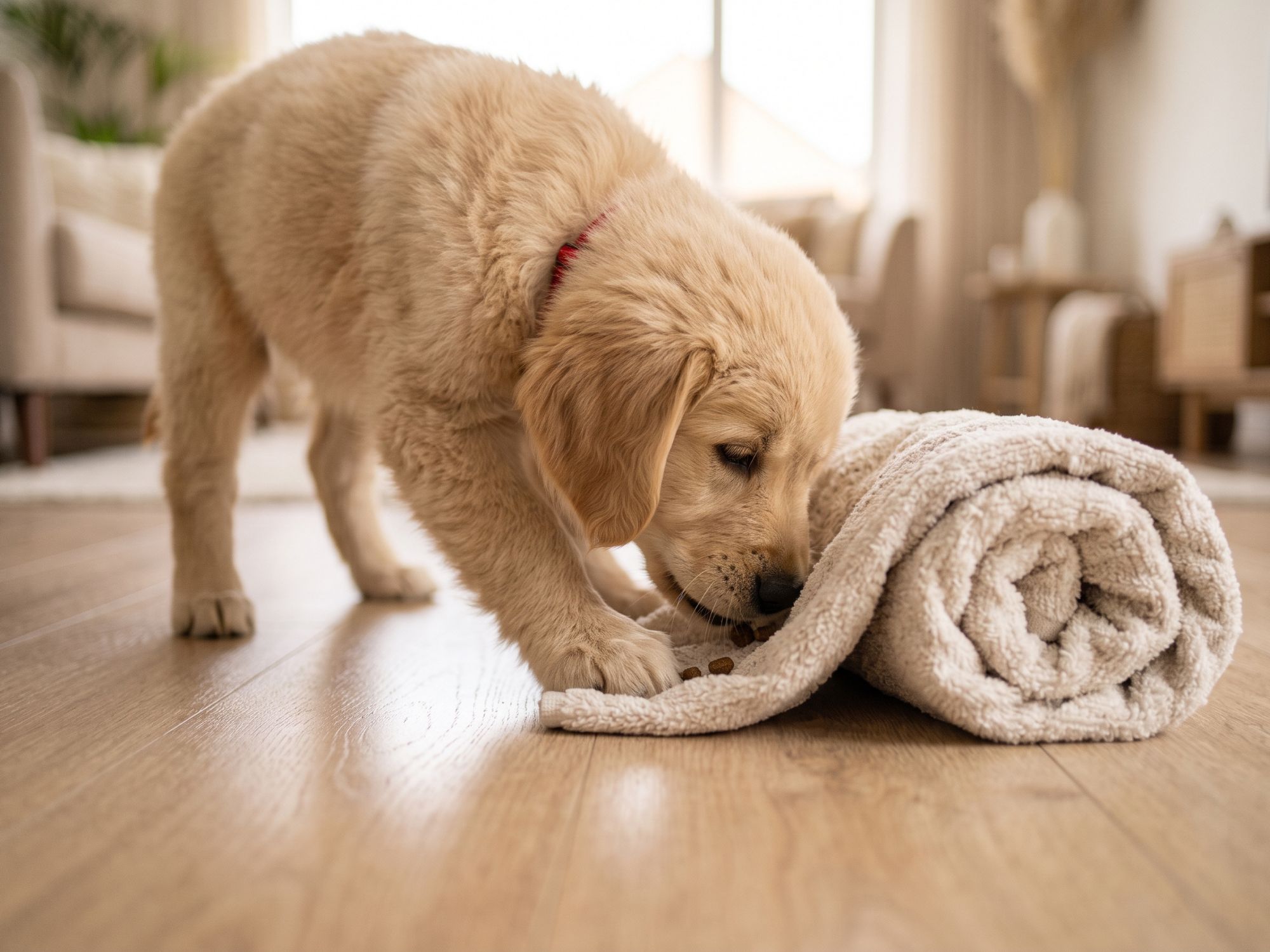
You’ll need: an old bath or hand towel and 10 to 20 pieces of kibble.
How to play
- Lay the towel flat and scatter the kibble over it.
- Loosely roll the towel up from one short end, trapping the food inside.
- Put it on the floor and let your puppy nose and paw it open.
Level up
- Level 2: Roll the towel more tightly.
- Level 3: Roll it, then tie it in one loose knot.
Tip: Use this to serve part of a meal on rainy days. Sniffing is calming, so it works well 10 minutes before a nap or bedtime.
6. Touch (Hand Target)
Half game, half training. Once your puppy knows “touch”, you can move them anywhere without pulling on their collar.
You’ll need: small treats.
How to play
- Hold your flat palm about 5 cm (2 inches) from your puppy’s nose.
- Most puppies sniff it. The instant their nose touches your palm, say “yes!” and give a treat from your other hand.
- Repeat 10 times. Once they bump your hand every time, say “touch” just before you offer your palm.
Level up
- Level 2: Offer your hand higher, lower and to either side.
- Level 3: Hold your hand out a step or two away so your puppy has to come to you.
If your puppy ignores your hand: Rub a treat on your palm first so it smells interesting.
7. Hide and Seek
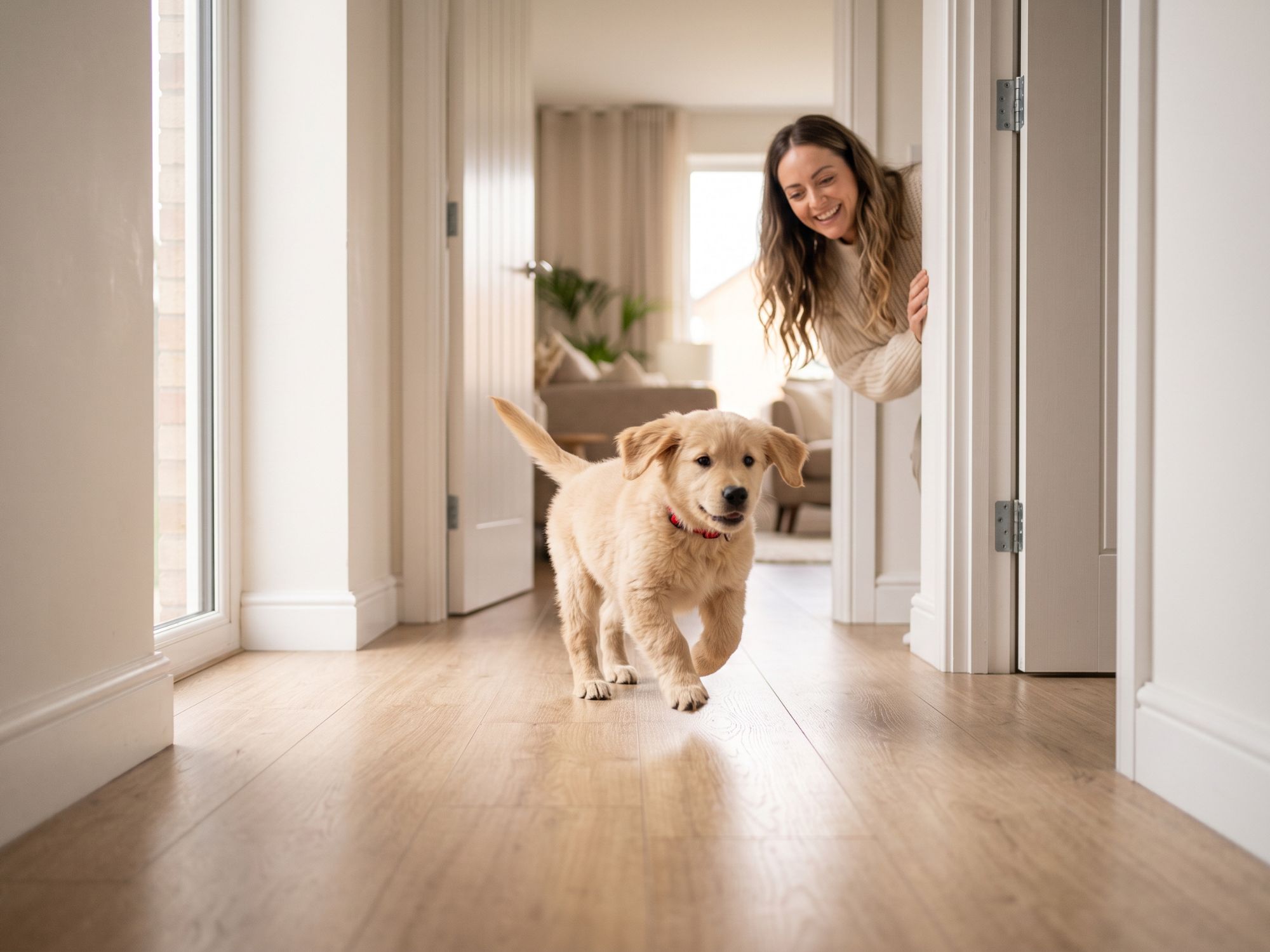
The most fun way to practise coming when called.
You’ll need: a helper (or a distracted puppy) and high-value treats.
How to play
- Ask a family member to gently hold your puppy, or wait until your puppy is busy sniffing.
- Step just out of sight, behind a door or around a corner, and call your puppy’s name once in a happy voice.
- When they find you, celebrate: praise, 3 or 4 treats in a row, and a quick game.
Level up
- Level 2: Hide in another room.
- Level 3: Play in a fenced garden, hiding behind a shed or tree.
If your puppy doesn’t come: Make a squeaky noise or clap, and hide somewhere easier next time. Never call your puppy for something they dislike, like a bath, or “come” stops being fun.
8. Name That Toy
You’ll need: 2 or 3 toys that look clearly different.
How to play
- Pick your puppy’s favourite toy and give it a short name, like “duck”.
- Use the name every time you play with it: “Get your duck!” Do this for 3 or 4 days.
- Put the toy on the floor, say “duck”, and reward your puppy for touching or picking it up.
Level up
- Level 2: Put a second, different toy beside it and ask for “duck”. Reward only the right choice.
- Level 3: Name the second toy the same way, then ask for either one.
Good to know: Some dogs learn toy names quickly and others never really pick it up. If your puppy finds this frustrating, focus on the other games. They’re getting just as much brain work.
9. Cardboard Box Dig
You’ll need: a shallow cardboard box, plain scrunched-up paper, 8 to 10 treats and an old toy.
How to play
- Fill the box with scrunched-up paper and the toy.
- Drop the treats in among the paper.
- Let your puppy dig, rummage and rip their way to the treats.
Level up
- Level 2: Wrap a few treats inside individual balls of paper.
- Level 3: Put a smaller box inside the big box, with treats in both.
Safety: Supervise closely. Shredding is fine; swallowing isn’t. Remove tape, staples and glossy printed paper first, and tidy up straight after.
10. Lick Mat Calm-Down
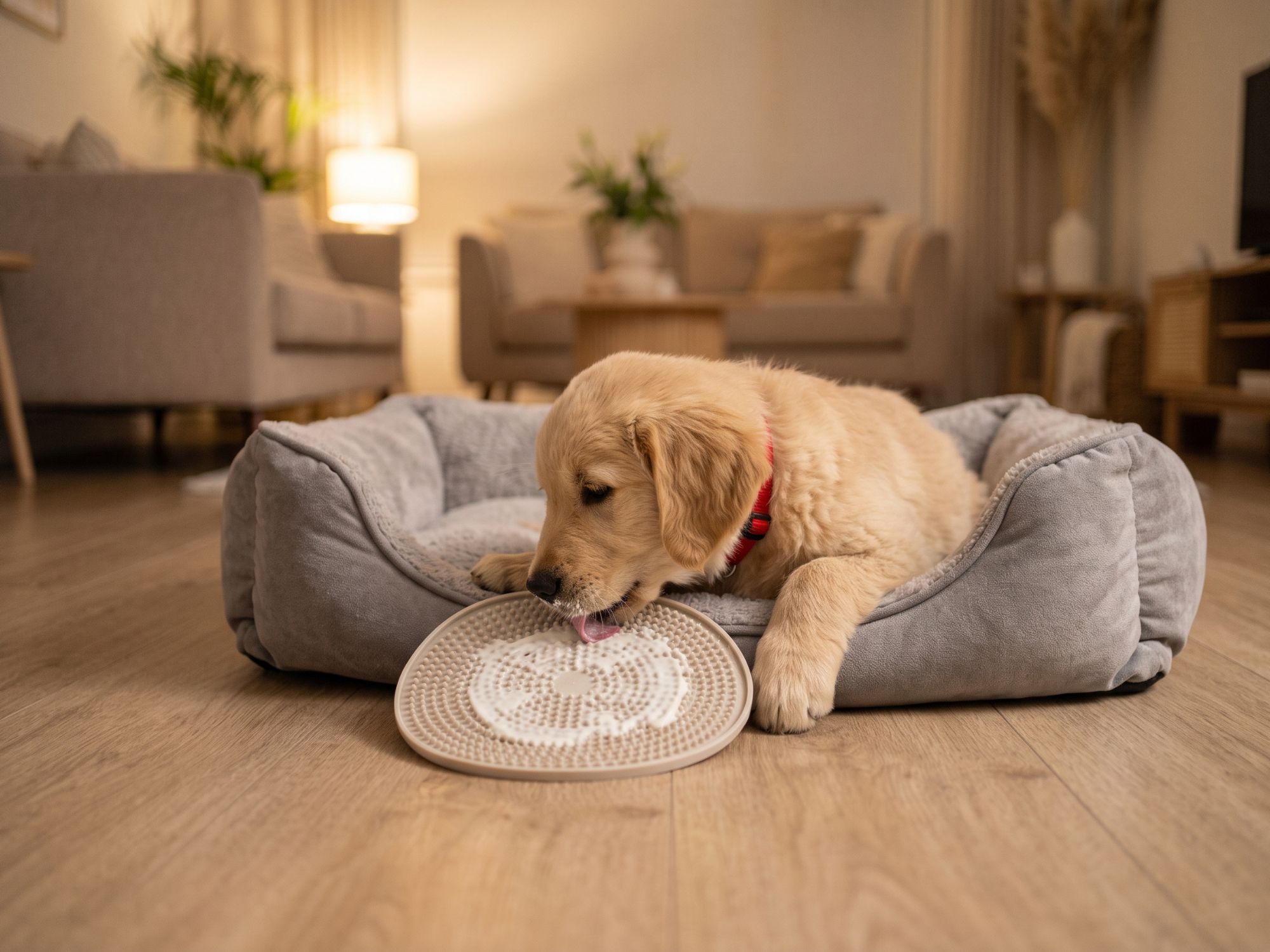
Not every brain game needs to be exciting. Licking is naturally soothing for dogs, so this is the ideal wind-down before bed, in the crate or when visitors arrive.
You’ll need: a lick mat (or a flat plate to start) and a soft food such as wet puppy food, plain unsweetened yoghurt or mashed banana.
How to play
- Spread 1 to 2 teaspoons of the food thinly over the mat, pushing it into the grooves.
- Give it to your puppy in their bed or crate and let them lick in peace. Stay nearby.
- Pick the mat up as soon as it’s clean so it doesn’t become a chew toy.
Level up
- Level 2: Freeze the mat for 1 to 2 hours first. It lasts much longer.
Safety: If you use peanut butter, check the label. Some brands contain xylitol (sometimes listed as birch sugar), which is toxic to dogs. Count the spread as part of your puppy’s daily food.
A simple 7-day brain games plan
An energising game in the morning and a calming game in the evening. Use the session lengths from the age table.
| Day | Morning game | Evening game |
|---|---|---|
| Monday | Find It | Lick Mat Calm-Down |
| Tuesday | Touch | Snuffle Towel |
| Wednesday | Which Hand? | Lick Mat Calm-Down |
| Thursday | Muffin Tin Puzzle | Find It (Level 3, around the room) |
| Friday | Hide and Seek | Snuffle Towel |
| Saturday | Cup Game | Cardboard Box Dig |
| Sunday | Name That Toy | Lick Mat Calm-Down |
6 common mistakes (and what to do instead)
- Making it harder too fast. Stick to the 4-out-of-5 rule before levelling up.
- Repeating the cue. Say “find it” or “touch” once. Saying it over and over teaches your puppy to ignore it.
- Playing when your puppy is overtired. A nippy, frantic puppy usually needs a nap, not a game.
- Leaving puzzle items out. Cups, balls, boxes and mats get chewed when no one is watching. Put them away every time.
- Playing the same game every day. Rotate games so your puppy keeps solving new problems. The 7-day plan does this for you.
- Ending on a fail. Always finish with an easy win, even if it means going back a level.
Signs It’s Time to Stop
End the session and let your puppy rest if you see:
- Nipping, barking or pawing at you
- Yawning, lip licking or turning away
- Wandering off or losing interest
- Getting the easy version wrong when they’ve done it before
Get the free Puppy Survival Guide
Brain games are one part of raising a calm, happy puppy. Our free 19-page guide covers toilet training, biting, night crying and your first 30 days, with printable schedules and trackers.
Download My Free Guide Free PDF · no sign-upFrequently asked questions
At what age can puppies start brain games?
From 8 weeks, the age most puppies come home. Start with Find It, Which Hand?, the Snuffle Towel, Touch and the Lick Mat, keep sessions to 2 to 3 minutes, and make every game easy to win.
How many brain games should a puppy play a day?
Two or three short sessions a day is plenty. Each session can be one game or two quick ones. See the age table for session lengths.
Can brain games replace walks?
No. Puppies need both. Brain games are a great addition on rainy days, before your vet says your puppy can walk in public places, or when you need them calm. They don’t replace exploring the outside world and meeting new things.
Do brain games help with puppy biting?
They can reduce it. Much puppy biting comes from boredom or overtiredness. Regular brain games use up mental energy, and Which Hand? directly rewards a gentle mouth. If biting happens when your puppy is overtired, a nap will help more than a game.
Do I need to buy puzzle toys or a snuffle mat?
No. Every game here uses things you already have. If you enjoy the games and want more variety, a snuffle mat and a beginner puzzle toy are worthwhile next steps.
My puppy gets frustrated and gives up. What should I do?
Go back a level and give 3 or 4 easy wins in a row before trying again. Frustration means the jump in difficulty was too big, not that your puppy can’t do it.
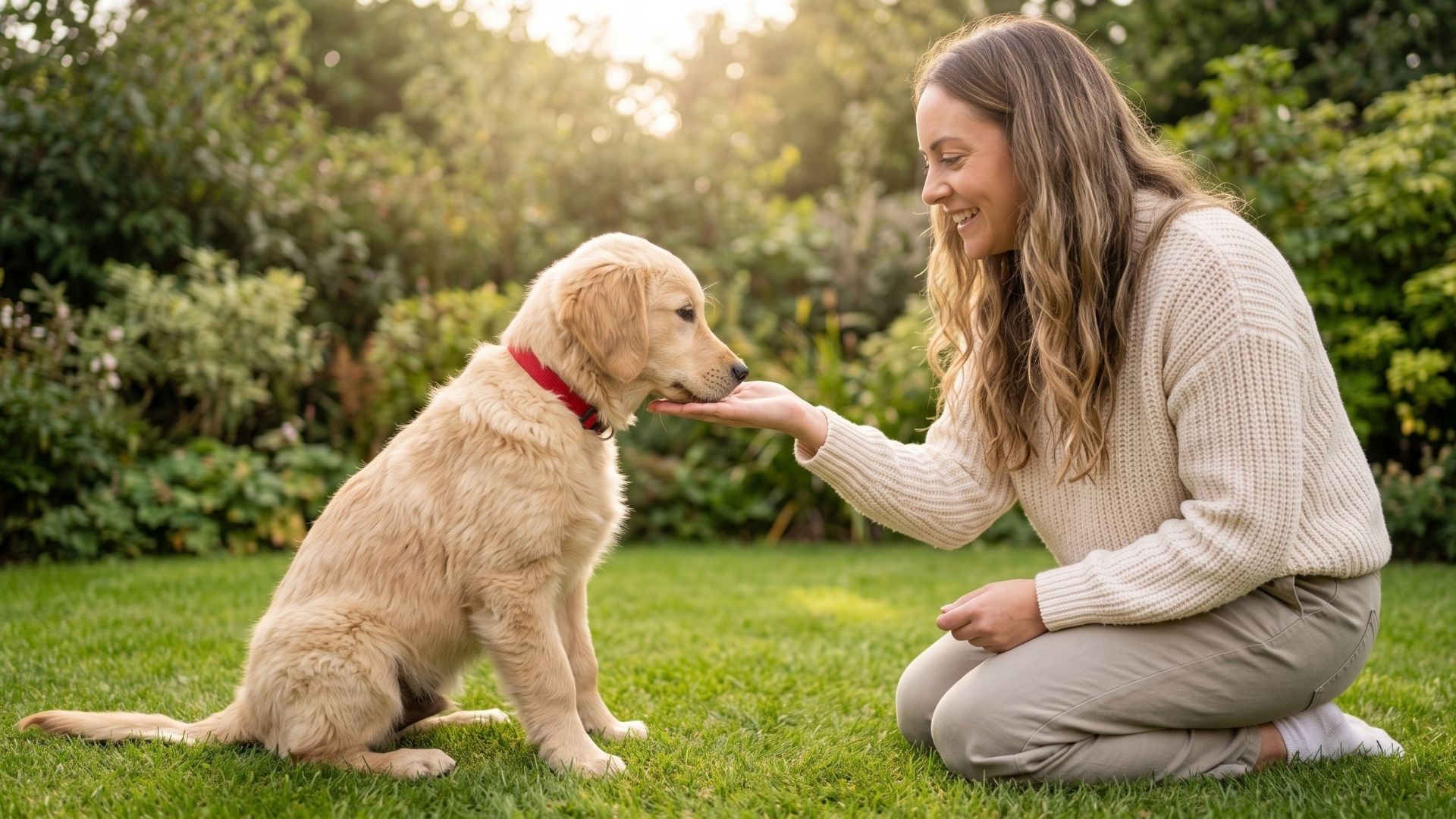
Ready to Take Brain Training Further?
Once your puppy is breezing through Level 3 of these games, they’re ready for more structured challenges. Brain Training For Dogs is an online programme of step-by-step games that build focus, impulse control and obedience, using the same positive, reward-based approach as this article.
Brain Training For Dogs
Progressive games and lessons for puppies and adult dogs, from beginner to advanced.
Explore Brain Training For Dogs Affiliate linkPick one game from the problem picker and try it today. Five minutes on the floor with your puppy and a handful of kibble is all it takes.
This article is general information and isn’t a substitute for advice from your vet or a qualified trainer. If your puppy has a health condition or a special diet, check with your vet before using new treats or foods.