Quick Answer
To stop a dog barking at everything, first find what sets the barking off. Then change the setup so your dog sees and hears less of it, reward quiet before the barking starts, and teach a simple alternative, like going to a mat. Yelling rarely works. Small, consistent steps usually do.
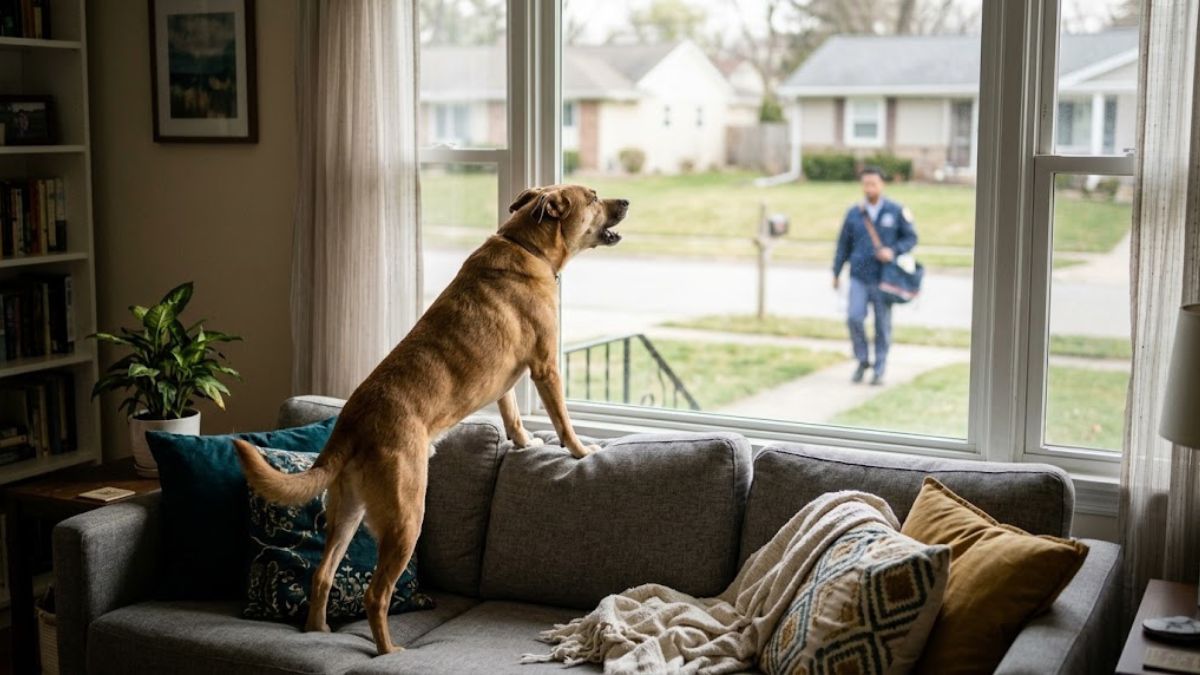
If your dog barks at the mail carrier, the doorbell, the neighbor’s car door and a leaf blowing past the window, you’re not dealing with a bad dog. You’re dealing with a dog who has learned that barking is the best response to a lot of everyday things. The good news: what’s learned can be changed.
This guide walks you through the five steps we use in The Calm Home Dog Plan, then shows you how to apply them to the three most common barking spots in an American home: the window, the front door and the backyard fence.
Why Dogs Bark At Everything
Barking is how dogs communicate, so the goal is never zero barking. The goal is less barking, shorter barking and a dog who can settle again quickly. Researchers who recorded dogs in different situations found that barks sound different depending on what’s happening, such as a stranger at the door, being left alone or play (Yin and McCowan, 2004). In other words, “barking” is really several different behaviors that happen to sound alike.
Most everyday barking falls into one of these groups:
- Alert barking: something moved or made a sound. The window, the doorbell and noises outside are the classic triggers.
- Territorial barking: people or dogs near “their” space, like the yard, the fence line or the front path.
- Excitement barking: guests arriving, the leash coming out, play that gets wound up.
- Demand barking: your dog has learned that barking gets attention, food, a ball thrown or a door opened.
- Boredom or frustration barking: too little to do, or something they want and can’t reach.
- Barking from fear or distress: a dog who seems scared, or who barks or howls mainly when left alone. This kind needs a different plan, which we cover in the section on when to get help.
Why does it matter which one you’re dealing with? Because the fix for a dog who barks at the window to chase people away isn’t the same as the fix for a dog who barks at you for dinner. That’s why the first step below is spotting the trigger, not picking a trick.
The 5 Calm Steps To Stop Dog Barking
These five steps work for almost any everyday barking. They follow the P.A.W.S. Method from The Calm Home Dog Plan: pinpoint the pattern, adjust the setup, work on a new skill and study what changes.
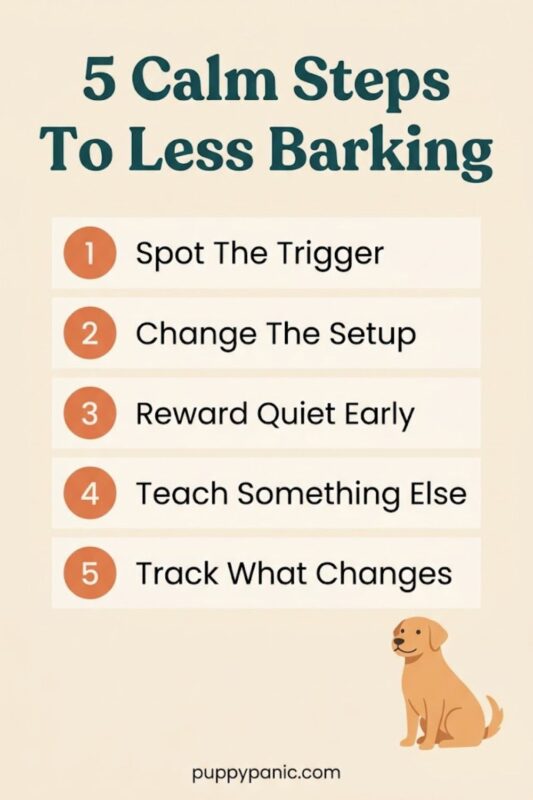
1. Spot The Trigger
For three to five days, don’t try to fix anything. Just notice. Every time your dog barks, jot down three things:
| Where and when | What happened right before | What happened right after |
|---|---|---|
| Living room window, 10:15 a.m. | Mail carrier walked up the path | Mail carrier left; I yelled “quiet” |
| Front door, 6:30 p.m. | Doorbell rang (food delivery) | I opened the door; dog got to sniff the bag |
| Kitchen, 7:00 p.m. | I sat down to eat | I tossed a bit of chicken to stop the noise |
Look at the “right after” column closely. In the first row, the mail carrier always leaves, so from your dog’s point of view, the barking worked. In the last row, barking earned chicken. Patterns like these explain why barking keeps happening, and they point straight to what to change.
2. Change The Setup
The more often your dog practices barking, the better they get at it. So before you teach anything, cut down on the practice:
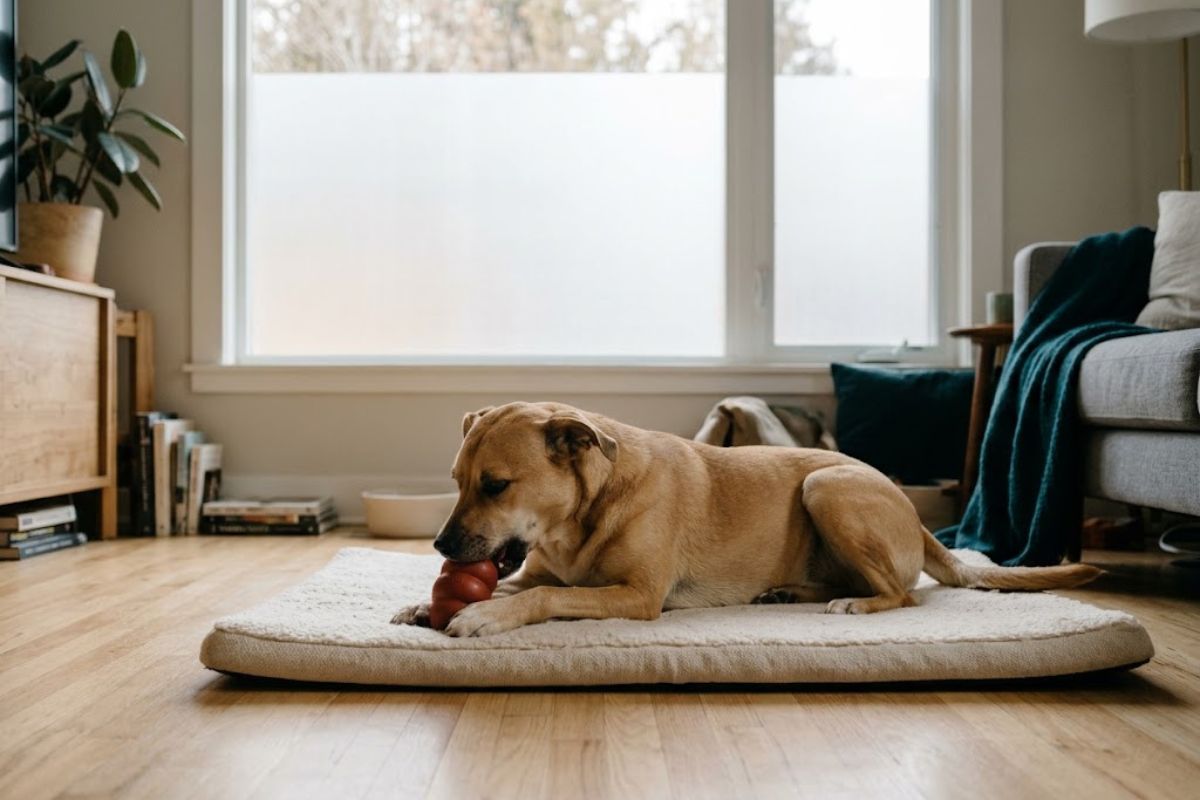
- Block the view at problem windows with frosted window film, a closed blind or by moving the couch.
- Play soft background sound, like a fan or quiet music, if outdoor noises set your dog off.
- Keep your dog out of the front room when you’re away or busy.
- Make sure your dog gets enough exercise, sniffing time and chew time each day. A tired, satisfied dog barks less.
This isn’t cheating. Management stops the problem from growing while you teach the new habit.
3. Reward Quiet Early
Most people only pay attention to their dog when the barking starts. Flip that around. When your dog notices the trigger but hasn’t barked yet, mark it with a calm “yes” and give a small treat. A dog who looks at the window, then back at you, is doing exactly what you want.
Timing matters. Reward the quiet moments before the barking, not the silence after a long burst of it, or you may accidentally teach your dog to bark first and then go quiet for a treat.
4. Teach Something Else
“Stop barking” is hard for a dog to understand. “Go to your mat” or “come to me” is much easier. Pick one simple alternative and teach it when nothing is happening:
- Ask your dog to come to you or go to a mat, and reward with a treat.
- Practice 5 to 10 times a day for a few days until it’s easy.
- Add a tiny version of the trigger, like a quiet knock on a table, then ask for the behavior and reward.
- Slowly make the trigger more realistic over several days.
The goal is a dog who hears a sound and runs to you or their mat, because that’s what pays.
5. Track What Changes
Keep the same simple log for two to four weeks. You’re looking for progress, not perfection: fewer barks, shorter bursts or a faster return to calm. If nothing has changed after two weeks of steady practice, the exercise may be too hard, or the trigger may need a different approach. Go back a step and make it easier.

How To Stop Dog Barking At The Window
Window barking is one of the most common complaints dog owners have. For your dog, the front window is like a TV that only shows intruders. Every time a person walks past, your dog barks, the person keeps walking, and your dog “wins.” Do that 20 times a day and you have a well-practiced habit.
Here’s what helps:
- Block the view first. Frosted window film on the lower half of the glass is cheap and lets light in. Closing the blinds or moving the couch away from the window works too.
- Give your dog a better spot. Set up a bed or mat in a quieter room with a chew toy, and make it the place good things happen.
- Practice “look and come.” With the view partly open, wait for your dog to notice someone outside. Before they bark, say your dog’s name in a happy voice and reward them for turning to you.
- Keep sessions short. Two or three minutes at a time is plenty. Stop before your dog gets wound up.
How To Stop Your Dog Barking At The Doorbell
The doorbell is the hardest trigger for many dogs, because it usually comes with something exciting: a stranger, a package, a guest. The fix is to practice the doorbell when nothing is at stake, so it stops being a surprise.
A simple doorbell routine:
- Teach a mat first. Reward your dog for going to a mat or bed a few feet from the door, until they run there happily.
- Make the sound small. Play a doorbell sound on your phone at low volume, or tap lightly on the inside of the door. The moment your dog hears it, toss a treat onto the mat.
- Turn it up slowly. Over several days, increase the volume, then have a family member ring the real doorbell while you stay by the mat with treats.
- Add pretend guests. Ask a friend to ring, wait, walk in calmly and leave. Repeat a few times in one session.
- Use a leash or gate for real visits until your dog can handle the routine. Prevention keeps your dog from practicing the old habit.
Expect this to take a few weeks of short, regular practice. That’s normal.
How To Stop A Dog Barking At Neighbors In The Backyard
Fence barking tends to grow quietly. Your dog spends time alone in the yard, the neighbor’s dog runs the fence, and before long your dog is barking at every sound next door. Your neighbors notice, too.
- Go out with your dog for now, rather than leaving them in the yard alone. Unsupervised yard time is often barking practice time.
- Give your dog a job outside. Scatter a handful of kibble in the grass for sniffing, bring a toy or practice a few easy cues.
- Reward check-ins. Every time your dog looks back at you instead of at the fence, mark it and reward it.
- Make the fence less interesting. A privacy screen or a row of planters along the worst stretch of fence can cut down on what your dog sees.
- Bring your dog in calmly if they start barking and can’t turn away. Don’t yell. Just walk over, call them cheerfully and go inside for a minute.
Why Yelling “Quiet!” Usually Doesn’t Work
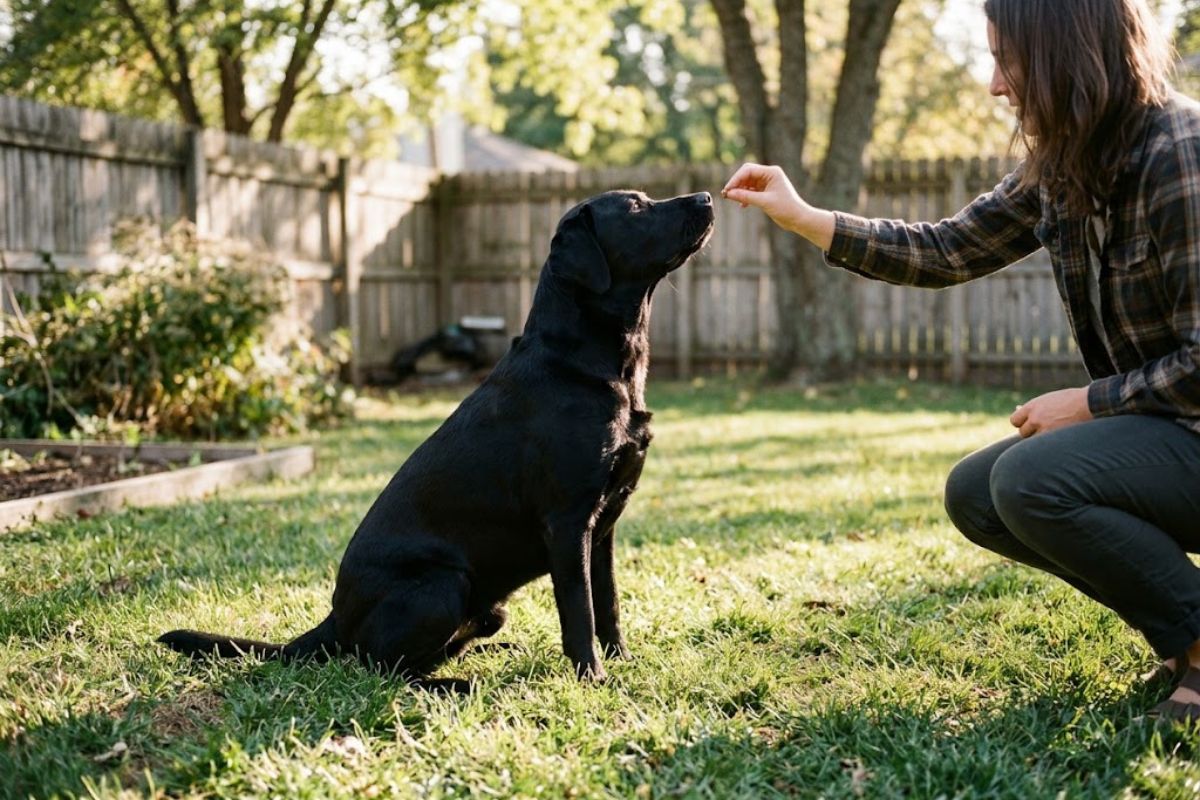
If you’ve said “quiet” a hundred times with no change, you’re not alone, and it’s not because you’re doing it wrong. To an excited dog, a raised voice may simply sound like you’re barking along. Even when shouting stops the noise for a second, it doesn’t teach your dog what to do the next time the doorbell rings.
What to do in the moment instead:
- Stay calm and keep your voice low.
- Call your dog away from the trigger in a happy tone, or toss a treat away from the window.
- Reward the first second of quiet or the first turn toward you.
- Then ask yourself what you can change before the next bark: the view, the timing or the practice.
What To Avoid
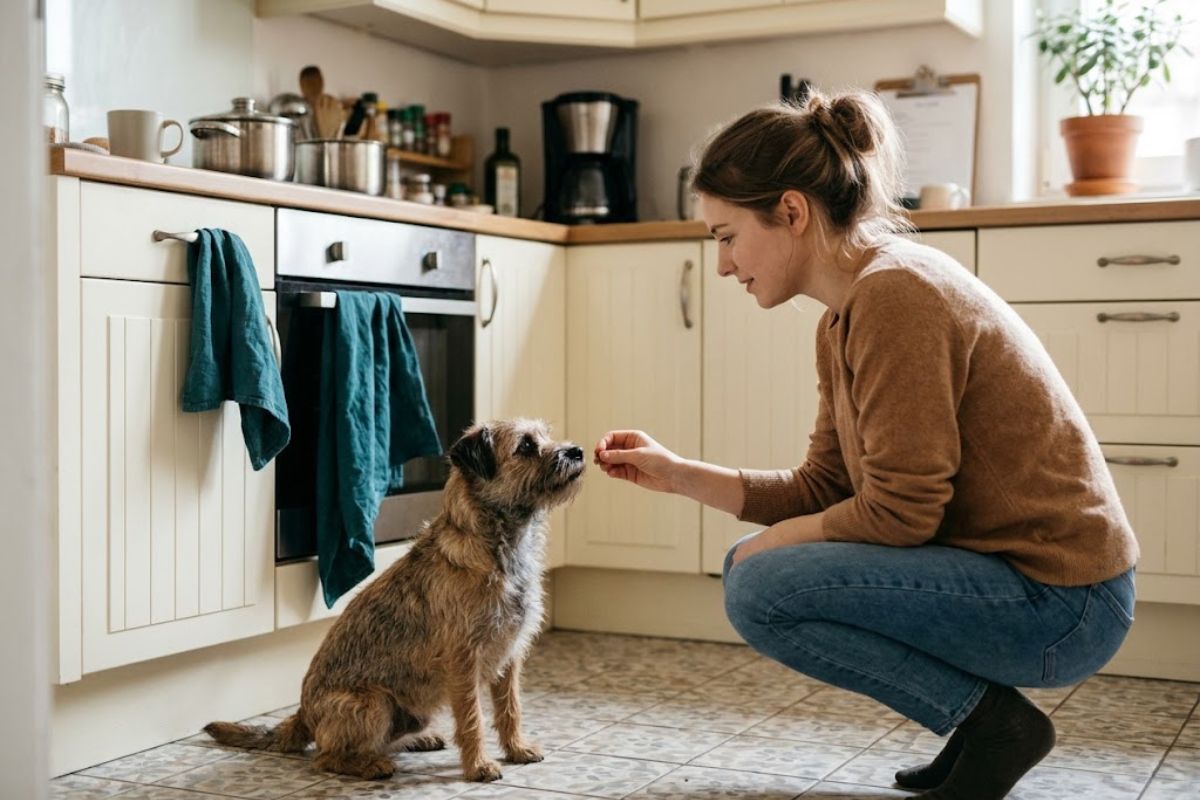
Shock collars, citronella spray collars, spray bottles and other punishments can stop barking in the short term, but they don’t teach a better habit and can make a worried dog more fearful. The American Veterinary Society of Animal Behavior recommends reward-based training only, including for behavior problems. Every method in this article follows that approach.
When Barking Needs A Vet Or A Certified Trainer
Most barking is ordinary, but some barking is a sign that your dog needs more than training tips. Talk to your veterinarian if:
- The barking started suddenly or changed a lot in a short time.
- Your dog is older and barking more at night, seems confused or doesn’t seem to hear you well.
- Your dog seems to be in pain, or barks when touched or moved.
Look for qualified help, such as a certified professional dog trainer or a board-certified veterinary behaviorist, if:
- Your dog barks, howls or panics mainly when left alone. This can be separation-related distress, which needs its own plan.
- The barking comes with growling, lunging, snapping or hiding.
- Your dog seems scared rather than excited.
Getting help early isn’t a failure. It’s often the fastest route to a calmer home.
Dog Barking FAQ
Why Does My Dog Bark At Nothing?
Usually your dog is barking at something you can’t hear or see, like a sound outside, a smell or movement far away. Dogs hear higher and quieter sounds than people do. If the barking is new, happens at night or comes with confusion in an older dog, check with your vet.
How Long Does It Take To Stop A Dog Barking?
Most owners see small changes within one to two weeks of daily practice, such as shorter bursts or faster recovery. Long-standing habits, like window barking that’s been practiced for years, often take a month or more. Every dog moves at their own pace.
Should I Ignore My Dog When It Barks?
Ignoring works best for demand barking, when your dog barks to get attention, food or play. Even then, reward the quiet moments so your dog learns what does work. For alert, fear or distress barking, ignoring alone usually isn’t enough. Change the setup and teach an alternative.
Do Anti-Bark Collars Work?
Shock, spray and vibration collars may interrupt barking, but they don’t teach your dog what to do instead and can make a fearful dog more anxious. Veterinary behavior experts recommend reward-based training instead.
Can You Train An Older Dog To Stop Barking?
Yes. Adult and senior dogs learn well with short, reward-based sessions. Older dogs that start barking more should see a vet first, since hearing loss, pain or age-related changes can play a part.
Is It Normal For A Puppy To Bark A Lot?
Some barking is normal as puppies explore and test what gets attention. Reward quiet behavior early, give plenty of rest and chew time, and avoid rewarding demand barking. Habits formed now are easier to shape than habits in an adult dog.
Want The Full Step-By-Step Plan?
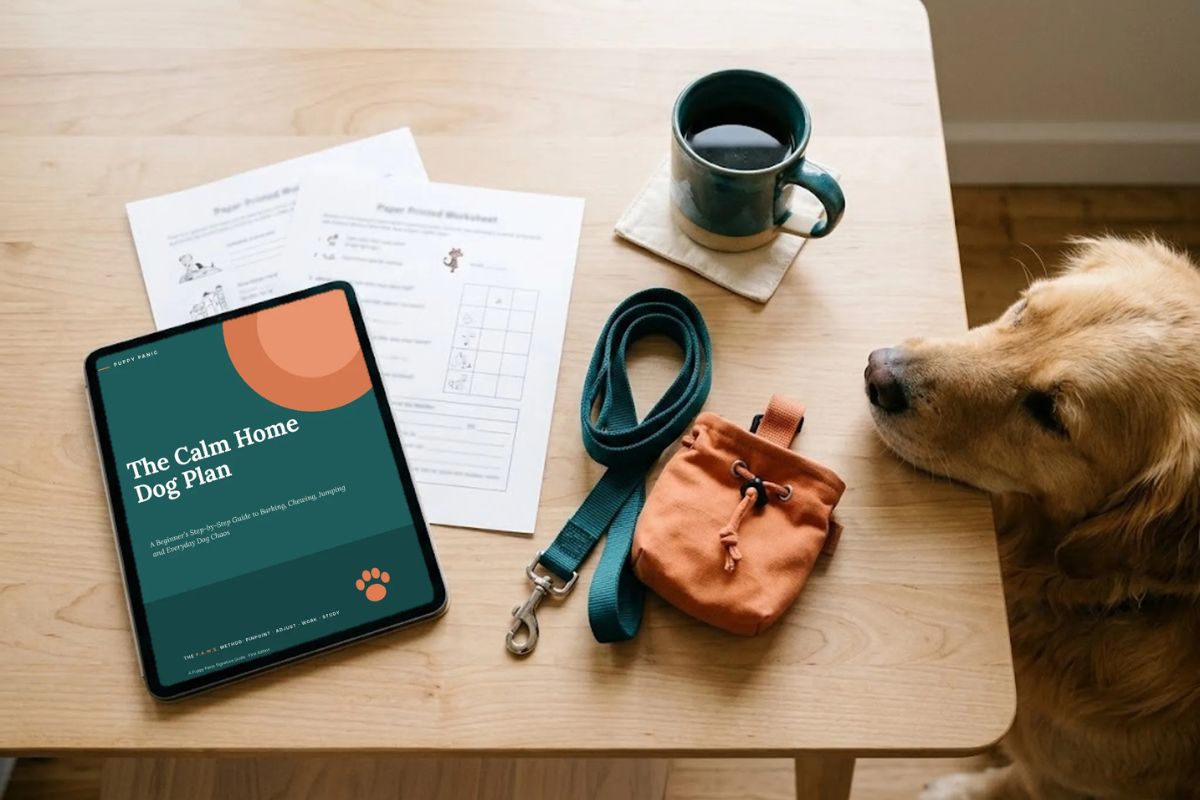
This article gives you the five steps. The Calm Home Dog Plan gives you the whole system, for barking and the rest of the everyday chaos.
Inside the 155-page guide:
- A full chapter on barking, with routines for the doorbell, the window and demand barking, plus a personal barking plan
- Chapters on chewing, jumping on guests, whining and being alone
- 30 printable worksheets, plus a Barking Observation Sheet in the bonus workbook that works like the trigger log in this article
- A 30-day practice plan, so you know what to do each week
- 3 bonus workbooks: the Barking Trigger Detective, the Puppy Potty Training Planner and the Stress-Free Walks Workbook
Reward-based methods only. Instant PDF download for $27, with a 30-day money-back guarantee.