Bringing home a puppy is one of the most exciting experiences for any dog owner. The tiny paws, playful energy, and curiosity quickly make puppies part of the family.
But then comes the biting.
Those small teeth can turn playtime into frustration when your puppy starts biting your hands, clothes, furniture, or anything they can reach.
The good news is that puppy biting is usually not aggression. Puppies explore the world with their mouths, learn through play, and experience teething discomfort.
Why Do Puppies Bite?
1. Puppies Explore With Their Mouths
Puppies use their mouths the way humans use their hands. They investigate new objects, textures, and environments through chewing and biting.
2. Teething Causes Discomfort
Young puppies experience gum discomfort as their adult teeth develop. Chewing helps them relieve this discomfort.
3. Puppies Learn Through Play
Many puppies naturally play by chasing, grabbing, and wrestling. They need guidance to understand that human skin is not a toy.
4. Boredom Can Increase Biting
A puppy without enough mental and physical activities may create its own entertainment through chewing and biting.
7 Ways To Stop Puppy Biting
1. Redirect Your Puppy To Toys
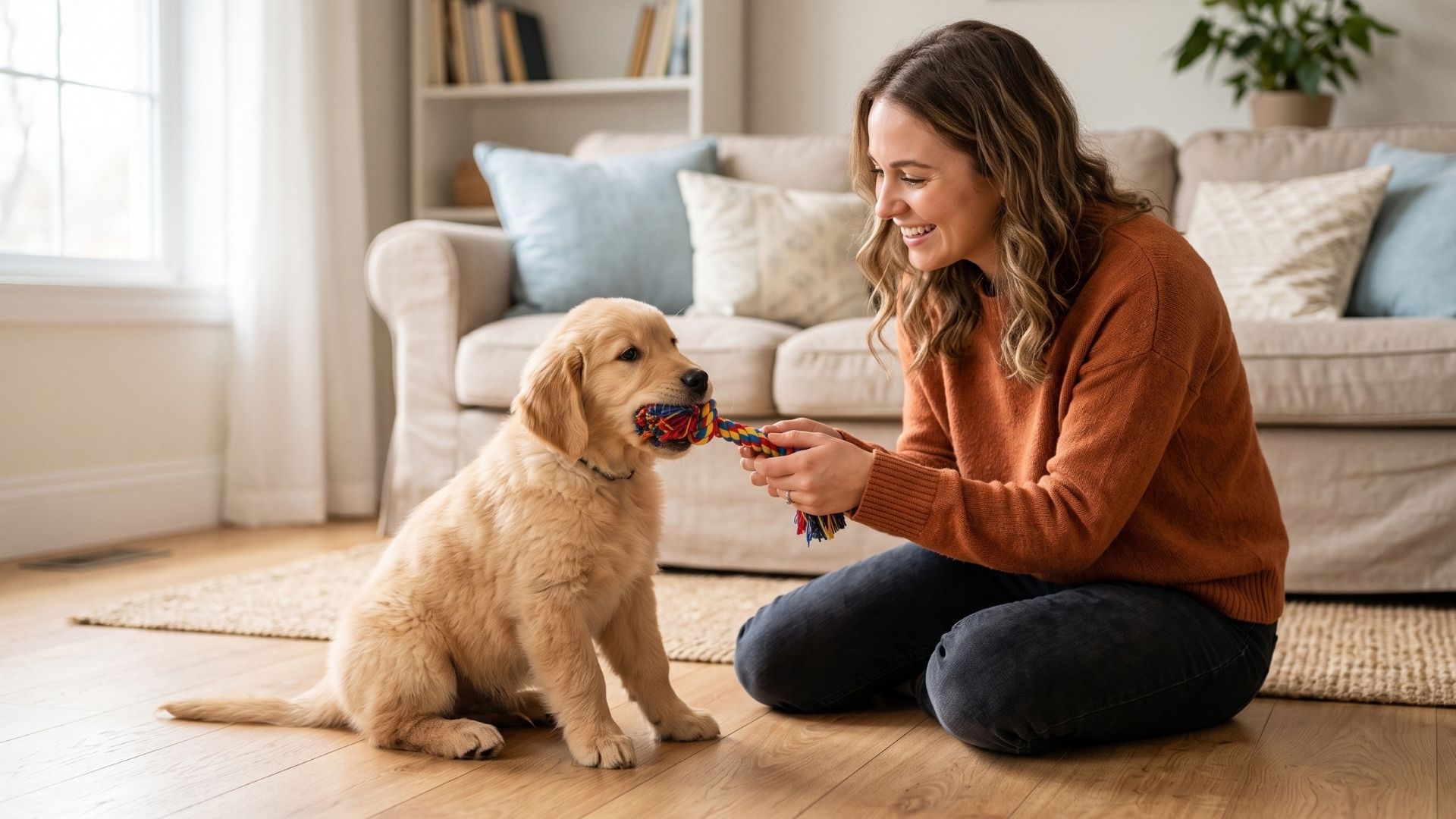
When your puppy bites your hand, calmly remove attention and offer an appropriate chew toy instead. Reward your puppy when they choose the toy.
2. Reward Calm Behaviour
Dogs repeat behaviours that receive positive feedback. Reward your puppy when they relax, sit calmly, or play gently.
3. Avoid Encouraging Rough Play
Using your hands as toys can confuse puppies. Always encourage your puppy to interact with proper toys.
4. Teach Bite Inhibition
Help your puppy understand that very hard biting ends playtime. Consistency helps puppies learn boundaries.
5. Create A Consistent Routine
A predictable daily routine helps puppies understand expectations and reduces unwanted behaviour.
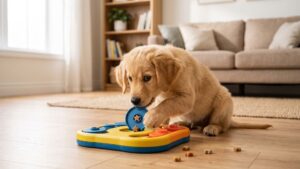
6. Give Your Puppy Mental Stimulation
Physical exercise is important, but puppies also need activities that challenge their minds.
Read our guide: Brain Games For Dogs
7. Keep Training Sessions Short
Puppies have short attention spans. Five to ten minutes of consistent training can be more effective than long sessions.
Build A Smarter, Better Behaved Dog 🧠🐶
Training is not only about stopping unwanted behaviour. Dogs also need mental stimulation, focus exercises, and structured learning.
Explore Brain Training For DogsCommon Puppy Biting Mistakes To Avoid
- Punishing instead of teaching
- Allowing biting sometimes but stopping it other times
- Ignoring your puppy’s need for mental stimulation
- Not providing appropriate chew toys
Can Brain Training Help Puppies?
Brain training does not replace responsible ownership or basic obedience training. However, mental exercises can help dogs develop focus, confidence, and problem-solving skills.
Many owners combine obedience training, play, routines, and mental stimulation to build better relationships with their dogs.
Ready To Start Training Your Dog?
Discover structured training exercises designed to improve focus, engagement, and learning.
Start Brain Training For DogsFrequently Asked Questions
Why does my puppy bite so much?
Puppies bite because they explore with their mouths, experience teething discomfort, and learn through play.
What age do puppies stop biting?
Most puppies naturally reduce biting as they mature when owners provide consistent guidance.
Should I punish my puppy for biting?
Redirecting behaviour and rewarding good choices is usually more effective than punishment.
Do toys help stop puppy biting?
Yes. Appropriate toys give puppies a safe way to chew and play.