Crate training is one of the most valuable skills a new puppy owner can teach. When introduced correctly, a crate can become a safe and comfortable space where your puppy can relax.
However, many owners make the mistake of treating a crate like a place for punishment. This can create fear and make training more difficult.
The goal of crate training is simple:
Help your puppy see the crate as a safe, positive place.
What Is Puppy Crate Training?
Crate training teaches your puppy to become comfortable spending time in their own safe area.
A properly introduced crate can help with:
- Creating a consistent routine
- Helping with house training
- Providing a quiet resting place
- Preventing destructive behaviour when unsupervised
Benefits Of Crate Training Your Puppy
1. Creates A Safe Space
Dogs naturally enjoy having a comfortable place where they can relax. A crate can become your puppy’s personal resting area.
2. Supports House Training
A consistent crate routine can help puppies develop better bathroom habits when combined with regular toilet breaks.
3. Helps Prevent Destructive Behaviour
Puppies explore the world through chewing. A crate can provide a safe environment when you cannot supervise your puppy.
4. Builds Independence
Learning to relax alone helps puppies develop confidence.
How To Crate Train Your Puppy Step By Step
Step 1: Choose The Right Crate Size
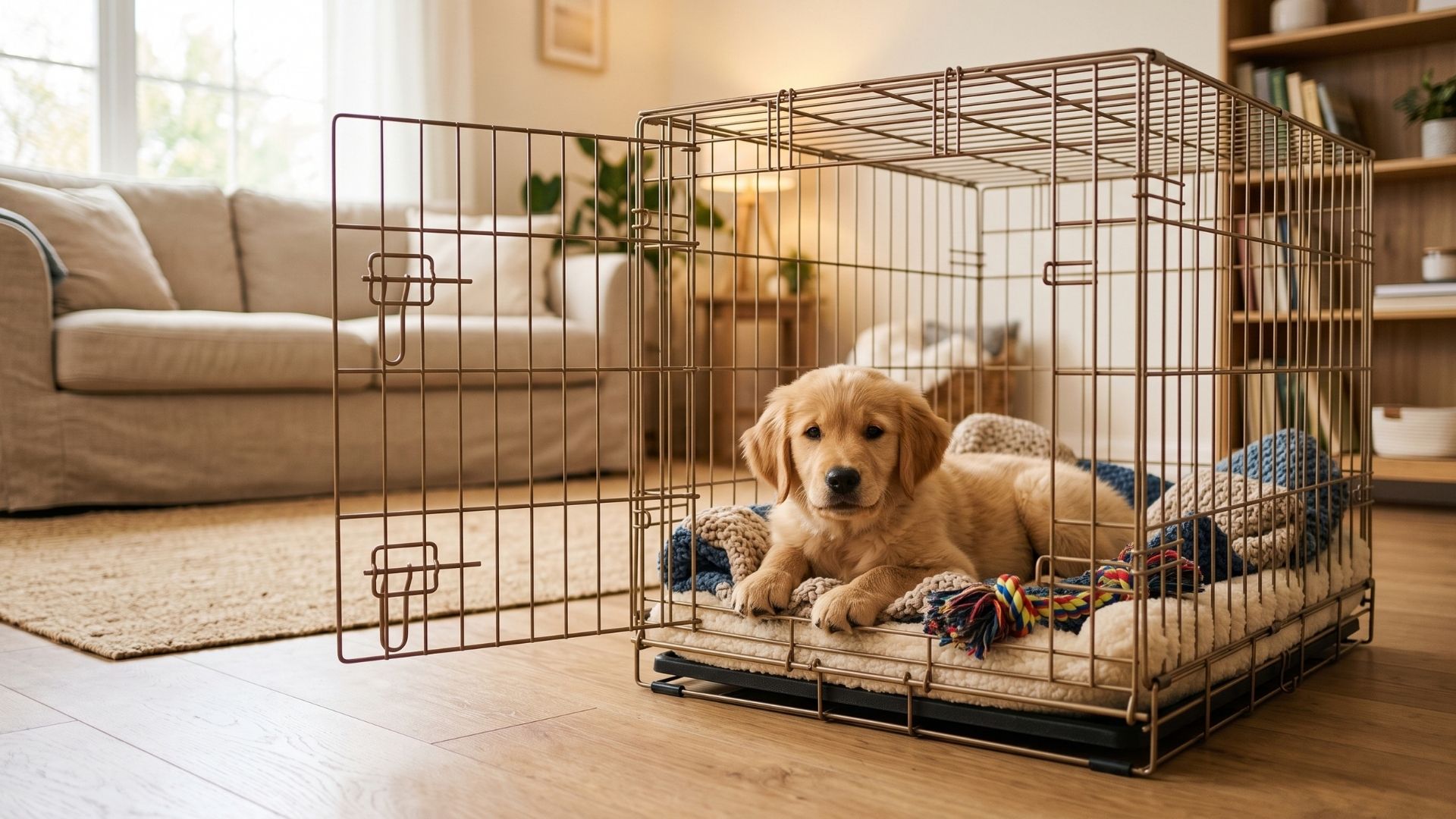
Your puppy should have enough room to stand, turn around, and lie down comfortably.
Step 2: Make The Crate Comfortable
Add comfortable bedding and safe toys. The crate should feel welcoming.
Step 3: Allow Your Puppy To Explore
Do not force your puppy inside. Allow curiosity and reward voluntary exploration.
Step 4: Reward Positive Behaviour
Reward your puppy when they enter, relax, or spend calm time inside the crate.
Step 5: Increase Time Gradually
Start with short periods and slowly increase the duration as your puppy becomes comfortable.
Common Puppy Crate Training Mistakes
Mistake 1: Using The Crate As Punishment
Your puppy should associate the crate with safety, not fear.
Mistake 2: Leaving The Puppy Too Long
Young puppies need frequent breaks, attention, and interaction.
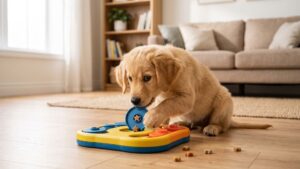
Mistake 3: Ignoring Mental Stimulation
A puppy that receives only physical exercise may still become bored.
Mental activities help puppies develop focus and problem-solving skills.
Read our guide: Brain Games For Dogs: Fun Mental Exercises
Want A Puppy That Learns Faster? 🧠🐶
Crate training builds routine, but dogs also need mental challenges that improve focus and learning.
Explore Brain Training For DogsHow Long Does Crate Training Take?
Every puppy learns differently. Some puppies adjust quickly, while others need more patience and gradual introduction.
The key is consistency, positive experiences, and avoiding pressure.
Can Brain Training Help Crate Training?
Brain training does not replace crate training, but mental stimulation can support better focus, confidence, and learning.
A puppy that learns problem-solving skills and responds well to training may find new routines easier to understand.
Build Better Habits With Your Dog
Discover structured brain training exercises designed to improve obedience, focus, and engagement.
Start Brain Training For DogsFrequently Asked Questions
Is crate training good for puppies?
Yes. When introduced positively, crate training can provide puppies with a safe resting area and support routine development.
How long does it take to crate train a puppy?
The time varies depending on the puppy, consistency, and training approach.
Should puppies sleep in crates?
Many owners use crates as a safe sleeping area while helping puppies develop healthy routines.
Can crate training stop destructive behaviour?
Crate training can help prevent unwanted behaviour when puppies are unsupervised, especially when combined with proper exercise and training.