
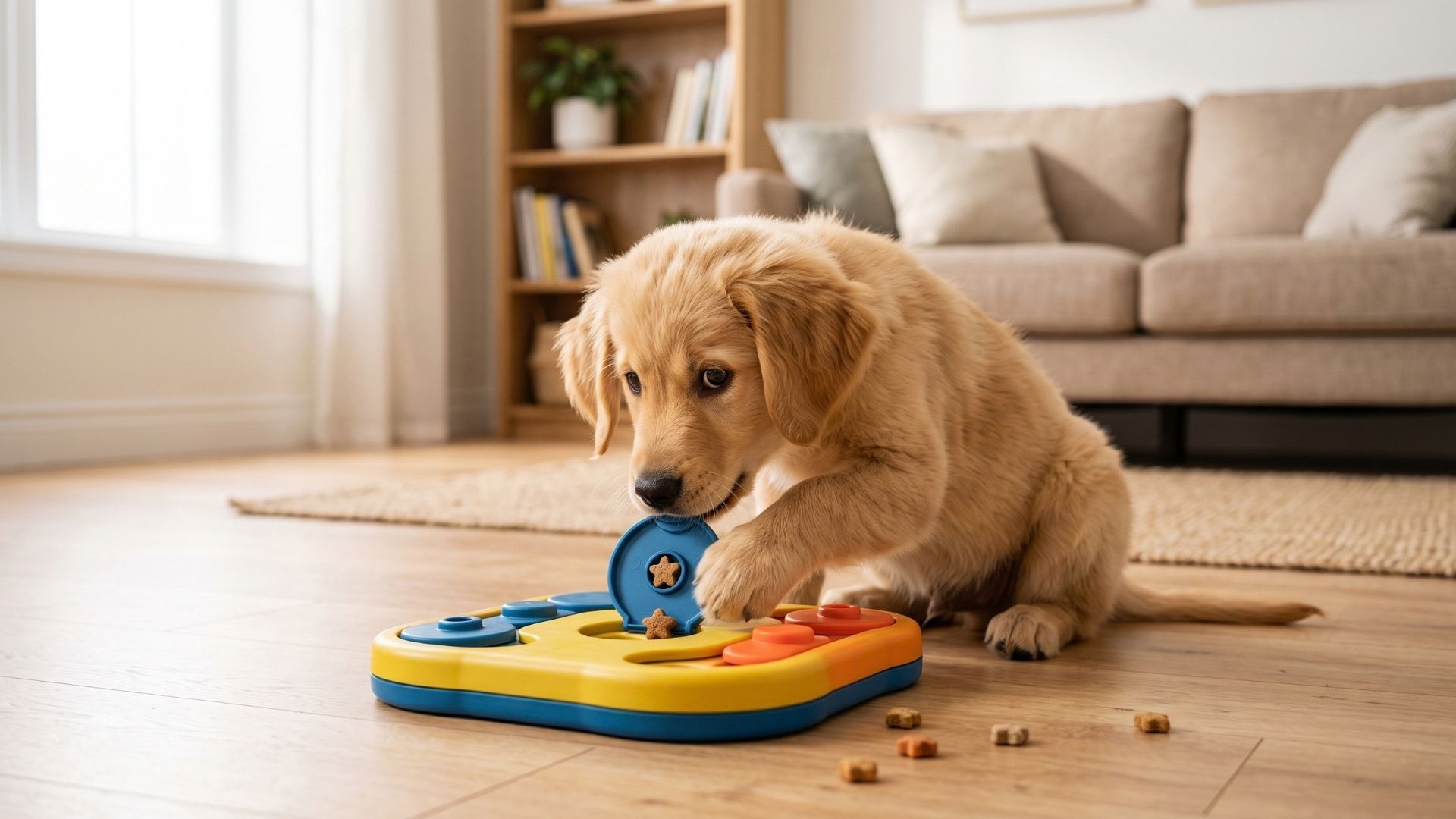
Disclosure: This article contains affiliate links. If you purchase through some links on this page, Puppy Panic may earn a commission at no additional cost to you.
A dog can have a long walk and still be bored. Exercise tires the body, but it does not always give the brain enough to do.
Brain games for dogs are short, simple activities that encourage problem-solving, focus, and confidence. Most need nothing more than a few treats and a bit of floor space, and you can start today.
Why Do Dogs Need Mental Stimulation?
Dogs are natural problem-solvers. They like to sniff, explore, and work out how to earn a reward. When that instinct has nowhere to go, some dogs find their own entertainment, such as:
- Excessive barking
- Chewing furniture or shoes
- Restlessness and pacing
- Digging
- Constantly seeking attention
Boredom is not the only cause of these behaviours, but it is a common one, and it is often the easiest to fix. Brain games give your dog a healthy outlet for the same energy.
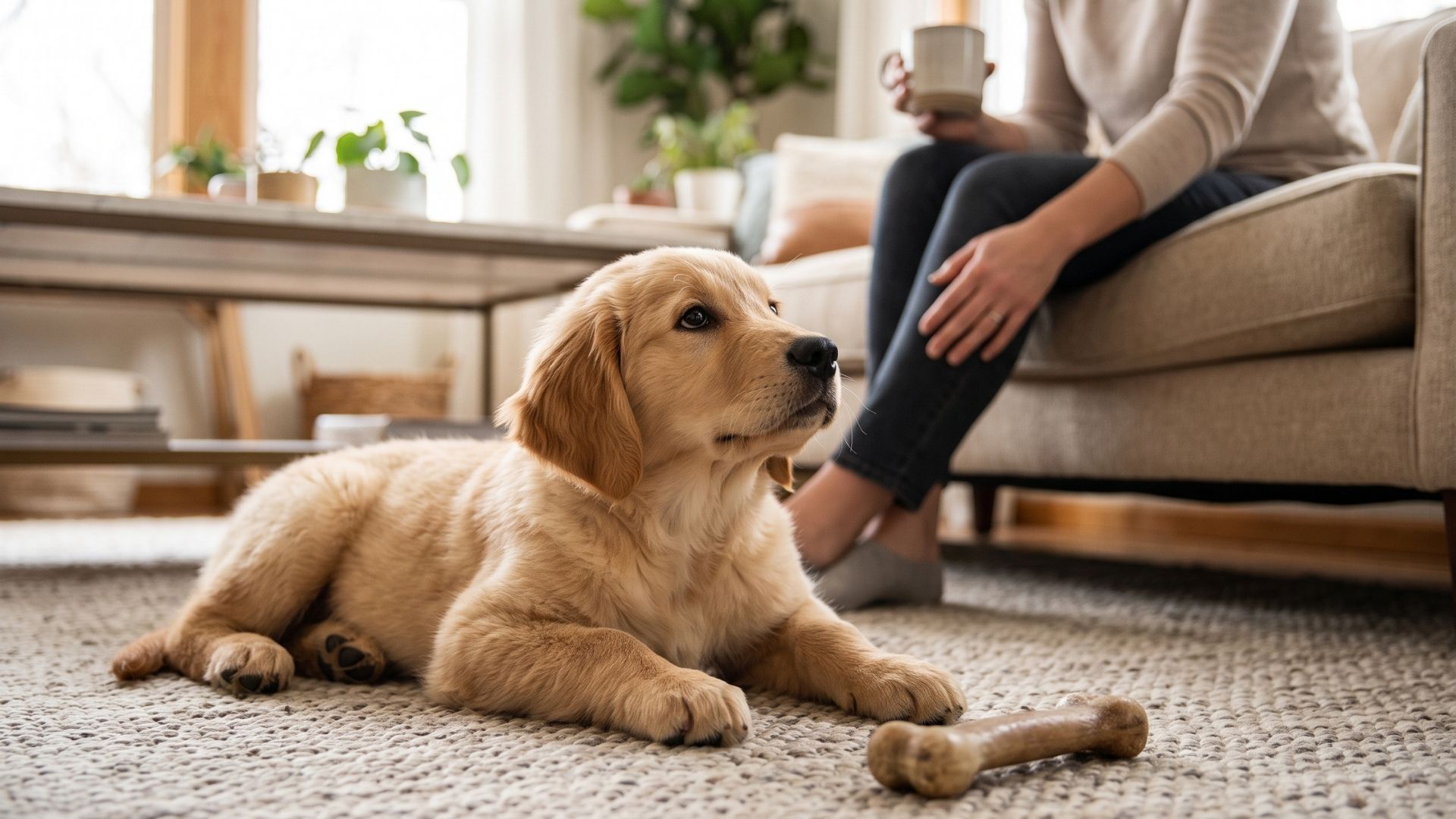
Before You Start: Quick Tips
- Keep sessions short. Five to ten minutes is plenty. Stop while your dog is still keen.
- Start easy. A game your dog can win builds confidence. Make it harder one small step at a time.
- Use small treats. Pea-sized pieces, or part of your dog’s normal meal, so the extra calories do not add up.
- Stay close. Supervise any game that involves toys, treats, or objects your dog could chew or swallow.
- End on a success. If your dog is struggling, go back one step and finish with an easy win.
7 Brain Games For Dogs You Can Try Today
1. Hide And Seek
This game builds recall, attention, and a strong habit of checking in with you.
How to play:
- Ask your dog to sit and stay, or have someone hold them gently.
- Hide somewhere easy at first, such as just behind a door.
- Call your dog’s name or say “Come find me!”
- When they find you, give lots of praise and a treat.
🚀 Make it harder: Move to a different room, hide behind furniture, or stay quiet and let your dog search.
💡 Tip: If your dog gets stuck, make a small sound so they can succeed and keep their confidence up.
2. Find The Treat Game
Scent games tap into your dog’s strongest sense, and a few minutes of sniffing can be surprisingly tiring.

How to play:
- Let your dog watch you place a treat on the floor a short distance away.
- Say “Find it!” and let them eat it.
- Repeat, hiding the treat a little further away each time.
- Once they understand, hide treats where they cannot see you put them.
🚀 Make it harder: Hide treats behind table legs, under a corner of a blanket, or in different rooms.
⚠️ Safety: Choose a safe area with no dropped objects, and count your treats so none are left behind.
3. Puzzle Toy Challenge
Puzzle toys make your dog work for a reward. They are especially useful for dogs that spend time indoors or need something to do while you are busy.
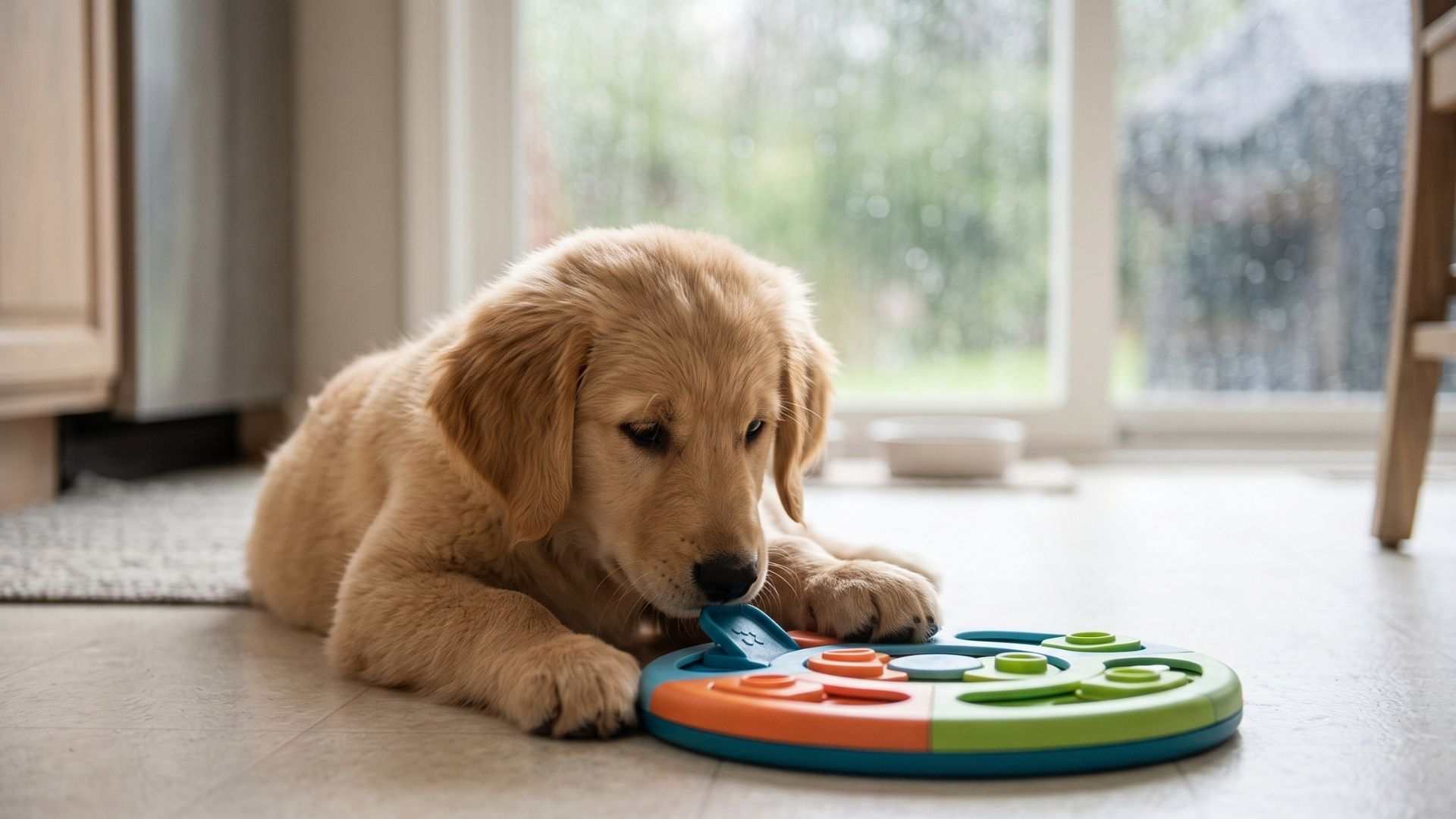
How to play:
- Choose a beginner-level puzzle toy.
- Show your dog the treat inside and let them nudge, paw, or lick it out.
- Help a little at first, then step back as they work it out.
- Move up to harder puzzles once the easy ones become simple.
⚠️ Safety: Supervise your dog, especially at first, and check the toy regularly for damage. Pick a size that suits your dog so it cannot be swallowed.
4. Name Recognition Game
A dog that looks at you when you say their name is much easier to train, and much easier to call away from distractions.
How to play:
- Stand a short distance away in a quiet room.
- Say your dog’s name once, in a cheerful voice.
- The moment they look at you, say “Yes!” and give a treat.
- Repeat a few times, then practise in busier spots.
💡 Tip: Say the name only once. Repeating it teaches your dog that they can ignore you the first few times.
5. Learn A New Trick
Learning something new gives your dog’s brain a proper workout, and it strengthens your bond as a team.
Easy tricks to begin with:
- Touch: your dog bumps your open hand with their nose.
- Spin: lure your dog in a small circle with a treat.
- Shake paws: reward your dog for lifting a paw toward your hand.
- Roll over: a good next step once your dog is comfortable lying down.
How to teach it: Break the trick into tiny steps, reward each small improvement, and keep sessions short. Basic cues such as Stay and Wait are valuable too, but they are better treated as everyday manners than as tricks.
6. Obstacle Course At Home
An indoor or garden obstacle course gives your dog something to think about while they follow your directions.
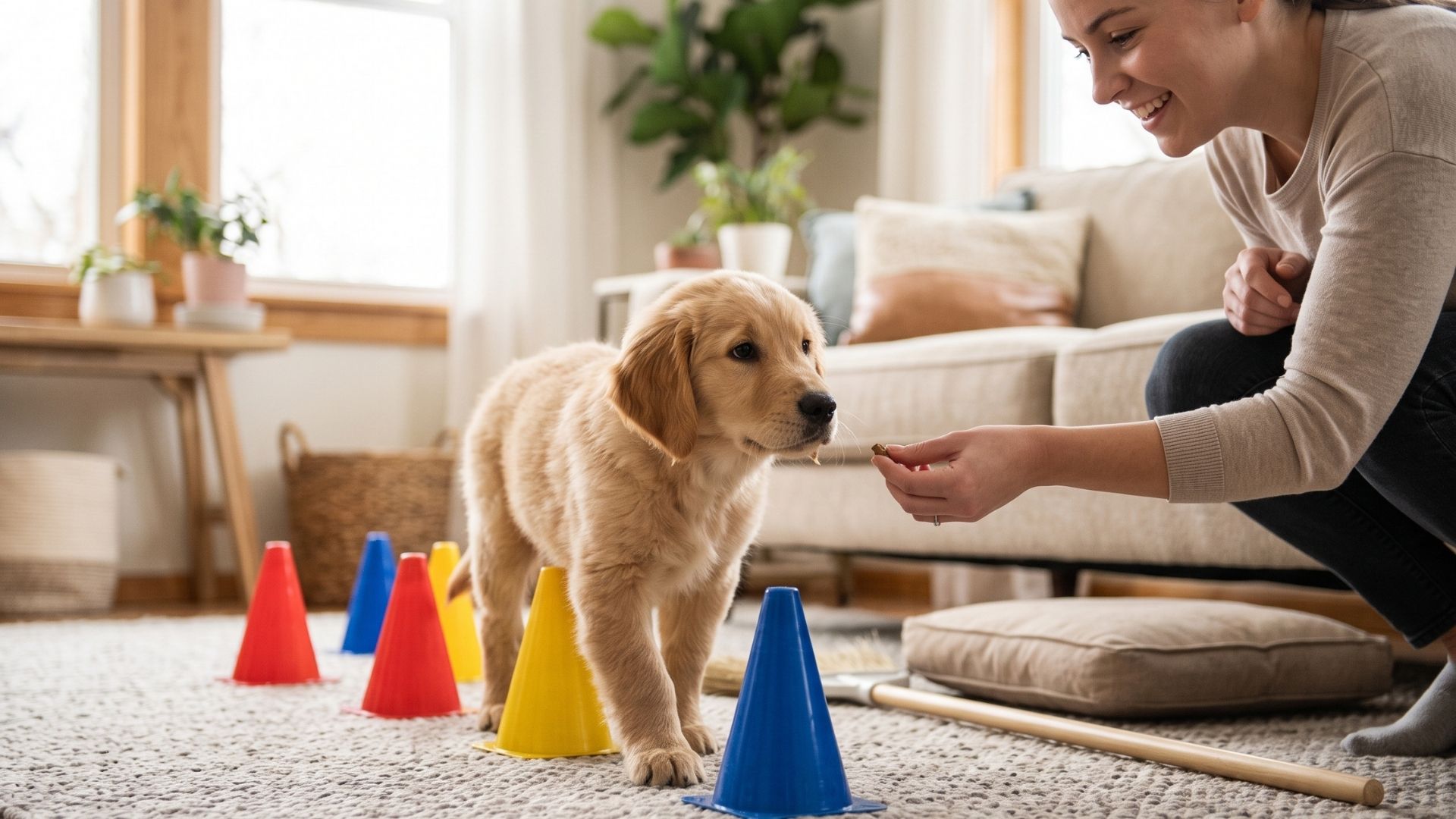
How to set it up:
- Walk around a few chairs or cones in a weaving pattern.
- Step over a broom handle laid flat on the floor.
- Crawl under a low, stable table.
- Hop onto a sturdy, non-slip mat or cushion.
Lead your dog through with a treat at first, then use a hand signal or verbal cue.
⚠️ Safety: Keep everything low, stable, and non-slip. Avoid anything that can tip over or trap your dog, and avoid high jumps for puppies and for dogs with joint problems.
7. Training Challenge Games
This is where you combine skills into a mini session. Choose three or four things your dog already knows and string them together.
Example sequence:
- Name recognition: your dog looks at you.
- Sit.
- Touch.
- Find it: a treat hidden nearby as the final reward.
Mix the order up each time so your dog has to listen rather than guess. Keep it fun and reward generously.
Brain Games Are More Than Entertainment
The purpose of brain games is not only to keep your dog busy. Regular play can help develop:
- Better focus
- Confidence
- Learning ability
- Communication between you and your dog
Brain Games For Puppies vs Adult Dogs
🐶 Puppies
Puppies learn fast but tire quickly, so keep sessions very short, a few minutes at a time. Good starting games include name recognition, simple find-the-treat, and a very easy hide and seek. Puppies are also a good age to introduce gentle obstacle play, such as walking over different surfaces.
Brain games are also a good way to burn off energy between naps. If you are working on bedtime routines, our Puppy Crate Training Guide shows how calm routines and mental play fit together.
🐕 Adult Dogs
Adult dogs can handle longer sessions and more challenge. Try harder puzzle toys, scent searches across several rooms, multi-step tricks, and full training challenge sequences.
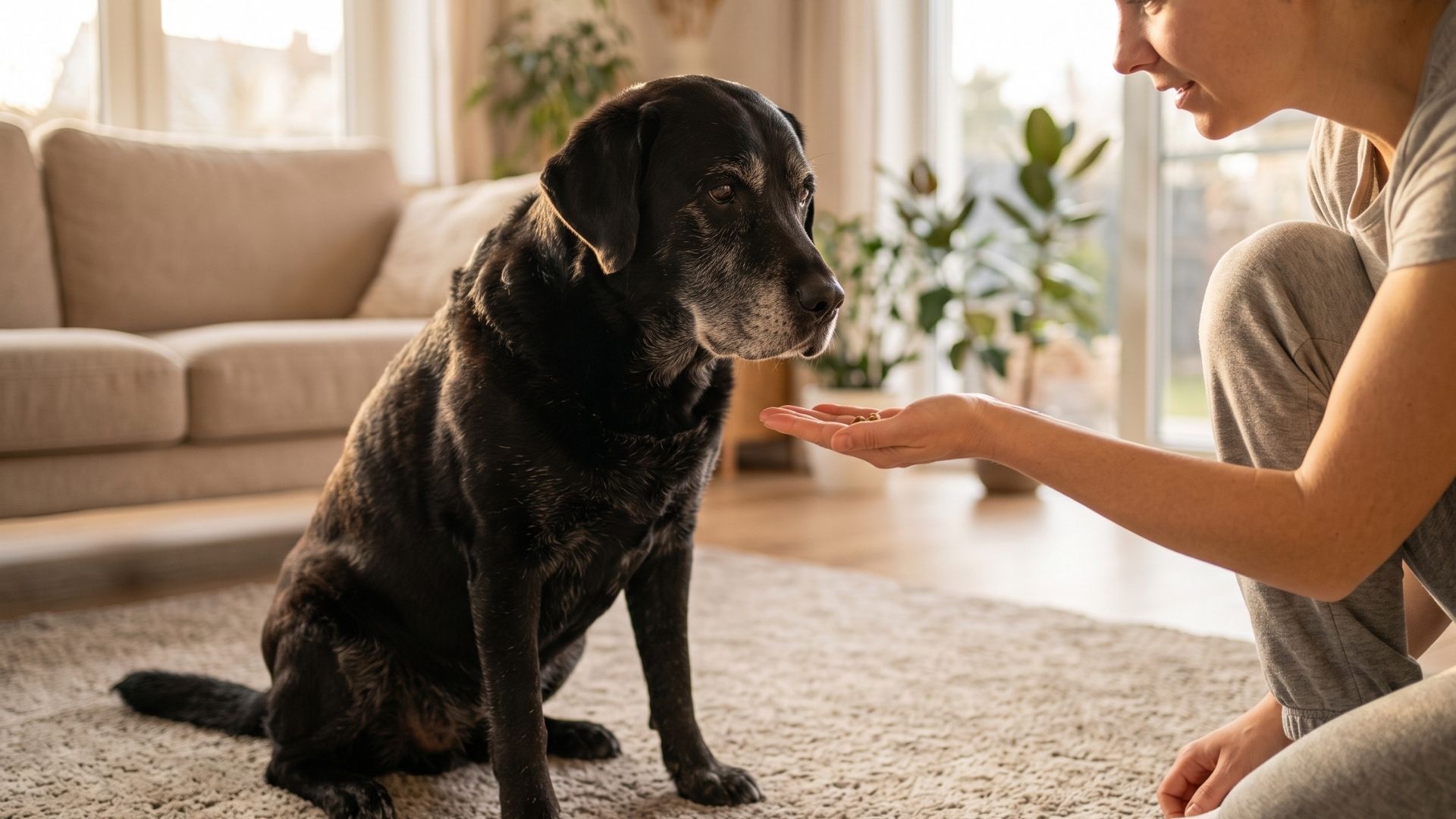
🦮 Senior Dogs
Older dogs still enjoy using their minds, but they may tire more easily or have stiff joints. Favour gentle, low-impact games such as sniffing for treats, simple puzzle feeders, and easy tricks. If your senior dog seems confused, restless at night, or loses interest in things they used to enjoy, mention it to your vet.
How Often Should Dogs Play Brain Games?
There is no single perfect schedule, but a good starting point is five to ten minutes once or twice a day. Many owners fit a short game into daily routines, such as a scent search before dinner or a trick before a walk.
Watch your dog. Signs of enthusiasm include bright eyes, a wagging tail, and eagerness to start again. If your dog turns away, yawns, or seems frustrated, the game is too hard or has gone on too long. Make it easier or stop for the day.
Can Brain Training Improve Dog Behaviour?
Mental stimulation alone does not solve every behaviour problem, but it can support better learning and communication. A dog with a healthy outlet for their energy is often calmer and easier to train.
Combined with consistency, positive reinforcement, and proper routines, brain activities become an important part of good dog training. If your dog shows persistent aggression, severe anxiety, or sudden changes in behaviour, speak with your vet or a qualified trainer.
Want A Complete Dog Brain Training System? 🧠🐶
If you enjoy these simple brain games, you may want a structured approach that guides your dog through progressive exercises, step by step.
Explore Brain Training For DogsNot sure yet? Read our Brain Training For Dogs Review to see what is included.
You May Also Like
Frequently Asked Questions
What are brain games for dogs?
Brain games are short activities that encourage dogs to think, search, learn, and solve problems, such as scent games, puzzle toys, and trick training.
Do brain games tire dogs out?
Often, yes. Focused mental work can be surprisingly tiring, and many dogs settle more easily after a short session. It does not replace physical exercise, so aim for a mix of both.
How often should I do brain games with my dog?
Five to ten minutes once or twice a day is a sensible start. Puppies and seniors may prefer even shorter sessions.
Can brain games help a bored dog?
Yes. They give a bored dog something productive to do and can reduce boredom-related behaviours like chewing and barking, though other causes should be ruled out if the behaviour continues.
What if my dog does not seem interested?
Try higher-value treats, a quieter room, or an easier version of the game. Some dogs need a few sessions to understand what is being asked.
Are brain games safe for puppies?
Yes, when they are short, gentle, and supervised. Avoid high jumps and long sessions while their joints and attention spans are still developing.
Ready To Take Your Dog Training Further? 🎉
Discover a structured approach to improving focus, obedience, and mental engagement.
See Brain Training For Dogs