
Disclosure: This article contains affiliate links. If you buy through them, Puppy Panic may earn a commission at no extra cost to you. As an Amazon Associate, I earn from qualifying purchases.
To look after a puppy in winter: keep their bed off the floor and out of draughts, keep walks short and in daylight, use a coat for small, short-coated or very young puppies, wipe their paws after every walk to remove grit and salt, and keep the toilet routine going even in the rain. Bring your puppy inside straight away if they shiver, lift their paws or slow down.
Your puppy has never seen winter before. Frosty grass, gritted pavements, dark evenings and rain that makes toilet training ten times harder are all brand new, and puppies feel the cold far more than adult dogs do.
This guide covers everything you need for a puppy’s first winter: who feels the cold most, how cold is too cold for a walk, paw care, toilet training in bad weather, keeping your puppy warm indoors, and the warning signs that mean it’s time to head home.
Which Puppies Feel the Cold Most?
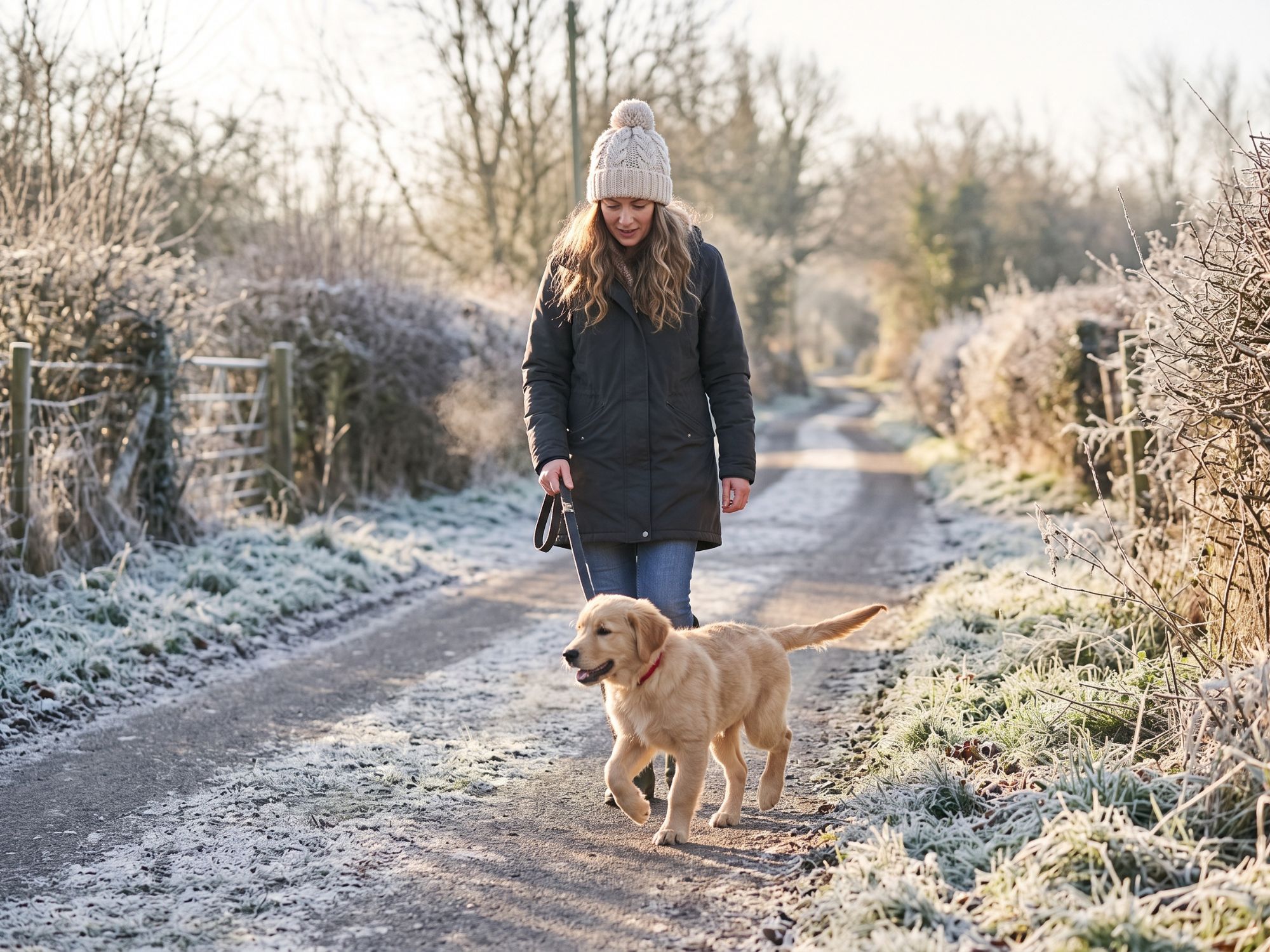
Every puppy is more sensitive to cold than an adult dog, because they have less body fat and are still learning to control their body temperature. Some feel it much more than others.
| Puppy type | Cold risk | Examples |
|---|---|---|
| Toy and small breeds | High | Chihuahua, Yorkshire Terrier, Toy Poodle, Miniature Pinscher |
| Short or thin coats | High | Whippet, Greyhound, French Bulldog, Staffordshire Bull Terrier, Boxer |
| Any puppy under 4 months | High | All breeds |
| Medium breeds with an average coat | Medium | Labrador, Cocker Spaniel, Border Collie, Beagle |
| Thick double coats | Lower | Husky, Malamute, Samoyed, Bernese Mountain Dog |
Good to know: Even thick-coated breeds aren’t fully protected as young puppies, and wet fur loses most of its warmth. A soaked Labrador puppy can get cold quickly on a windy day.
How Cold Is Too Cold for a Puppy?
Use this as a rough guide and adjust for your puppy’s size, coat and age. Wind, rain and wet ground all make it feel much colder.
| Temperature | Small, short-coated or under 4 months | Medium and larger puppies |
|---|---|---|
| Above 7°C (45°F) | Normal walks. A coat on wet or windy days. | Normal walks |
| 0°C to 7°C (32°F to 45°F) | Coat on, shorter walks, keep moving | Normal walks, dry them off afterwards |
| Minus 6°C to 0°C (21°F to 32°F) | Short outings of 10 to 15 minutes with a coat | Shorter walks, watch for paw lifting |
| Below minus 6°C (21°F) | Quick toilet breaks only | Short outings of 10 to 15 minutes |
Signs Your Puppy Is Too Cold
Head home or bring your puppy inside if you see:
- Shivering or trembling
- Lifting paws off the ground, or limping
- Whining, or trying to turn back home
- Slowing down, hunching up, or tucking the tail
- Looking for shelter, or wanting to be picked up
Call your vet straight away if you see: violent shivering that stops suddenly, weakness, extreme tiredness, stiff muscles or slow breathing (signs of hypothermia), or pale, grey or blue skin on the ears, tail tip or paws that feels cold and hard (signs of frostbite). Wrap your puppy in a warm, dry blanket on the way. Don’t rub frostbitten areas or put a hot water bottle directly on the skin.
Winter Walks: 7 Rules
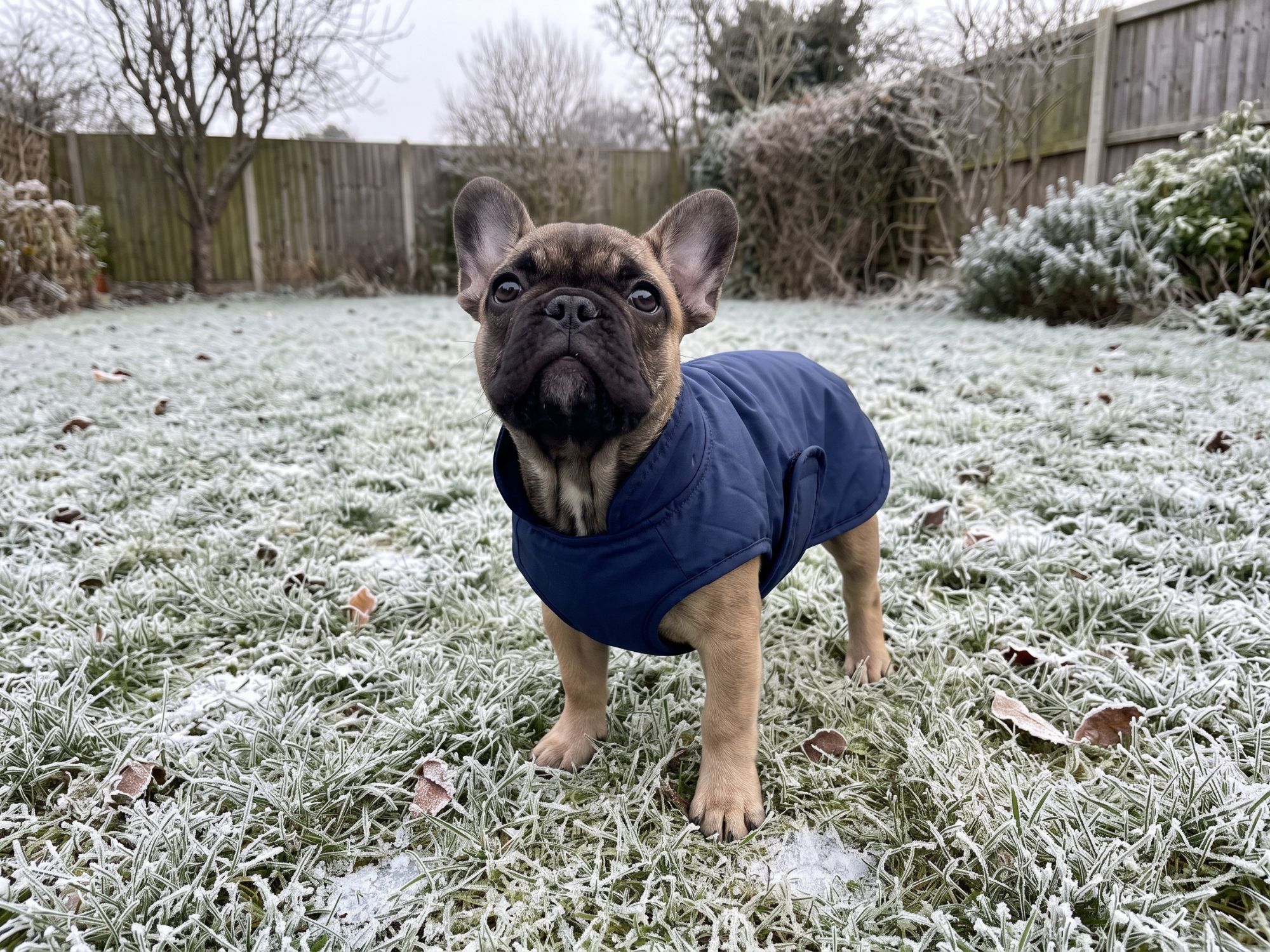
- Walk in daylight. Late morning or early afternoon is the warmest part of the day, and you can see ice and hazards.
- Keep walks short and active. A common rule of thumb for young puppies is around 5 minutes of walking per month of age, up to twice a day. In winter, do several short outings rather than one long one.
- Use a coat if your puppy needs one. See the cold risk table. Pick a coat that covers the chest and belly, not just the back.
- Be seen in the dark. Use an LED collar or clip-on light and wear something reflective yourself.
- Keep your puppy on the lead near water. Never let them onto frozen ponds, lakes or canals. Ice that holds a bird can break under a puppy, and dogs drown trying to climb out.
- Dry them off when you get home. Towel them down, especially the belly, legs and paws.
- Never leave your puppy in a cold car. A parked car in winter cools down like a fridge.
Winter Paw Care
Paws take the biggest hit in winter. Grit, rock salt and de-icers can sting cracked pads and upset your puppy’s stomach if licked off.
After Every Walk
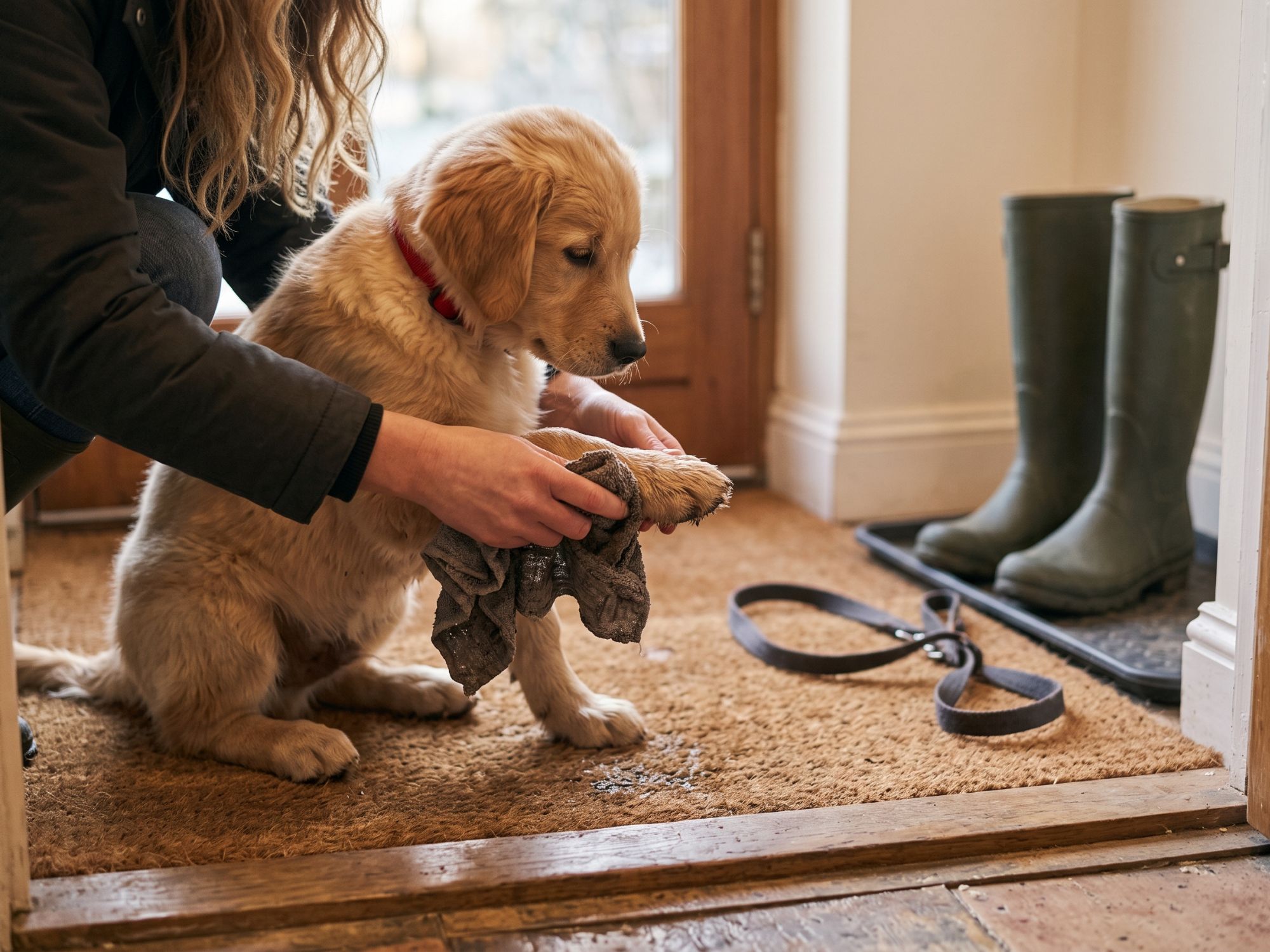
- Wipe each paw with a warm, damp cloth, including between the toes.
- Dry each paw thoroughly.
- Check the pads for cracks, cuts, and balls of ice or snow stuck between the toes.
Once or Twice a Week
- Rub a pet paw balm into the pads to stop them cracking.
- For long-haired breeds, trim the fur between the pads so ice can’t ball up there. Ask a groomer if you’re unsure.
Dog boots: Boots protect paws from grit and ice, but most puppies walk like they’re on the moon at first. Put them on indoors for 1 minute at a time with treats, and build up over a week before trying them outside.
The Antifreeze Danger
Antifreeze (ethylene glycol) tastes sweet to dogs, and a very small amount can cause fatal kidney failure. It drips from cars onto driveways and roads, and it’s also found in some screen wash and de-icers.
- Keep your puppy away from puddles near parked cars and garages.
- Store antifreeze and screen wash high up in closed containers, and wipe up spills straight away.
- If you think your puppy has licked any, call your vet immediately. Treatment works best within a few hours, often before signs appear.
For more winter and holiday dangers, see our holiday dog safety guide.
Toilet Training in Winter (When Your Puppy Refuses to Go Out)
Many puppies hate rain, wind and cold grass, so accidents often go up in winter. These steps help:
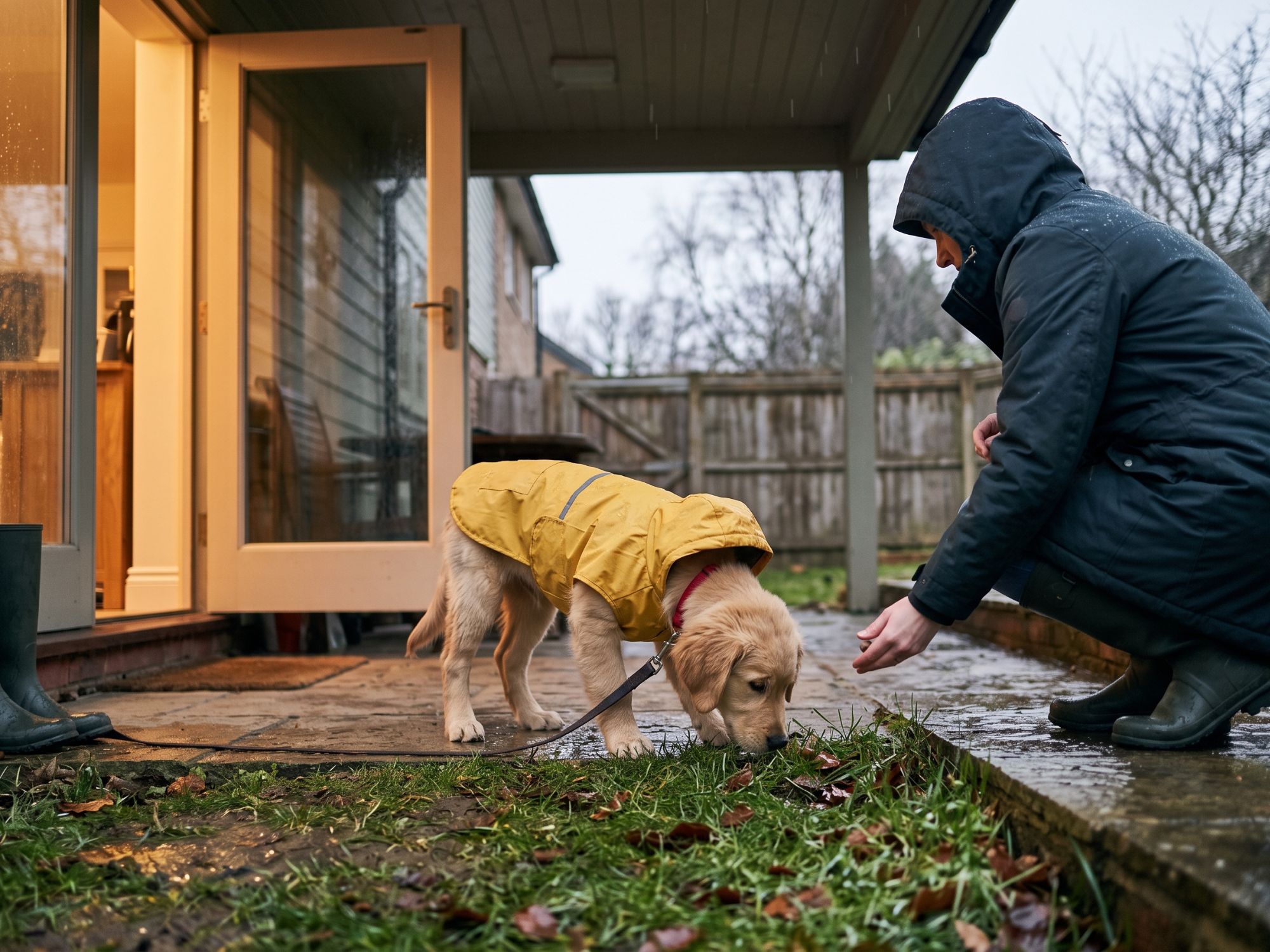
- Make a winter toilet spot close to the door. Clear snow from a small patch, or set up a sheltered area under a porch or awning.
- Go out with your puppy, every time. If you stay inside, they’ll just wait by the door.
- Keep it quick. Stand still, say your toilet cue once, and wait up to 5 minutes.
- Reward straight away, outside. A treat and praise the moment they finish, then head back in. A warm house is a reward too.
- Don’t stretch the gaps. Puppies still need to go after waking, eating and playing, and every 1 to 2 hours in between, whatever the weather.
- Use a coat in the rain. Some puppies who refuse to go in the rain will go happily once they’re dry.
First Winter With a New Puppy?
Our free 19-page New Puppy Owner Survival Guide covers toilet training, biting, night crying and your first 30 days, with printable schedules and trackers.
Download My Free Guide Free PDF · no sign-upKeeping Your Puppy Warm Indoors
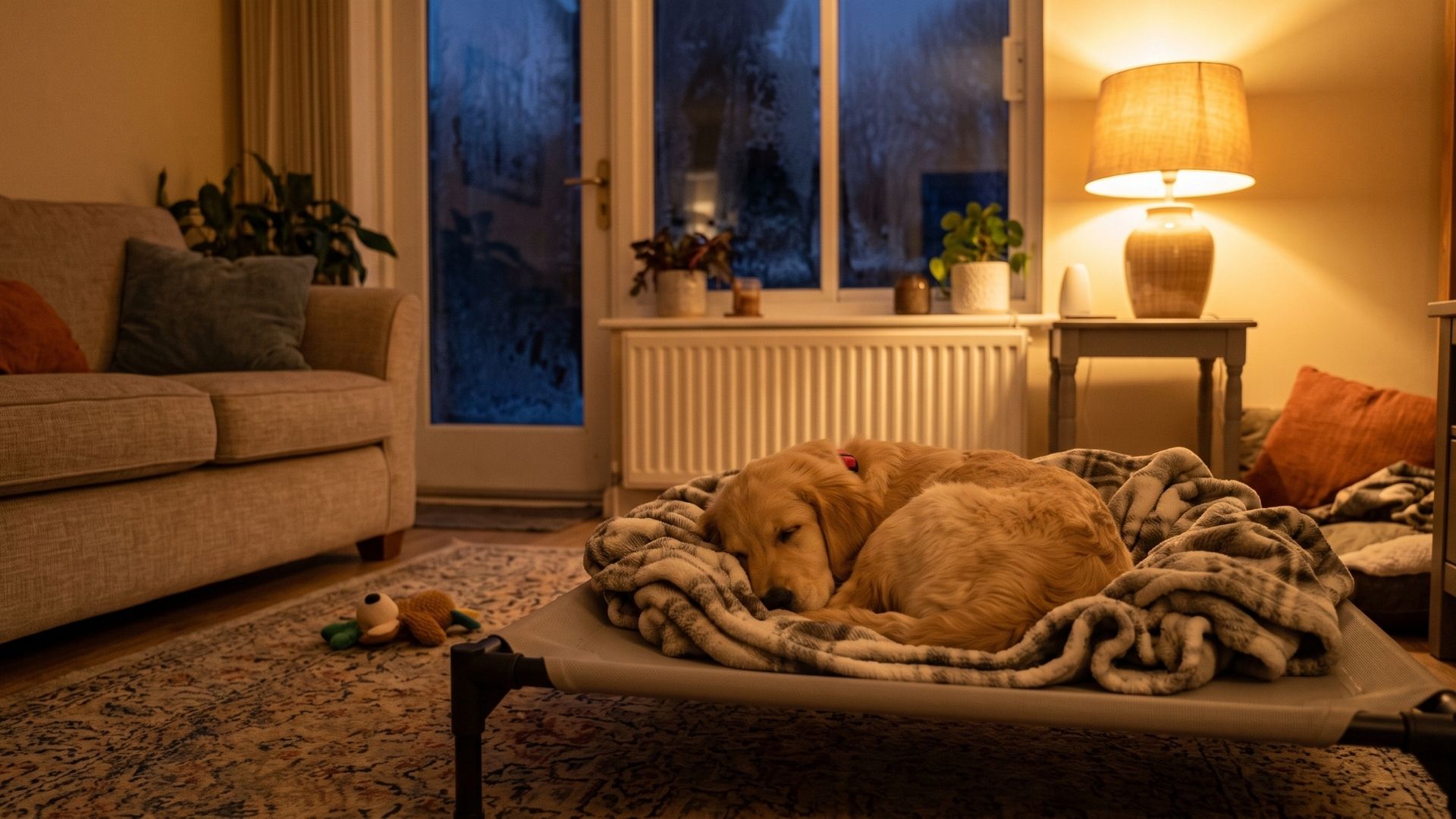
- Raise the bed. Use a raised bed or put a thick mat under the bed so it’s not on a cold floor.
- Block draughts. Keep the bed or crate away from doors, patio windows and cat flaps.
- Not too close to heat. Keep beds at least 1 metre (3 feet) from radiators, fires and heaters so your puppy can move away if they get too hot.
- Guard fires and heaters. Use a fireguard and keep heater cables out of chewing reach.
- Use only pet-safe heat pads. Choose a low-voltage pad designed for pets, with a chew-proof cable, and leave part of the bed unheated. A hot water bottle must be wrapped in a thick towel.
- Cover the crate at night. A blanket over the top and three sides keeps warmth in and makes a cosy den. Leave the front open for air.
Burning Energy When It’s Too Cold to Go Out
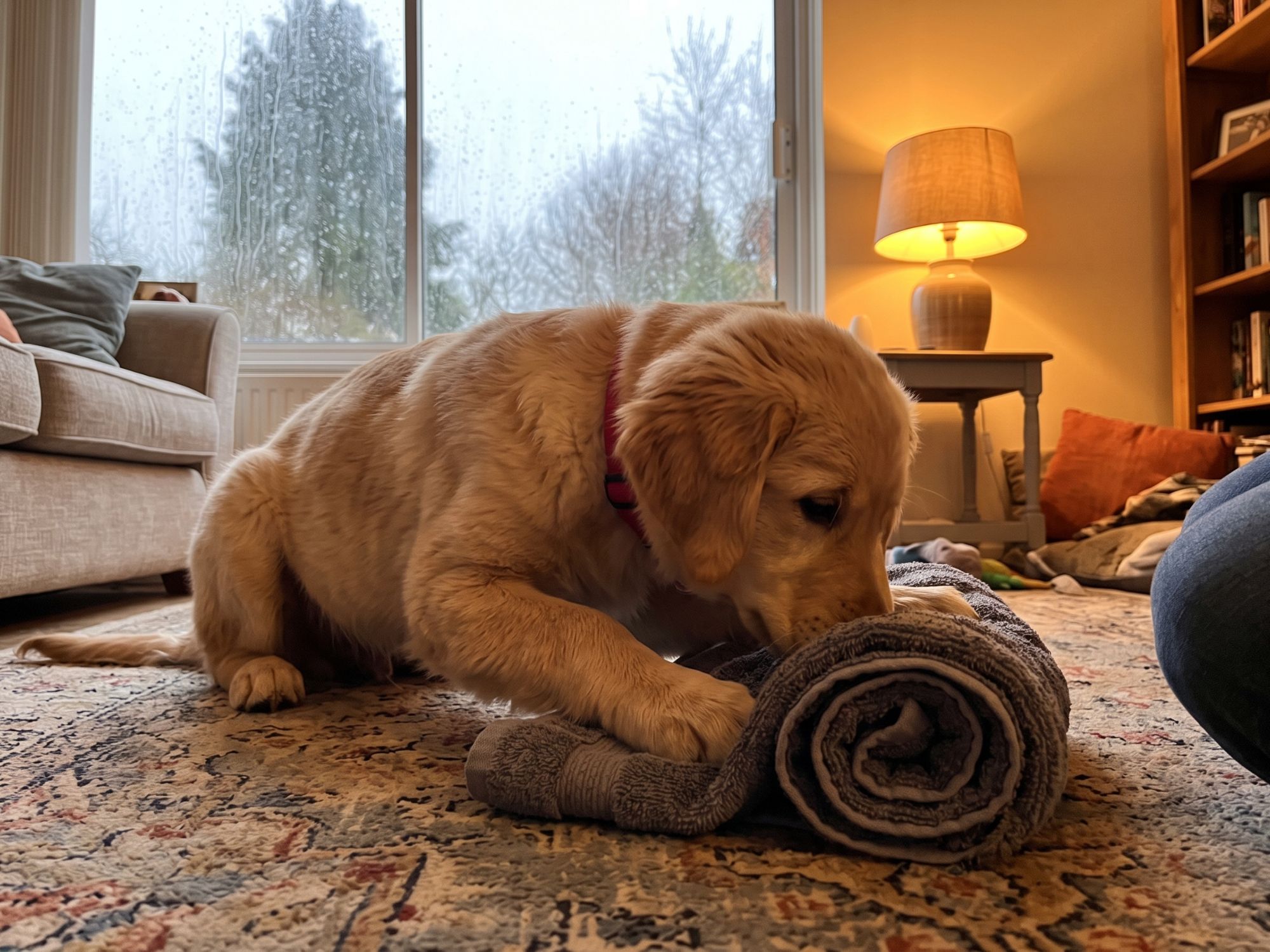
Shorter walks mean more energy indoors. Mental exercise tires a puppy out fast and needs no space. Try the 10 easy games in our brain games for puppies guide. Find It, the Snuffle Towel and Hide and Seek work perfectly on a dark, rainy afternoon.
Grooming, Bathing and Food in Winter
- Don’t shave your puppy. Their coat is their insulation. Brush it regularly instead, as matted fur doesn’t keep them warm.
- Bath less often, and dry your puppy completely before they go outside.
- Dry them after wet walks. A towel or a drying coat stops them getting chilled.
- Food: most puppies who spend winter indoors don’t need extra food. Very active puppies who spend lots of time outside may need a little more. Ask your vet if their weight changes.
- Water: check outdoor water bowls haven’t frozen, and keep fresh water inside, as heating can make the air dry.
- Snow: a mouthful of clean snow is usually fine, but don’t let your puppy eat snow near roads or paths, where it can contain grit, salt and antifreeze.
Winter Puppy Kit
Six things that make a puppy’s first winter easier and safer.
Puppy Coat
For small, short-coated and very young puppies. Look for one that covers the chest and belly, is waterproof, and fastens without tight elastic.
Check price on AmazonMeasure your puppy’s back and chest first.Paw Balm
Protects and soothes pads against grit, salt and cold. Choose one made for dogs that’s safe if licked.
Check price on AmazonLED Collar or Clip-On Light
Makes your puppy visible on dark winter evenings. Rechargeable lights save on batteries.
Check price on AmazonDog Drying Coat or Towel
A microfibre drying coat or towel soaks up rain and snow fast after walks.
Check price on AmazonPet-Safe Heated Pad
A low-voltage pad designed for pets, with a chew-resistant cable and temperature control. Always leave part of the bed unheated.
Check price on AmazonNon-Slip Dog Socks
Soft socks with grippy soles protect paws from cold floors and light grit, and help puppies keep their footing on slippery tiles and laminate. For long walks on icy or heavily gritted routes, sturdy dog boots give more protection.
Check price on AmazonMeasure your puppy’s paw width and check the size chart.5 Common Winter Mistakes
- One long walk instead of several short ones. Short, frequent outings keep your puppy warm and still give them exercise.
- Skipping the paw wipe. Grit and salt left on paws get licked off and swallowed.
- Letting toilet breaks slide. Fewer trips outside means more accidents and slower toilet training.
- Putting the bed right next to the radiator. Puppies need to be able to move away from heat.
- Letting your puppy off lead near frozen water. Thin ice is one of the most serious winter dangers for dogs.
Frequently Asked Questions
Do Puppies Need a Coat in Winter?
Small breeds, short-coated breeds and puppies under about 4 months usually benefit from a coat in cold, wet or windy weather. Thick-coated breeds rarely need one. If your puppy shivers or hunches up on walks, they need a coat.
How Cold Is Too Cold to Walk a Puppy?
For small, short-coated or very young puppies, keep outings to 10 to 15 minutes below freezing (0°C or 32°F), and stick to quick toilet breaks below about minus 6°C (21°F). Larger puppies can manage a little more. See the temperature guide above.
Can Puppies Play in the Snow?
Yes, for short periods. Keep it to 10 to 15 minutes, dry your puppy off afterwards, check their paws for ice balls, and don’t let them eat snow near roads or gritted paths.
Is Rock Salt Bad for Dogs’ Paws?
It can irritate and dry out paw pads, and eating it can cause vomiting and an upset stomach. Wipe your puppy’s paws with a warm, damp cloth after every walk on gritted pavements.
How Do I Toilet Train a Puppy When It’s Cold or Raining?
Go out with them every time, use a sheltered spot close to the door, keep it quick, and reward them the moment they finish. Don’t make the gaps between toilet breaks longer just because of the weather.
Make the Most of the Long Winter Evenings
Dark, cold evenings are the perfect time to work on your puppy’s brain instead of their legs. If you’d like a step-by-step plan for indoor training, Brain Training For Dogs uses positive, reward-based games to build focus, impulse control and calm.
Brain Training For Dogs
Indoor games and lessons for puppies and adult dogs. Perfect for winter.
Explore Brain Training For Dogs Affiliate linkShort daylight walks, clean dry paws and a warm bed away from draughts will see your puppy safely through their first winter. Enjoy the frosty mornings together.
This article is general information and isn’t a substitute for advice from your vet. Temperature guides are approximate; every puppy is different. If your puppy shows signs of hypothermia, frostbite or poisoning, contact your vet immediately.