Quick Answer
To stop a dog jumping on people, manage greetings first with a leash, gate or mat, so your dog can’t practice jumping. Then reward four paws on the floor, teach a simple greeting like a sit, and make sure everyone in the home and every guest follows the same rule: no attention until all four paws are down.
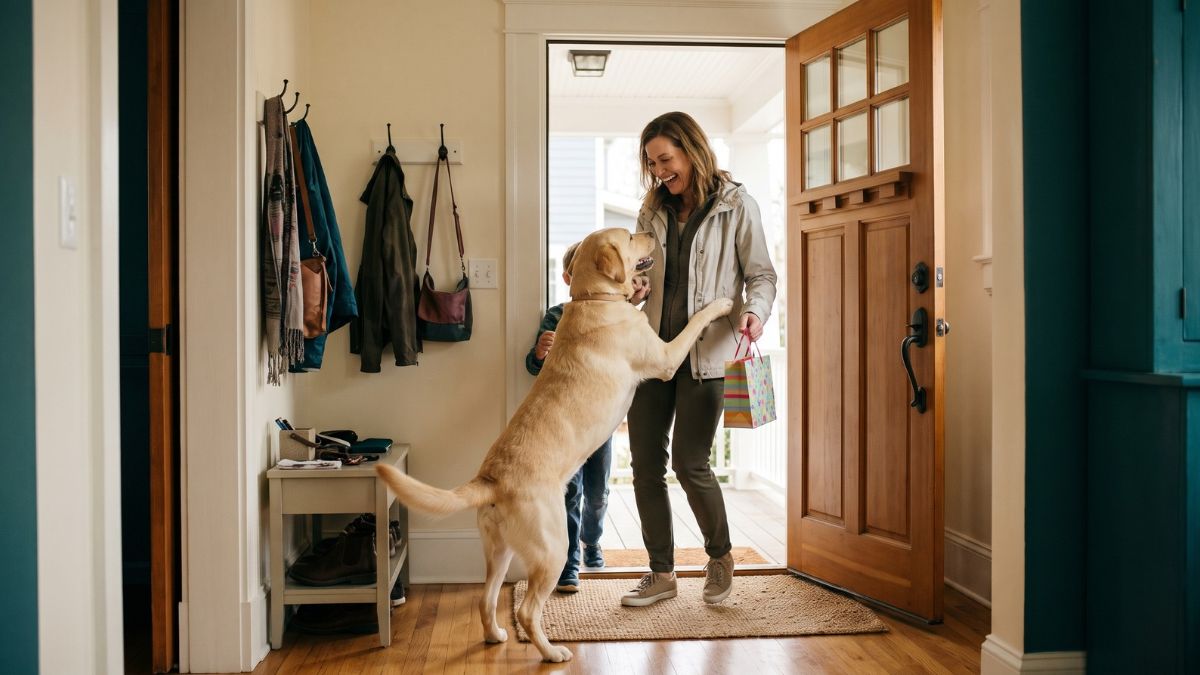
The doorbell rings, you open the door, and before your guest can say hello, your dog is on them: paws on their coat, tongue in their face, tail going a mile a minute.
You apologize, pull your dog away, and wish the floor would swallow you up. If that sounds familiar, you’re far from alone. The good news is that jumping usually gets much better once everyone in the house is working from the same plan.
Why Dogs Jump On People
Most jumping is a greeting. A guide written by board-certified veterinary behaviorists Debra Horwitz and Gary Landsberg notes that dogs usually jump to greet people, and that many dogs seem to prefer face-to-face greetings, the way they greet other dogs. Your face is up there, so your dog goes up to meet it.
Jumping keeps happening because it works. The American Veterinary Society of Animal Behavior uses jumping as an example: dogs jump on people because, when they do, they get attention.
And that attention doesn’t have to be friendly. Pushing, shouting “off” or grabbing paws can feel like part of the game to an excited dog.
That’s why the fix isn’t about being tougher. It’s about making four paws on the floor the fastest way to get the attention your dog wants, and keeping everyone consistent.
The 5 Steps To A Calm Greeting
These steps follow the P.A.W.S. Method from The Calm Home Dog Plan: pinpoint when the jumping happens, adjust the setup, work on a better greeting and study what changes.
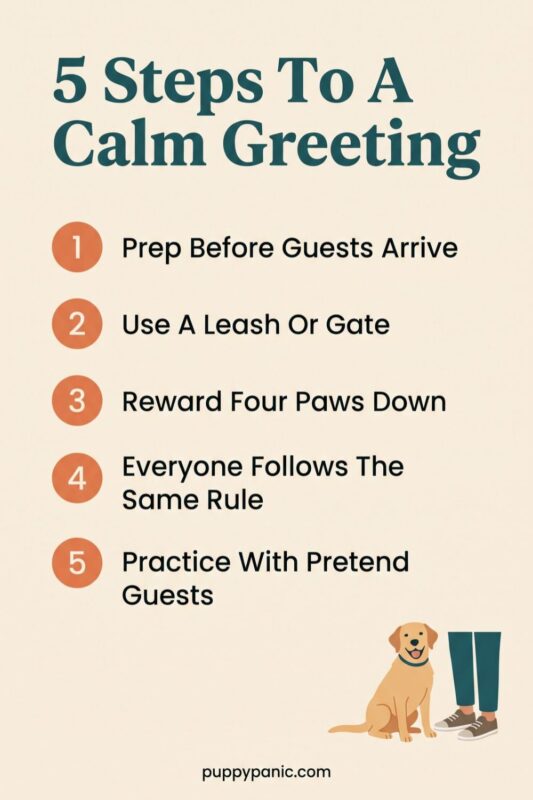
1. Prep Before Guests Arrive
Most jumping happens in the first moments of an arrival, when everyone is excited and nobody has a plan. So make the plan before the doorbell rings. Keep a leash and a pouch of small treats by the front door, set up a gate or a mat, and decide who handles the dog while someone else opens the door.
2. Use A Leash Or Gate
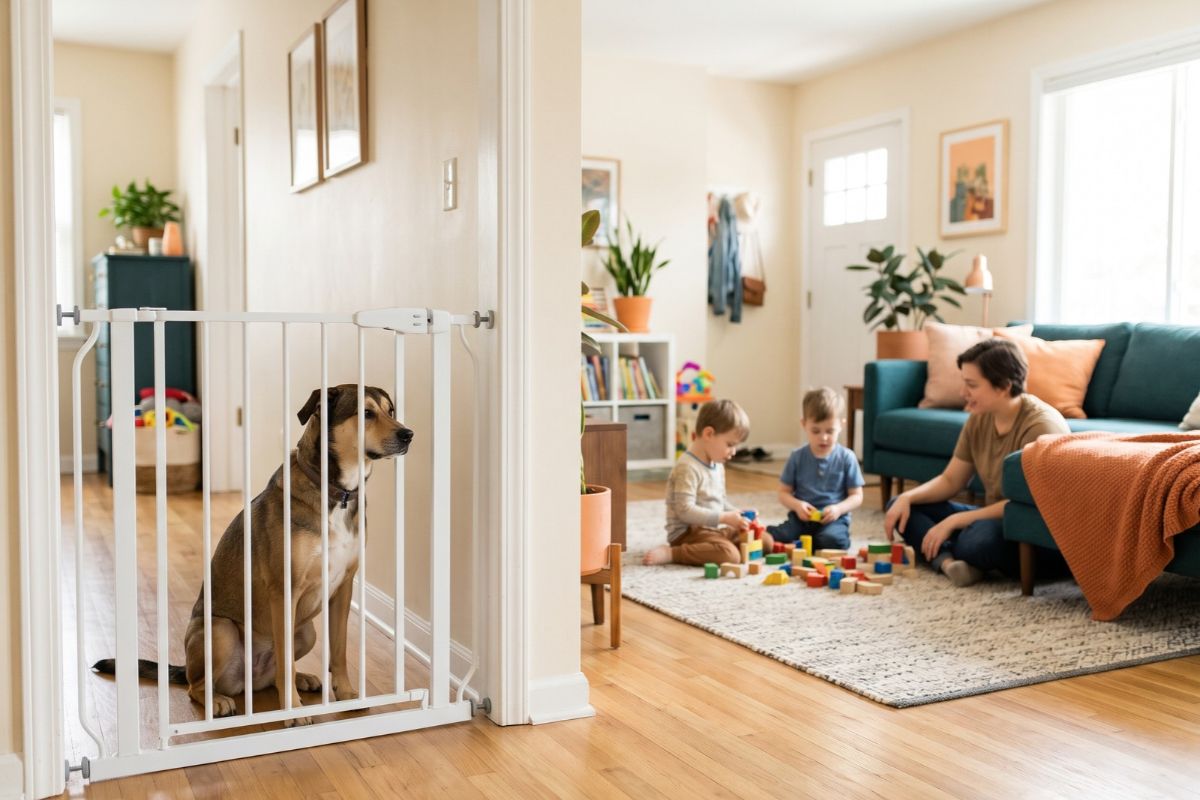
While your dog is learning, they shouldn’t get to practice the old greeting. Put your dog on a leash, behind a baby gate or in another room with a food toy when someone arrives.
Bring them out once the excitement has settled. If your dog also goes wild at the doorbell, our guide to doorbell barking has a practice routine that pairs well with this one.
Some visitors always get this protection, no matter how well training is going: older people, anyone who uses a cane or walker, anyone pregnant, small children and anyone who’s nervous around dogs. Training is for practice sessions with people who’ve agreed to help, not something to test on Grandma.
3. Reward Four Paws Down
The simplest greeting to teach is “four on the floor.” When you come home, before your dog has a chance to jump, scatter a few small treats on the floor at your feet. A dog who’s sniffing for treats isn’t jumping.
Mark it with a calm “yes” and reward again while all four paws are down. Greet your dog at their level, crouching if you can, so they don’t need to come up to reach you.
You can also teach a sit for greetings:
- Hold a treat just in front of your dog’s nose and slowly move it up and back over their head.
- As their head goes up, most dogs’ rear end goes down. The moment it touches the floor, mark and reward.
- After several repetitions, use the same hand movement without a treat in it, and reward from your other hand.
- Add the word “sit” just before the hand movement, then practice near the front door.
4. Everyone Follows The Same Rule
This is where most jumping plans fall apart. If one person pets the dog for jumping while everyone else turns away, the dog learns that jumping sometimes pays, and that’s enough to keep it going.
Agree on one rule for the whole household and every guest: attention only when four paws are on the floor. Tell guests before they come in. Most people are happy to help when you ask.
5. Practice With Pretend Guests
Don’t wait for real visitors to practice. Ask a family member or friend to ring the bell, come in, and greet your dog only when four paws are down.
If your dog jumps, the person simply turns away or steps back out the door, then tries again a few seconds later. Repeat 5 to 10 times in one session. Short, frequent practice beats one long, chaotic evening.
Keep a simple count of jumps per arrival for a couple of weeks. Fewer jumps, shorter jumps and a faster sit are all progress.
How To Stop Dog Jumping On People
Guests are the hardest test, because they’re new, exciting and often encourage the jumping (“Oh, I don’t mind!”). Here’s a simple arrival routine:
- Before the doorbell: leash on, or dog behind a gate or in another room with a chew.
- At the door: greet your guest and ask them to ignore the dog for the first minute. No eye contact, no talking to the dog.
- First minute inside: reward your dog for any calm moment, like four paws down, a sit or sniffing treats on the floor.
- Once your dog settles: let the guest crouch and say a calm hello while your dog is sitting or standing still. If your dog jumps, the guest stands up and turns away, then tries again.
- After hello: give your dog a chew or a food toy on their bed so the excitement has somewhere to go.
How To Stop Your Dog Jumping On You When You Get Home
The welcome-home jump is often the one owners accidentally reward most, because it’s sweet and you’ve missed your dog too. Change the first ten seconds:
- Walk in calmly. Keep greetings low-key until your dog has four paws down.
- Scatter treats at your feet as you step in, before your dog can jump.
- Crouch to say hello once your dog is calm, so they don’t need to jump to reach your face.
- Keep a cup of treats by the door so you’re always ready.
If your dog jumps, don’t push them off. Turn away, wait a few seconds for four paws down, then greet them warmly.
Why Pushing Your Dog Down Doesn’t Stop Jumping
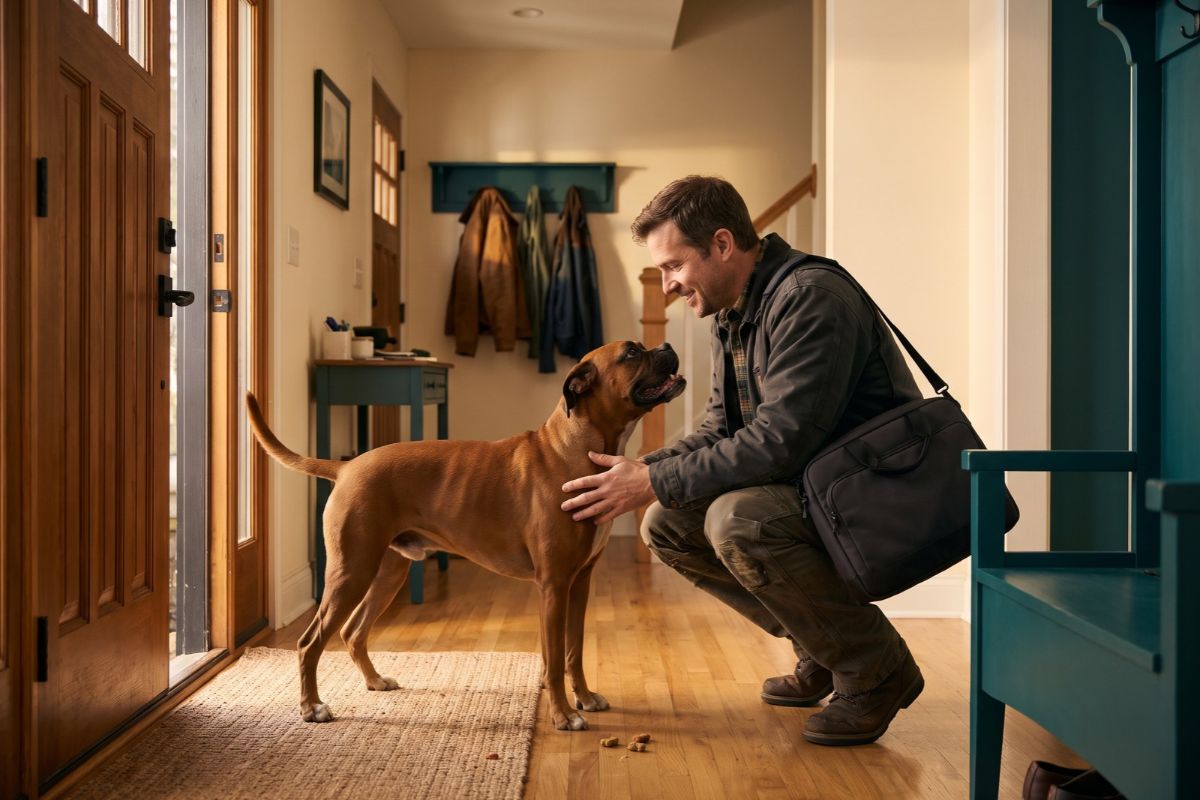
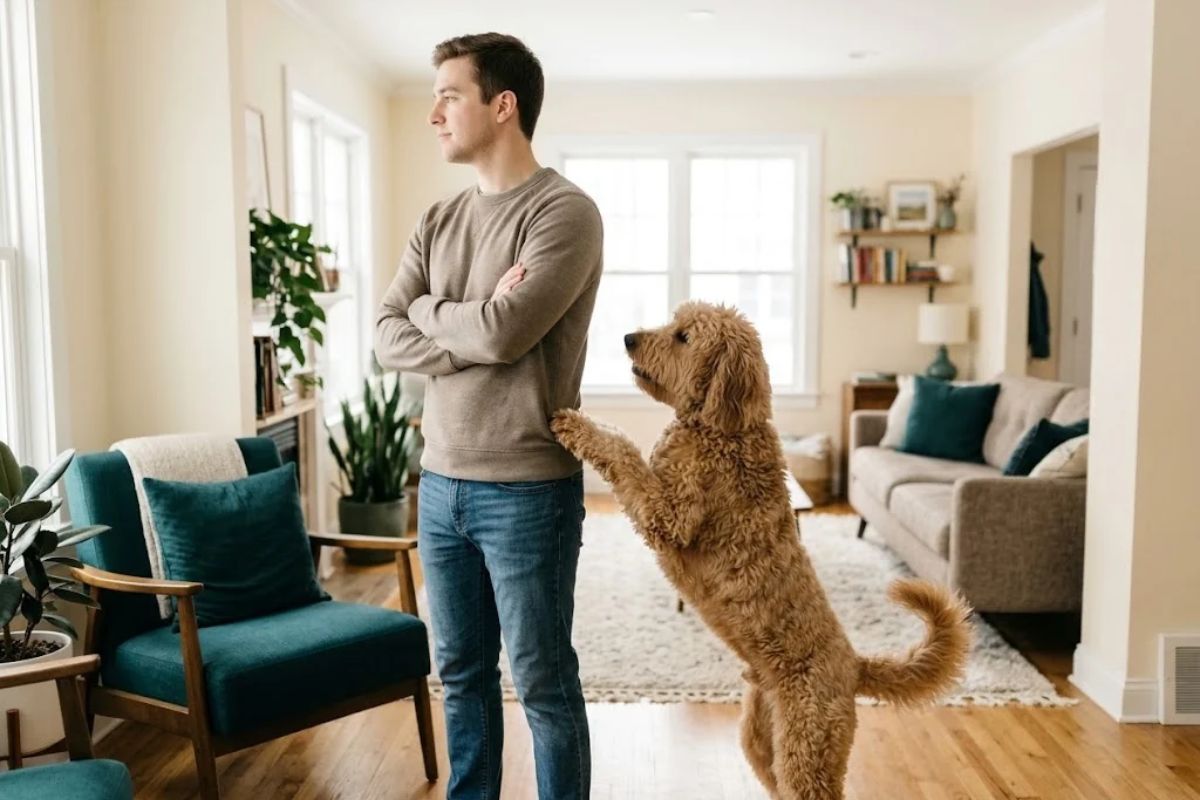
Pushing, kneeing, grabbing paws or shouting “off” are common reactions, but they often keep the jumping going. To an excited dog, hands on their chest and a loud voice can feel like play. Kneeing a dog in the chest can also hurt them and teach them to be wary of people coming close.
Instead:
- Fold your arms and turn away, so jumping earns nothing.
- The moment four paws hit the floor, turn back and reward.
- Ask for the behavior you want, like a sit, before your dog has a chance to jump.
How To Keep Kids Safe From A Jumping Dog
A big, friendly dog can knock over a small child in a second. That makes jumping around kids a safety issue, not just a manners issue.
- Always supervise dogs and young children together.
- Use gates and leashes when kids have friends over or when the house gets busy.
- Teach kids to stand still with their arms folded and look away if a dog jumps. Running and squealing make most dogs more excited.
- Let adults do the training. Kids can help later, once your dog greets calmly with adults.
Guest Arrival Checklist
Run through this before anyone comes over:
- Leash by the door
- Treats in your pocket
- Gate or mat set up
- Guests know the rule: attention only for four paws down
- A chew or food toy ready for after hello
When Jumping Needs More Than Training
Most jumping is friendly excitement. But some greetings are a sign that your dog needs qualified help, not just better manners. Contact your veterinarian or a qualified behavior professional, such as a certified professional dog trainer or a board-certified veterinary behaviorist, if:
- Jumping comes with hard mouthing, nipping, growling or snapping.
- Your dog stiffens, stares hard or freezes when people arrive.
- Your dog shows fear at arrivals, like backing away, a tucked tail, hiding, trembling or urinating.
- Anyone has been injured by your dog’s jumping.
Until you get help, keep your dog on a leash, behind a gate or in another room whenever people arrive. Getting help early keeps everyone safe and usually makes progress faster.
Dog Jumping FAQ
At What Age Do Puppies Stop Jumping Up?
Many puppies don’t grow out of jumping on their own, because jumping keeps earning attention. Most dogs do get calmer as they mature, often between one and two years old, but a consistent greeting routine works much faster than waiting.
How Long Does It Take To Stop A Dog Jumping?
With daily practice and everyone following the same rule, many families see fewer jumps within one to two weeks. Exciting visitors who come rarely usually take longer than family members coming home. Every dog moves at their own pace.
Is It Okay To Knee A Dog For Jumping?
No. Kneeing can hurt your dog, can make them wary of people, and often doesn’t stop the jumping anyway. Turn away until four paws are down, then reward the calm greeting you want.
Why Does My Dog Jump On Me But Not My Partner?
Usually because one of you rewards jumping more often, even by accident, with petting, talking or eye contact. Dogs repeat what pays. Agree on one rule and both stick to it.
Can I Let My Dog Jump On Me Sometimes?
It’s easiest for your dog if the rule never changes. If you love a hug, teach jumping up as a trick on a word like “hug,” and only reward it when you ask. Everyone else still gets four paws on the floor.
Why Does My Puppy Jump And Bite?
Jumping and grabbing at clothes or hands is usually excited play, often in an overtired puppy. Keep a toy handy to redirect the mouth, reward four paws down, and make sure your puppy gets plenty of naps. Our guide to chewing covers puppy mouthing too.
Want The Full Step-By-Step Plan?
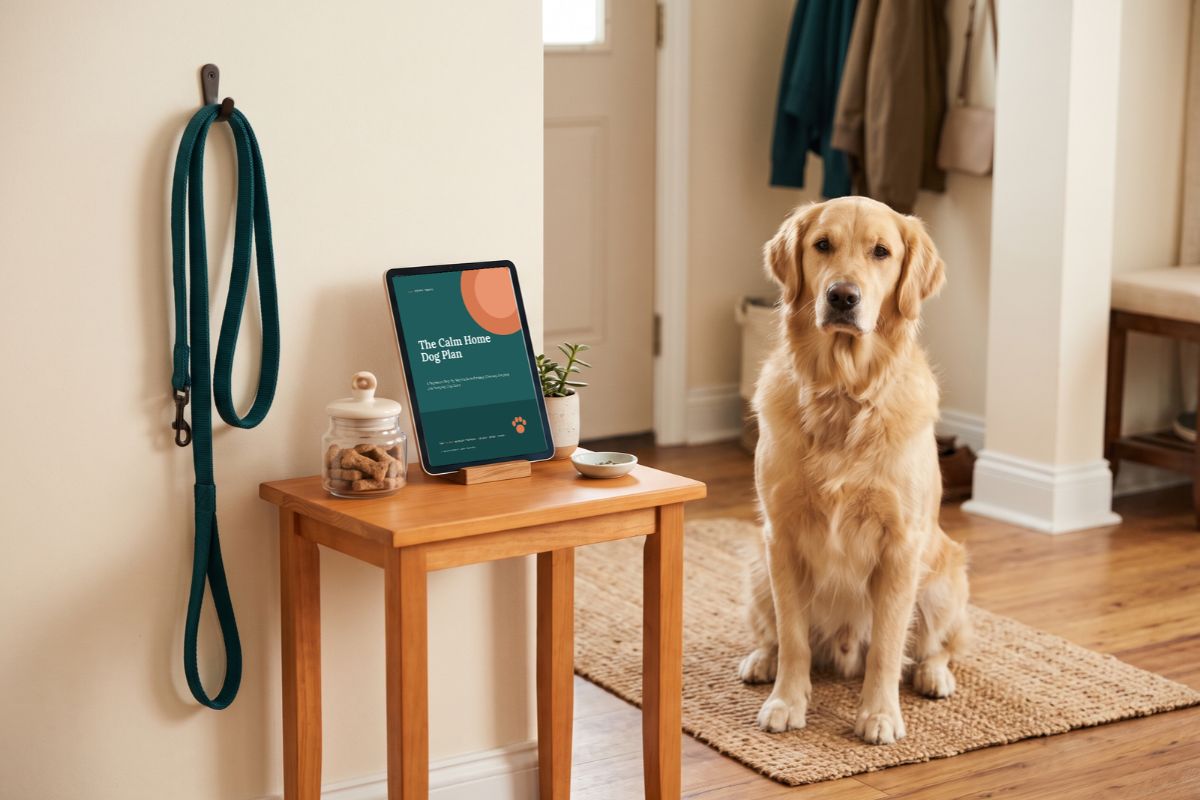
This article gives you the five steps. The Calm Home Dog Plan gives you the whole system, for jumping and the rest of the everyday chaos.
Inside the 155-page guide:
- A full chapter on jumping and greetings, with a greeting plan for each kind of arrival, a visitor script and family roles
- Chapters on barking, chewing, whining and being alone
- 30 printable worksheets to track what’s working
- A 30-day practice plan: observe and prepare, build the daily habit, raise the challenge one step at a time, then practice in real life and review
- 3 bonus workbooks: the Puppy Potty Training Planner, the Stress-Free Walks Workbook and the Barking Trigger Detective
Reward-based methods only. Instant PDF download for $27, with a 30-day money-back guarantee.