Quick Answer
Dogs chew to explore, to ease teething, to pass the time and because chewing simply feels good. To stop destructive chewing, check your dog’s age and health, pick up anything you don’t want chewed, offer safe chews they’re allowed to have, trade instead of chasing, and balance supervision with plenty of rest.
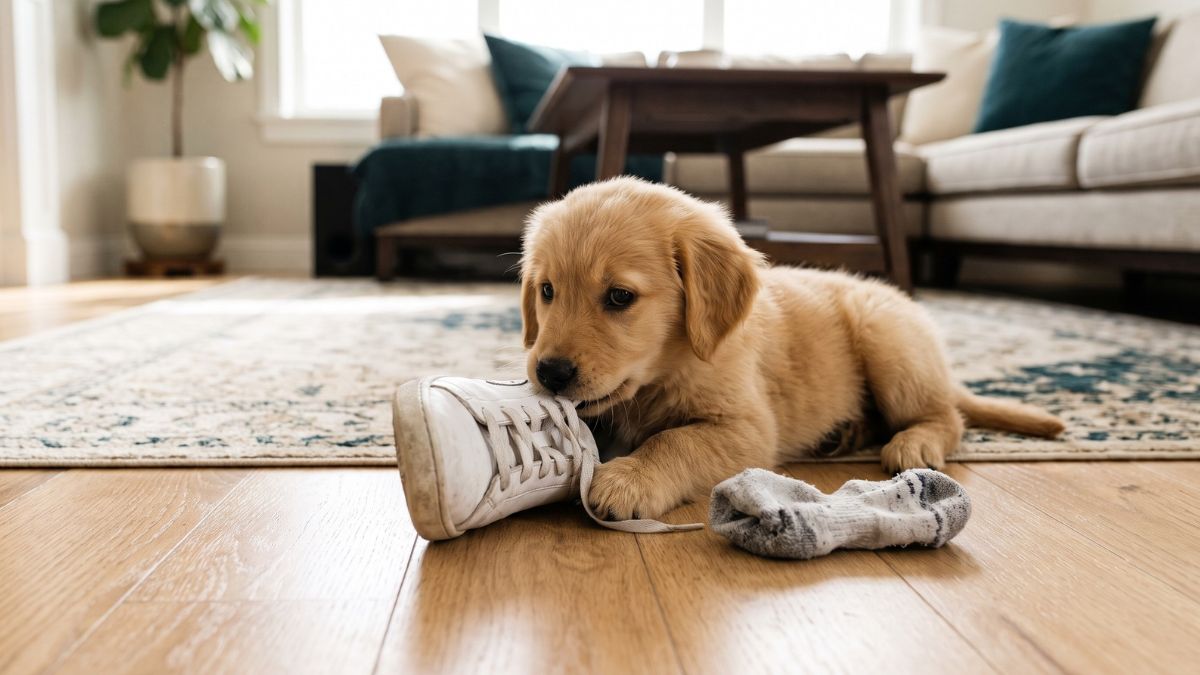
You come home, and there it is again: a chewed shoe, a gnawed table leg, a phone charger in two pieces. It’s frustrating, and it can get expensive. But chewing isn’t a sign that your dog is bad or spiteful.
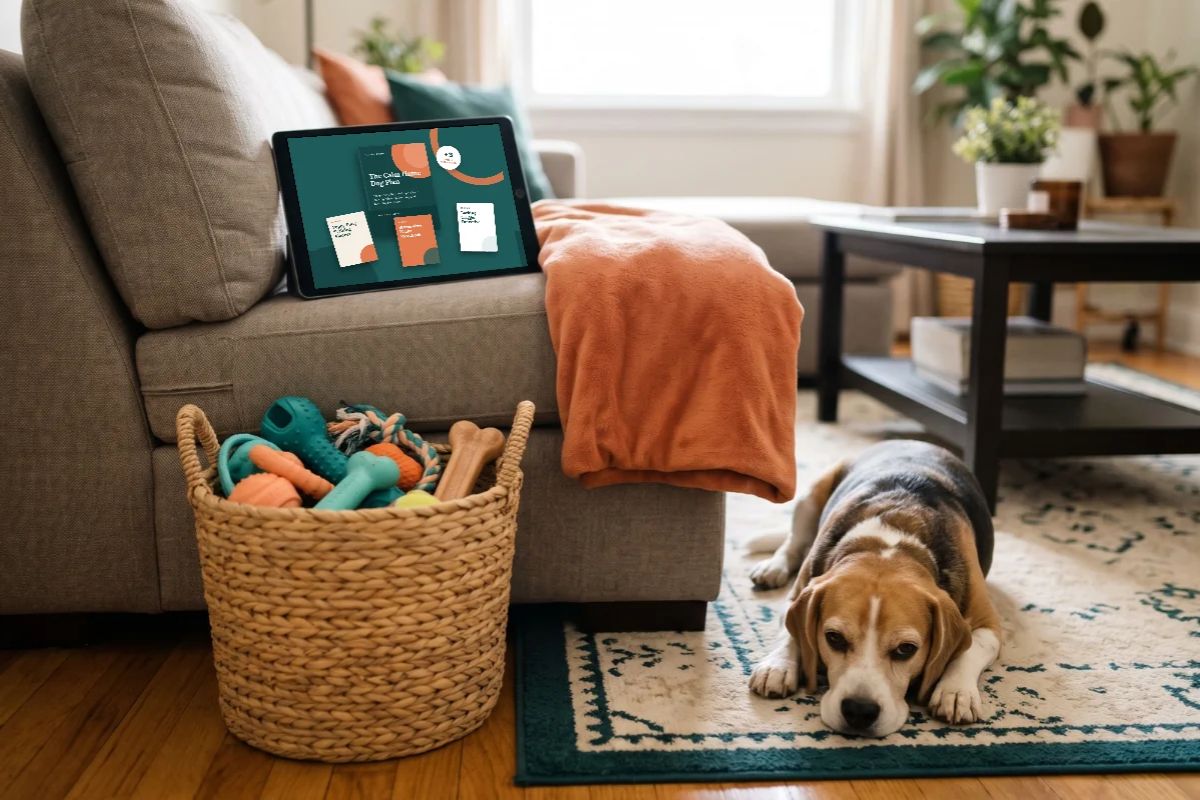
It’s a normal dog behavior that’s ended up aimed at the wrong things. The fix is less about stopping chewing and more about steering it. This guide shows you how, with five steps from The Calm Home Dog Plan and specific help for the couch, the sock thief and the counter surfer.
Why Dogs Chew Everything
Chewing is part of being a dog. Dogs explore the world with their mouths, and chewing seems to be satisfying in its own right. The reason behind your dog’s chewing changes the plan, though, so start here.
Teething Puppies
According to the American Kennel Club‘s puppy teething timeline, baby teeth fall out and adult teeth come in at roughly 12 to 16 weeks, and most puppies have their full set of adult teeth by about six months. Many puppies chew hard during this stage. It’s normal, and it passes, but it needs the right outlets.
Young Dogs And Adolescents
Dogs between about six months and two years often keep chewing well after teething ends. They’re curious, full of energy and still learning house rules. This is the age when many dogs discover couch cushions.
Adult Dogs
When an adult dog chews things they shouldn’t, look at the pattern. Common reasons include boredom, too little exercise or sniffing time, too much freedom too soon in a new home, frustration, or stress when left alone.
A dog who only chews doors and window frames when you’re out may be showing distress about being alone, which needs a different plan (see the vet and help section below).
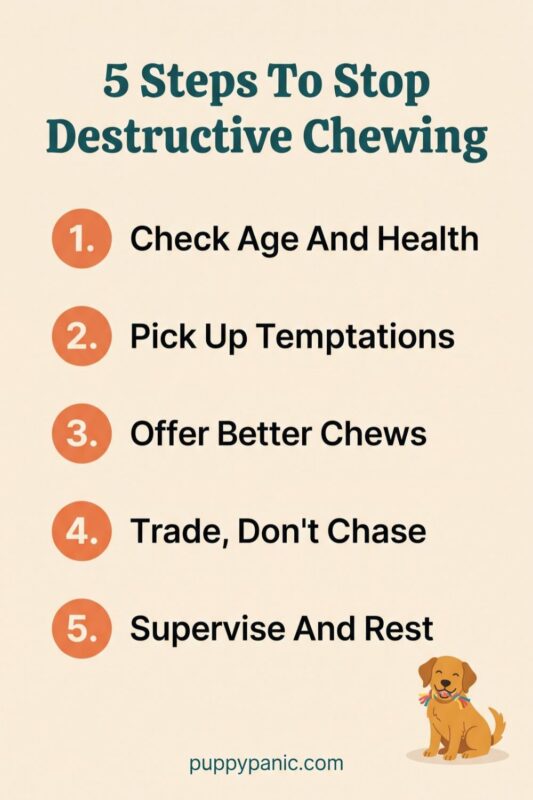
The 5 Steps To Stop Destructive Chewing
These steps work for puppies and adult dogs alike. They follow the P.A.W.S. Method from The Calm Home Dog Plan: pinpoint the pattern, adjust the setup, work on a new skill and study what changes.
1. Check Age And Health
Start by asking what’s normal for your dog right now. A four-month-old puppy chewing everything is teething. A calm five-year-old who suddenly starts chewing is a different story.
Sudden new chewing, chewing at their own body, or eating things that aren’t food can have medical causes, so a vet check comes first in those cases.
Then keep a simple record for a few days: what got chewed, when, and where you were. You’ll often spot a pattern, like chewing only in the evening, only when your dog is alone, or only after a quiet day with no walk.
2. Pick Up Temptations
The fastest way to cut chewing is to make the wrong things hard to reach. Every time your dog chews a shoe, they practice chewing shoes. Put things away now, and you’ll have less to undo later. The dog-proofing checklist below makes this quick.
3. Offer Better Chews
Your dog needs things they’re allowed to chew, and they need to be safe. Cornell University’s College of Veterinary Medicine advises avoiding antlers, hooves and bones, which can break teeth or splinter. It also describes the thumbnail test that veterinary dentists use: if you can press your fingernail into a chew and leave a dent, it passes. Chews too hard to dent are more likely to crack teeth.
A few more tips:
- Choose chews too large to swallow whole, and replace them before they wear down.
- Watch the first few sessions with any new chew.
- Keep three or four favorites and rotate them every few days, so they stay interesting.
- Ask your vet which products suit your dog’s size, teeth and health.
4. Trade, Don’t Chase
If your dog grabs something they shouldn’t, don’t chase them. A chase is often the best game in the house, and it teaches your dog that grabbing your things starts the fun. Instead, teach the trade game (below), so bringing items to you pays off better than running away.
Important: if your dog stiffens, freezes, growls or snaps when you come near something they have, that’s resource guarding. Don’t try to take things away or practice trading on your own. Manage access, keep children away when your dog has something valuable, and get help from a qualified professional.
5. Supervise And Rest
Many chewing problems happen when a dog has too much freedom and too little rest. When you can’t watch your dog, use a puppy pen, a gated room or a crate your dog is already comfortable in, with a safe chew inside.
Young puppies need a lot of sleep, and an overtired puppy often chews more, not less. A short walk, some sniffing time and a nap can do more for chewing than any spray.
How To Stop A Dog Chewing The Couch And Furniture
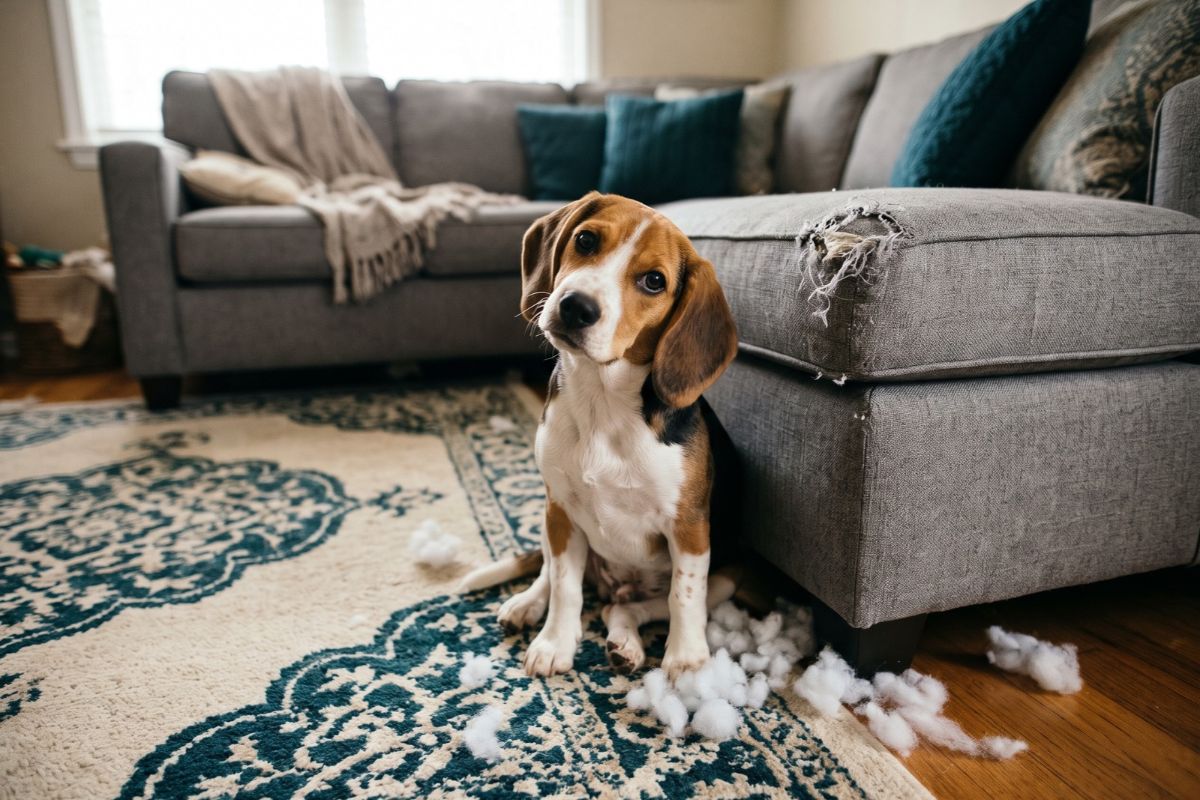
Coming home to a torn cushion or a chewed table leg is one of the most frustrating parts of living with a dog. Before you buy another bitter spray, look at the pattern:
- When does it happen? Only when you’re out, in the evening, or after a quiet day?
- What did your dog have access to? A whole living room, or a safe space with their own chews?
- What did your dog need? Exercise, sleep, something to do, or company?
Then act on what you find. Block access to the room or the furniture while you can’t supervise. Put a favorite chew on your dog’s bed near the couch, and reward them for chewing it there. Add a short walk or a sniffing game before the time of day the chewing usually happens.
Illustration: picture a one-year-old Lab mix who chews couch cushions only on workdays. The fix isn’t scolding him when you get home, hours later. It’s a morning sniff walk, a gated room with two safe chews and a food puzzle while you’re out.
Dog-Proof Your Home Checklist
Walk through your home at your dog’s eye level, and fix anything that’s easy to grab:
- Shoes and socks in a closet or a bin with a lid
- Phone chargers and cords lifted, covered or unplugged
- Remotes, glasses and wallets up high
- Trash cans with lids, or behind a cabinet door
- Kids’ toys picked up after play
- Laundry baskets off the floor
- Food off counters and tables, including bags on chairs
- Three or four safe chews ready in each room your dog uses
The ASPCA Animal Poison Control Center lists foods that can be dangerous to dogs, including chocolate, grapes and raisins, onions, garlic, macadamia nuts, xylitol (a sweetener in some gum and baked goods), alcohol, raw yeast dough and caffeine. Keep these well out of reach.
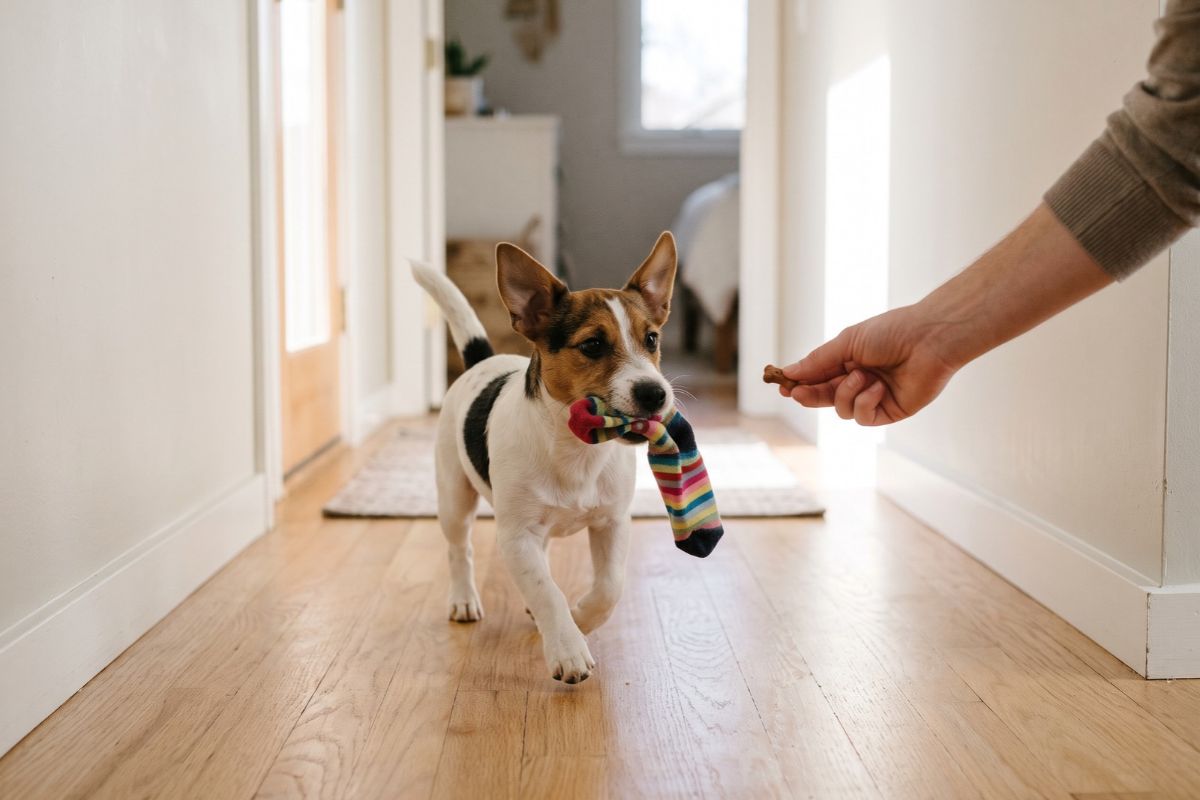
How To Stop Your Dog Stealing Socks: The Trade Game
If your dog grabs a sock and sprints off, the chase is probably the reward. The trade game teaches your dog that bringing things to you pays off better.
- Start with a toy, not a stolen item. Let your dog hold a low-value toy. Show a tasty treat near their nose.
- Swap. When they let go of the toy, say “thanks,” give the treat, then hand the toy back. Your dog learns that giving things up doesn’t mean losing them.
- Practice often, 5 to 10 trades a session, with slightly more interesting items over time.
- Use it in real life. When your dog grabs a sock, don’t chase. Walk calmly to the treat jar, call them cheerfully and trade.
- Stay calm with harmless items. If it’s something safe, sometimes the best move is to ignore it. Without a chase, many dogs lose interest fast.
If your dog has grabbed something dangerous, like medication, a battery or a chicken bone, call your vet right away rather than waiting.
How To Stop A Dog Counter Surfing
Counter surfing is hard to stop once it starts, because it pays off so well. Your dog doesn’t need to win every time. An occasional sandwich is enough to keep them checking. That’s why prevention works much better than correction after the fact.
- Clear the counters. Nothing edible left out, even for a minute.
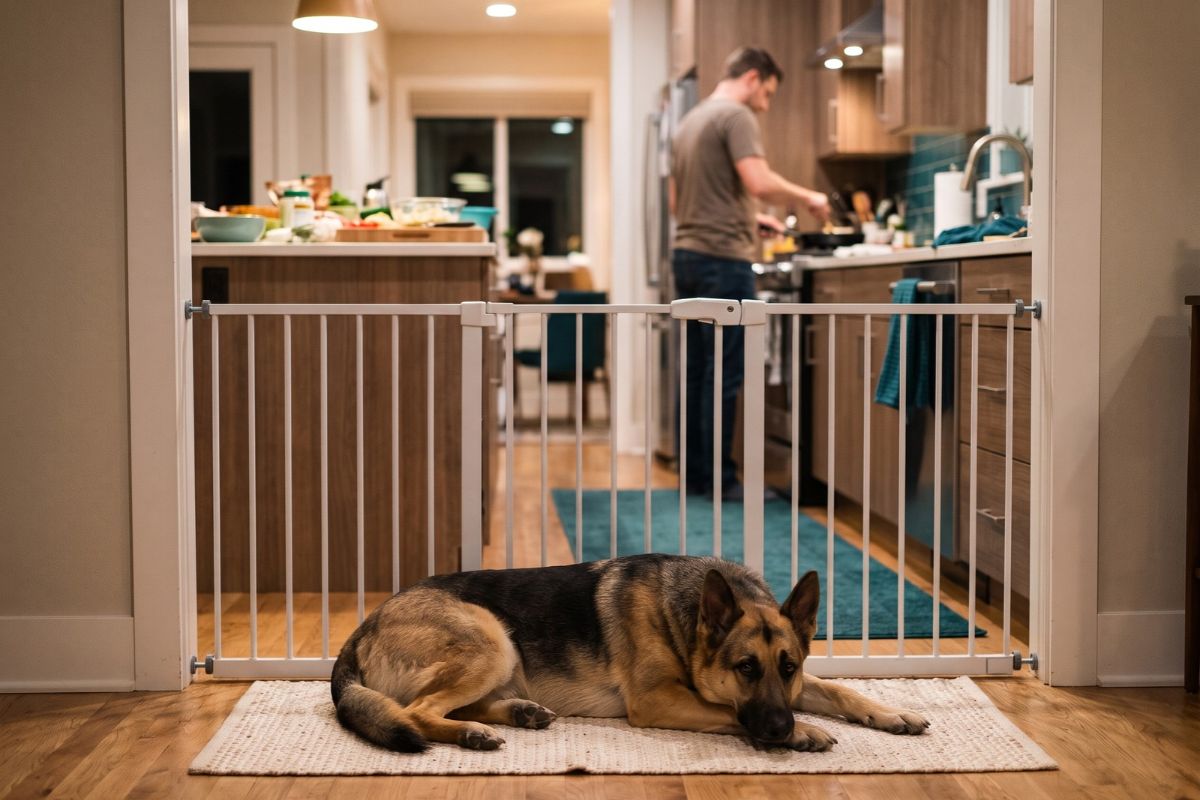
- Block the kitchen while you cook, with a baby gate or a closed door.
- Teach a spot. Give your dog a mat just outside the kitchen and reward them for lying there while you cook. Practice on ordinary days, so it’s familiar by the holidays.
- Reward four paws on the floor. When your dog wanders into the kitchen and doesn’t jump up, mark it and reward it.
What Not To Do About Dog Chewing
- Don’t punish after the fact. Showing your dog a chewed shoe hours later doesn’t connect to the chewing. That “guilty look” is your dog reacting to your mood, not remembering the shoe.
- Don’t give old shoes or socks as toys. Your dog can’t tell an old sneaker from your new one.
- Don’t rely on sprays alone. Bitter sprays can help protect one item, but they don’t teach your dog what to chew instead.
- Don’t use shock, shaking cans or hitting. These can make a dog fearful or more likely to guard things, and they don’t teach a better habit.
When Chewing Needs A Vet
Most chewing is ordinary, but some situations need a professional quickly.
Call your vet or an emergency clinic right away if your dog may have swallowed something, or shows signs that Cornell’s veterinary college links to a gastrointestinal blockage: vomiting, loss of appetite, belly pain, diarrhea, dehydration or low energy. String, ribbon and similar objects can be especially dangerous. Don’t try to make your dog vomit unless a veterinarian tells you to.
For a possible poisoning, call your vet, the ASPCA Animal Poison Control Center at (888) 426-4435 or the Pet Poison Helpline at (855) 764-7661. A consultation fee may apply. Check the current details and save them in your phone today.
Book a regular vet visit if:
- An adult dog suddenly starts chewing, or chewing changes a lot.
- Your dog licks or chews at their own body, or eats things that aren’t food, like dirt or fabric.
- Your dog seems to have mouth pain, drops food or chews on one side.
Look for a certified professional dog trainer or a board-certified veterinary behaviorist if your dog guards items with growling or snapping, or chews mainly at doors and windows when left alone, which can be a sign of separation-related distress.
Dog Chewing FAQ
At What Age Do Puppies Stop Chewing Everything?
Teething usually ends around six months, when most puppies have their adult teeth. Many dogs keep chewing a lot until about two years old, because they’re still curious and energetic.
With safe chews and good management, chewing usually becomes much easier to live with well before then.
Why Does My Dog Only Chew Things When I Leave?
It may be boredom, too much freedom while you’re out, or stress about being alone. Give your dog a safe space with chews and a food puzzle, and add exercise before you leave.
If the chewing targets doors and windows, or comes with howling or barking when you’re gone, talk to your vet or a qualified trainer about separation-related distress.
What Is Safe For My Dog To Chew?
Choose chews that pass the thumbnail test (you can dent them with a fingernail), that are too big to swallow whole, and that you replace before they wear down. Avoid antlers, hooves and bones, which can break teeth or splinter. Your vet can suggest products for your dog’s size and health.
Does Bitter Spray Stop Dogs Chewing?
Bitter sprays can make one item less appealing, but some dogs ignore the taste, and sprays don’t teach your dog what to chew instead. Use them as a backup to dog-proofing and safe chews, not a replacement.
Should I Punish My Dog For Chewing?
No. Punishment after the fact doesn’t connect to the chewing, and harsh corrections can make dogs fearful or more likely to guard things. Prevent access, offer better options and reward your dog for chewing the right things.
How Do I Stop My Puppy Chewing My Hands?
Puppy mouthing is normal. Keep a toy handy and offer it whenever your puppy reaches for your hands. If teeth touch skin, pause play for a few seconds, then start again gently. An overtired puppy mouths more, so make sure they get plenty of naps.
Want The Full Step-By-Step Plan?
This article gives you the five steps. The Calm Home Dog Plan gives you the whole system, for chewing and the rest of the everyday chaos.
Inside the 155-page guide:
- A full chapter on chewing, stealing and counter surfing, with a temptation sweep, a chew rotation plan and a kitchen and holiday plan
- Chapters on barking, jumping on guests, whining and being alone
- 30 printable worksheets to track what’s working
- A 30-day practice plan, so you know what to do each week
- 3 bonus workbooks: the Puppy Potty Training Planner, the Stress-Free Walks Workbook and the Barking Trigger Detective
Reward-based methods only. Instant PDF download for $27, with a 30-day money-back guarantee.