
This post contains affiliate links. If you click through and make a purchase, we may earn a small commission at no extra cost to you. We only recommend products we’ve actually used and trust, and everything shared here reflects our honest experience with our own puppy.
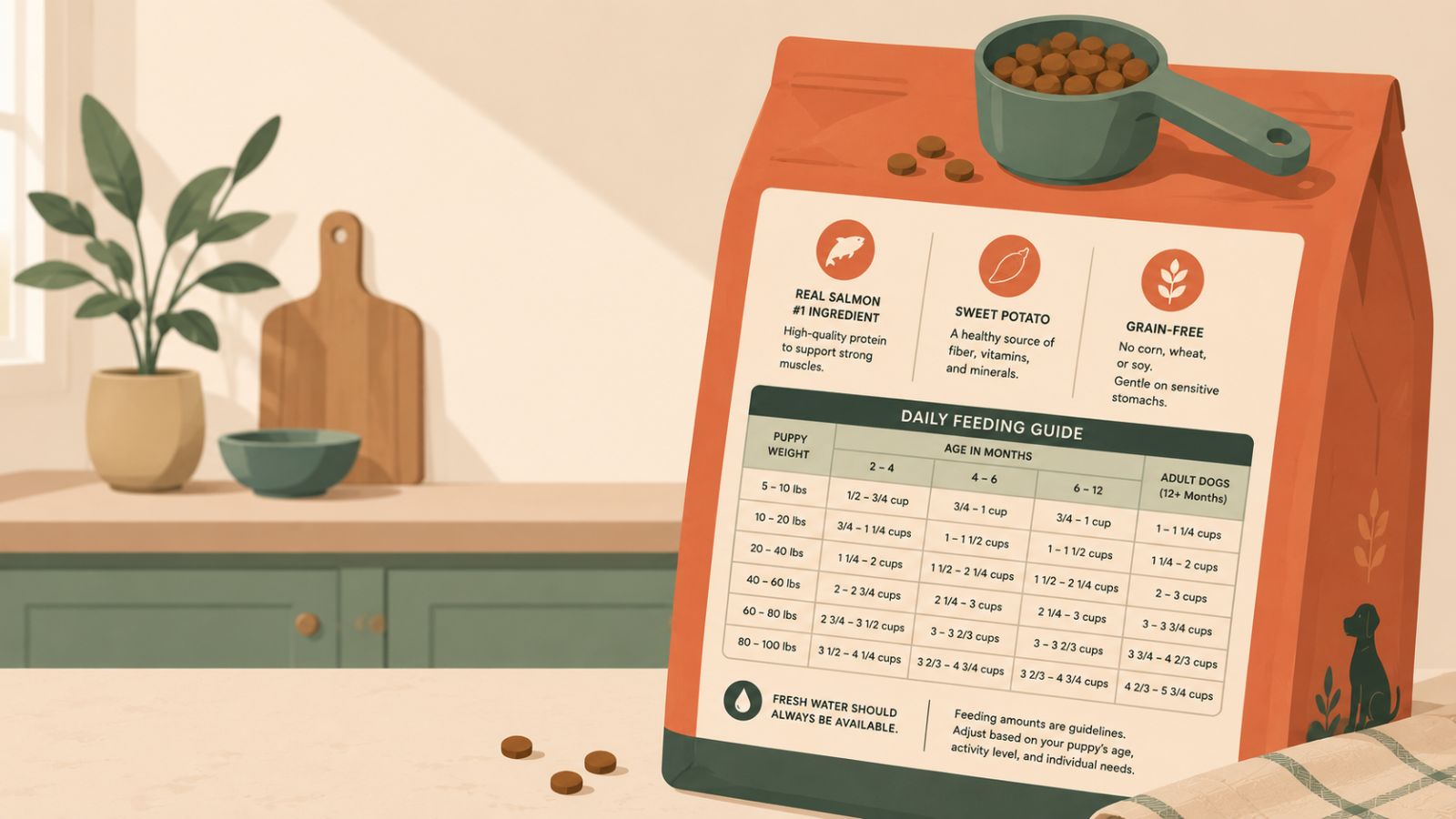
I didn’t think I needed a puppy portion calculator until the feeding chart on the back of the bag started working against us.
For the first two weeks, I fed our puppy exactly what the back of the bag told me to. Weight range, cup amount, done. It felt like the responsible thing to do, the bag had a chart, the chart had numbers, I followed the numbers.
Except the numbers were wrong for him. Not wildly wrong, just off in that quiet way that’s hard to catch. He was underweight for his age at the low end of one bracket and technically qualified for a smaller portion, but a smaller portion for a puppy who was about to have a growth spurt meant he was hungry an hour after eating and chewing on everything in sight, including things he shouldn’t.
It took me longer than I’d like to admit to realize the chart wasn’t built for him specifically. It was built for an average dog at an average pace of growth, and my puppy wasn’t average, no puppy really is.
The Problem With “Just Follow the Bag”
Every bag of puppy food has a feeding chart, and every one of those charts is doing the same rough math: current weight range, life stage, done. What it can’t account for is the stuff that actually matters for a specific puppy.
It doesn’t know his expected adult size, which changes how fast he should be gaining and how much fuel that growth needs. It doesn’t know whether he’s a lean, high-energy puppy who burns through calories faster than his littermates, or a laid back one who gains weight if you look at him wrong.
Again is doesn’t know if you just switched foods and his stomach is still adjusting, which changes how much he can comfortably handle in one sitting.
A chart with three weight brackets and one number per bracket is a starting point, not an answer. Treating it as an answer is how you end up either underfeeding a growing puppy or overfeeding one who’s already on the heavier side for his frame.
What Actually Changed Things
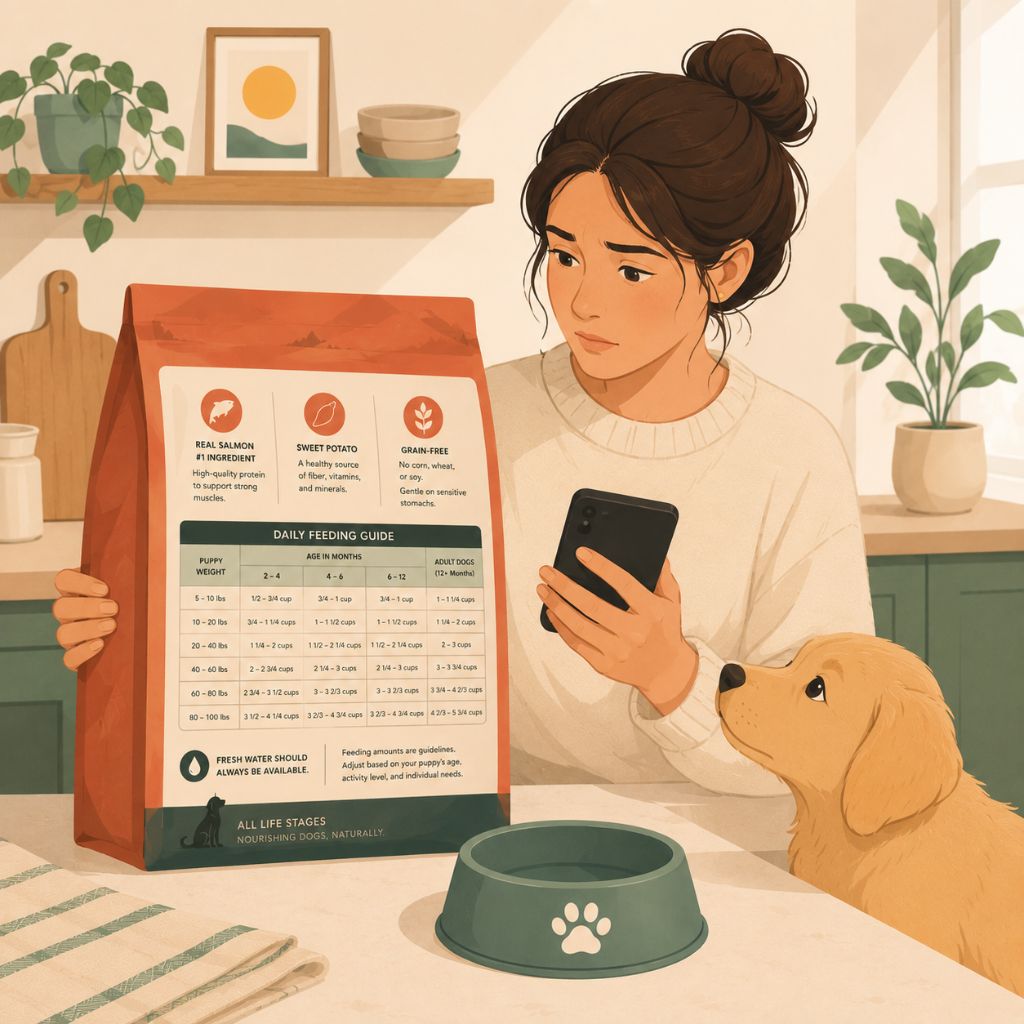
Once I stopped treating the bag’s chart as gospel, I needed something that could actually account for his current weight, his age, and roughly where he was headed as an adult, and adjust the portion accordingly instead of forcing him into one of three generic brackets.
That’s where a proper portion calculator came in. Instead of eyeballing which bracket he fit into, I could put in his actual current weight and age range and get a daily amount split across the right number of meals for his stage, more meals a day for a younger puppy whose stomach can’t hold much at once, fewer as he gets older and can handle bigger portions less often.
The difference wasn’t dramatic overnight, but it was noticeable within a week. He stopped acting ravenous an hour after meals. His energy leveled out instead of spiking and crashing. And I stopped that low-level guilt of wondering if I was quietly underfeeding or overfeeding him every time I scooped his bowl.

Why a Calculator Beats a Static Chart
A static chart gives you one number for a range of dogs. A calculator built specifically for puppies can account for the things that actually shift the right amount:
- Current weight, not just a bracket you round up or down into
- Age range, since a 10-week-old and a 5-month-old at the same weight need different daily percentages and a different number of meals
- Meal splitting, since younger puppies do better on smaller, more frequent meals while older puppies can handle fewer, larger ones
None of that is complicated math on its own, but doing it by hand every time your puppy’s weight changes (which is often, they grow fast) is exactly the kind of thing that quietly gets skipped when you’re busy. A calculator does it in a few seconds instead.
How We Actually Use It Now
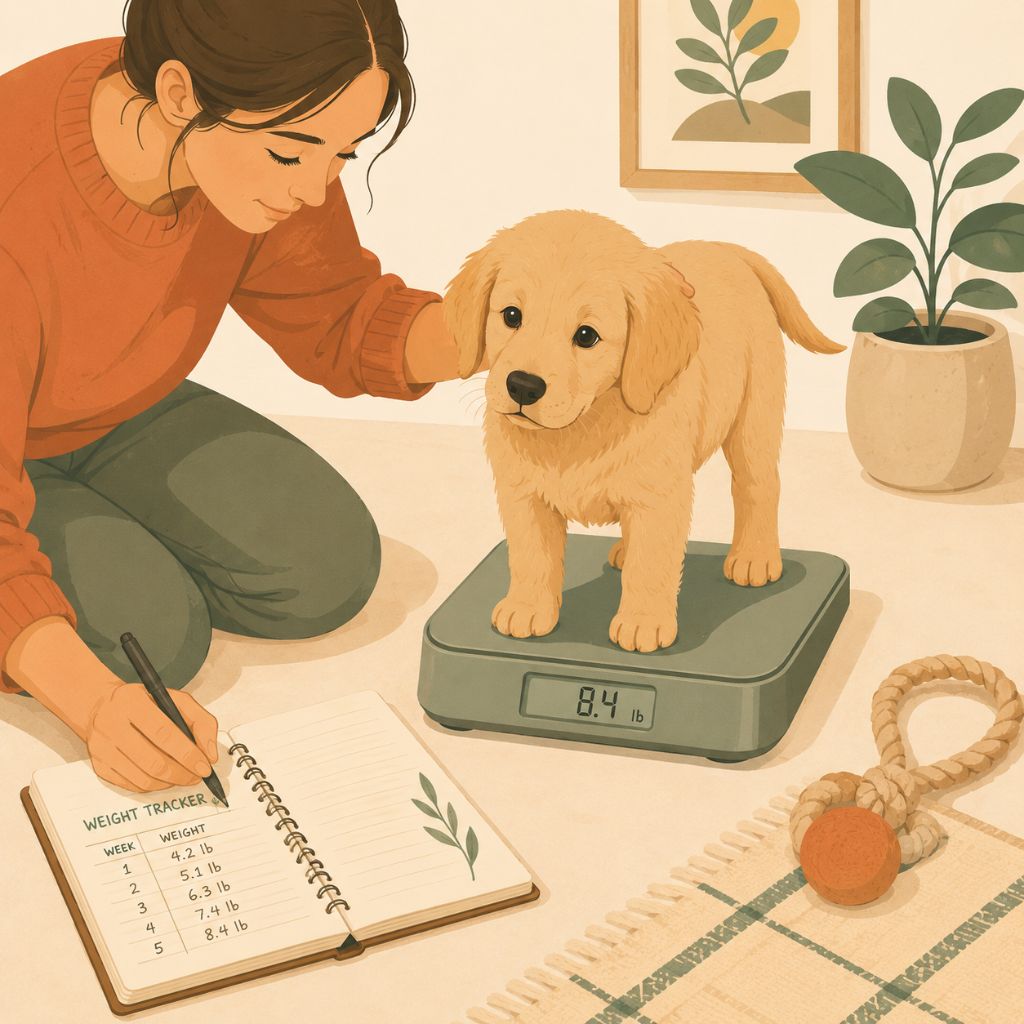
Every couple of weeks, when we notice he feels heavier picking him up or his last vet visit updated his weight, we run his numbers through the portion calculator again. It takes less time than making his dinner. We adjust the daily amount, split it across his current number of meals, and that’s the plan until the next check-in.
It’s a small habit, but it’s the difference between feeding him based on a static number from week one and actually feeding the puppy in front of us right now.
If You’re Still Just Following the Bag
You’re not doing anything wrong by starting there, it’s the default for a reason. But if your puppy seems hungrier than the chart suggests he should be, or he’s gaining weight faster or slower than expected, it’s worth running his actual numbers through something built to handle the variables the bag can’t.
A 5 minute check every couple of weeks is a small but great habit that saves you from guessing.